


-
About UsHebei Derui Chemical Co., Ltd. (hereinafter referred to as Derui Chemical) was established in January 2006 with a registered capital of RMB 51.8 million. The company specializes in the production and sale of agrochemicals, with its main products including thiamethoxam technical grade, imidacloprid technical grade, spirotetramat technical grade, and related formulated products.

-
Product CenterThe company is committed to building and continuously improving its management systems, and in 2020 it obtained certifications under GB/T 19001-2016/ISO 9001:2015, GB/T 24001-2016/ISO 14001:2015, and GB/T 45001-2020/ISO 45001:2018. Derui Chemical has consistently upheld the corporate mission of “pursuing green development and serving global agriculture,” while adhering to the core values of “integrity, innovation, pragmatism, and gratitude.” The company is eager to collaborate with its partners to contribute to the advancement of global agriculture.
-
BlogThe company places great emphasis on standardized management and sustainable development, successfully obtaining certification for its three major management systems—quality, environment, and occupational health and safety—in 2020. These certifications align with GB/T 19001-2016/ISO 9001:2015, GB/T 24001-2016/ISO 14001:2015, and GB/T 45001-2020/ISO 45001:2018. Derui Chemical remains committed to its corporate mission of promoting green development and serving global agriculture, upholding the core values of “integrity, innovation, pragmatism, and gratitude.” We look forward to partnering with stakeholders from all sectors, pooling our strengths, and advancing together to support the steady growth of global agriculture.

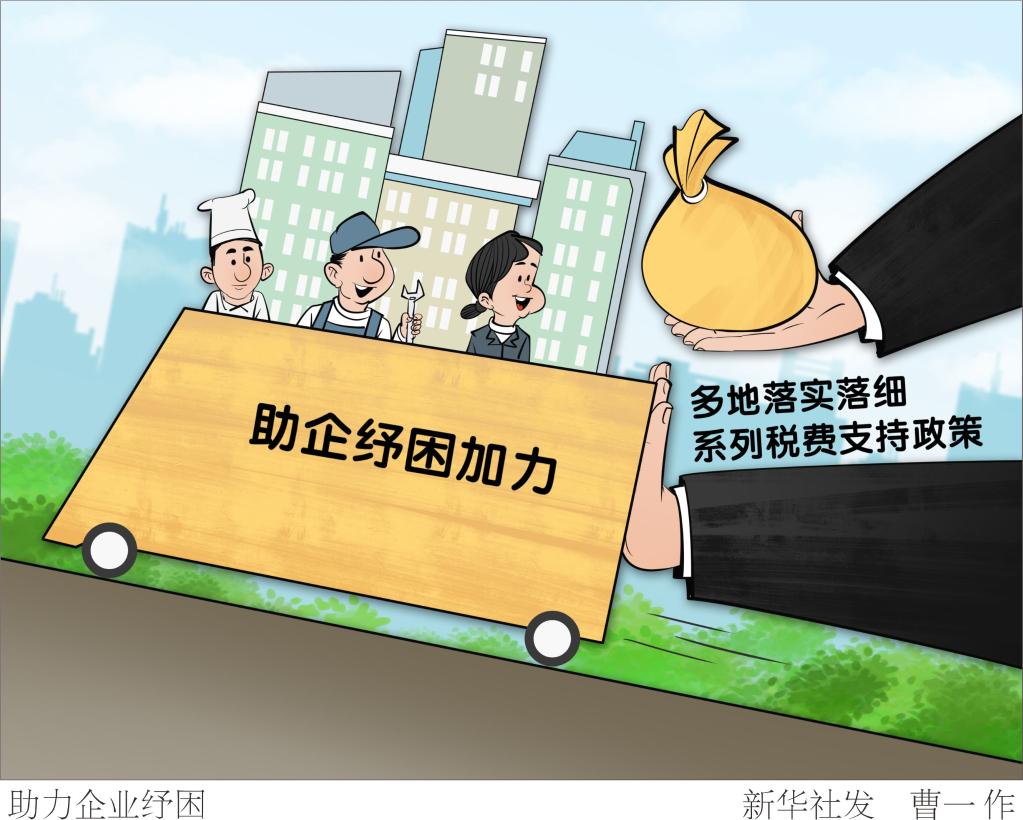
Stepping up efforts to help businesses alleviate difficulties, many localities are implementing and refining a series of tax and fee support policies.
Release Date:
2022-12-12
Since the beginning of this year, a series of new bundled tax and fee support policies, along with comprehensive measures to stabilize the economy and follow-up initiatives, have been rolled out in phases, providing strong backing for easing the burden on market entities and anchoring the overall macroeconomic landscape. Reporters have learned that many localities have taken proactive steps to ensure the effective and meticulous implementation of these tax and fee support measures, thereby reducing burdens and boosting vitality for businesses.
Recently, Beijing Yanshan Petrochemical Co., Ltd. of Sinopec Group received a refund of outstanding input VAT credits. Wang He, the company’s tax director, said, “The refund application was reviewed on the same day, and the funds were credited to our account within three days.” With the heating season now underway, this tangible financial support has provided robust funding for the electricity and heat needs of Yanshan Petrochemical’s more than 30 production sites.
Large-scale refunds of outstanding input VAT credits are the centerpiece of this year’s new package of tax and fee support measures.
In Shanghai, the renowned snack brand “Xiao Yang Shengjian” has benefited from a tax‑cut “bonus.” According to Yang Lipeng, the company’s general manager, following the introduction of the relevant policies, the Shanghai tax authorities promptly delivered the measures directly to the business. Shanghai Penglilai Catering Management Co., Ltd. and its subsidiary, Xiao Yang Shengjian Enterprise Management & Development (Shanghai) Co., Ltd., have collectively received over RMB 20 million in additional tax refunds, significantly easing their financial pressures—such as settling payments to suppliers.
In Gaomi City, Shandong Province, the Municipal Finance Bureau has established a multi‑departmental coordination mechanism to strengthen policy outreach, ensure effective implementation, and proactively provide tailored services, delivering tangible financial benefits to businesses. Kverneland Agricultural Machinery (Shandong) Co., Ltd. has invested a cumulative total of over RMB 1.6 billion in the region. Thanks to the robust support from the fiscal and tax authorities, the company successfully received RMB 121 million in outstanding tax refunds this year and is using these funds to expand production capacity and launch R&D projects locally.
Since the beginning of this year, amid the impact of the pandemic, small, medium, and micro enterprises as well as individual business households have faced mounting difficulties, making it all the more critical to provide targeted relief and support.
In Beibei District, Chongqing, Yu Guotang Old Hot Pot Restaurant has benefited from temporary VAT and other tax exemptions for small-scale taxpayers, resulting in cumulative tax reductions and exemptions totaling nearly RMB 50,000 this year. “We’ve used the savings to cover employee wages and rent, effectively easing operational pressures,” said Zhou Linbo, the restaurant’s manager.
Starting in May this year, multiple departments in Beijing jointly issued a series of preferential policies, including temporary deferrals of employer‑paid social insurance contributions for businesses in the catering, retail, tourism, civil aviation, and road and rail transport sectors, further helping market entities alleviate their difficulties.
Li Longjiang, Director of the Fengtai District Tax Bureau in Beijing, stated that the bureau leverages tax‑related big data to precisely identify eligible enterprises and, through targeted SMS messages, tax‑enterprise WeChat groups, as well as dedicated “Wei Lan+” consultation windows and its official WeChat account, has continuously expanded the reach and awareness of preferential policies.
A range of tax and fee support policies not only lightens the burden on businesses’ day-to-day operations but also injects vitality into their long-term development.
“In the first three quarters of this year, the company’s R&D expenditure totaled approximately RMB 270 million, already surpassing last year’s full-year R&D spending,” said Bi Wenxin, CFO of Nanjing Novozymes Biotechnology Co., Ltd. He added that the policy increasing the additional deduction rate for R&D expenses has effectively bolstered the company’s confidence in ramping up its R&D investment.
In Xiangyang City, Hubei Province, the tax authorities have focused on the city’s “Little Giant” enterprises that are specialized, refined, distinctive, and innovative, carefully compiling and tailoring promotional materials on “personalized” tax incentives—such as the additional deduction for R&D expenses and the amortization of intangible asset costs—to deliver targeted, precision‑driven support. They have also established a dedicated task force for the high‑quality development of these SMEs, conducting regular “diagnostic consultations” to address business needs and guiding enterprises toward transformation and upgrading into smart and high‑end manufacturing.
According to data from the State Taxation Administration, as of November 10, the national tax system had collectively implemented new tax and fee reductions, refunds, deferrals, and exemptions totaling over RMB 3.7 trillion.
Industry insiders estimate that the total tax and fee reductions, refunds, deferrals, and exemptions for the year will exceed 4 trillion yuan. This comprehensive package of fiscal and tax measures has not only helped businesses alleviate difficulties and stabilize the economy but has also bolstered corporate confidence and supported their transformation.
Xinhua News Agency reporters Shen Cheng, Ji Ning, Hou Wenkun, and Sang Tong
[Editor-in-charge: Wu Yongling]
Tags:
More information
Contact Us
Address:
No. 1, No. 1, New District Road No. 1, Gaocheng District, Shijiazhuang City, Hebei Province
WeChat/WhatsApp:
Phone:
Email:
