


-
About UsHebei Derui Chemical Co., Ltd. (hereinafter referred to as Derui Chemical) was established in January 2006 with a registered capital of RMB 51.8 million. The company specializes in the production and sale of agrochemicals, with its main products including thiamethoxam technical grade, imidacloprid technical grade, spirotetramat technical grade, and related formulated products.

-
Product CenterThe company is committed to building and continuously improving its management systems, and in 2020 it obtained certifications under GB/T 19001-2016/ISO 9001:2015, GB/T 24001-2016/ISO 14001:2015, and GB/T 45001-2020/ISO 45001:2018. Derui Chemical has consistently upheld the corporate mission of “pursuing green development and serving global agriculture,” while adhering to the core values of “integrity, innovation, pragmatism, and gratitude.” The company is eager to collaborate with its partners to contribute to the advancement of global agriculture.
-
BlogThe company places great emphasis on standardized management and sustainable development, successfully obtaining certification for its three major management systems—quality, environment, and occupational health and safety—in 2020. These certifications align with GB/T 19001-2016/ISO 9001:2015, GB/T 24001-2016/ISO 14001:2015, and GB/T 45001-2020/ISO 45001:2018. Derui Chemical remains committed to its corporate mission of promoting green development and serving global agriculture, upholding the core values of “integrity, innovation, pragmatism, and gratitude.” We look forward to partnering with stakeholders from all sectors, pooling our strengths, and advancing together to support the steady growth of global agriculture.

Breaking News: Nearly 20 departments, including the Ministry of Ecology and Environment, the National Development and Reform Commission, the Ministry of Public Security, and the Ministry of Industry and Information Technology, have jointly issued a document!
Release Date:
2021-11-01
Recently, the Ministry of Ecology and Environment issued a notice promulgating the “Comprehensive Plan for Tackling Air Pollution during the Autumn–Winter Season 2021–2022.” In terms of implementation scope, taking into account local air quality conditions during the autumn–winter period and regional transport impacts, the plan has been further refined for the 2021–2022 season. Building on the existing “2+26” cities in the Beijing–Tianjin–Hebei region and its surrounding areas, as well as the 39 cities in the Fenwei Plain, an additional 20 cities have been included: three cities in northern Hebei, three in northern Shanxi, six in eastern and southern Shandong, and eight in southern Henan.
In previous years, the campaign targeted 80 prefecture-level and above cities across the Beijing–Tianjin–Hebei region and its surrounding areas, the Fenwei Plain, and the Yangtze River Delta. This year, the focus has been narrowed to 59 cities, with some additions and deletions compared to the original 80. Overall, in the Yangtze River Delta, the 41 cities that previously experienced severe pollution have largely seen such conditions eliminated; with the exception of seven cities in northern Jiangsu and northern Anhui, which will continue to be subject to the same measures, the remaining cities are no longer included in the campaign’s scope.
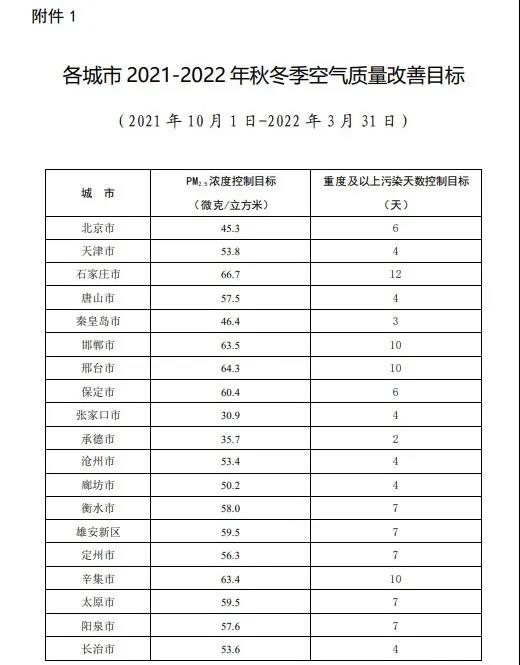
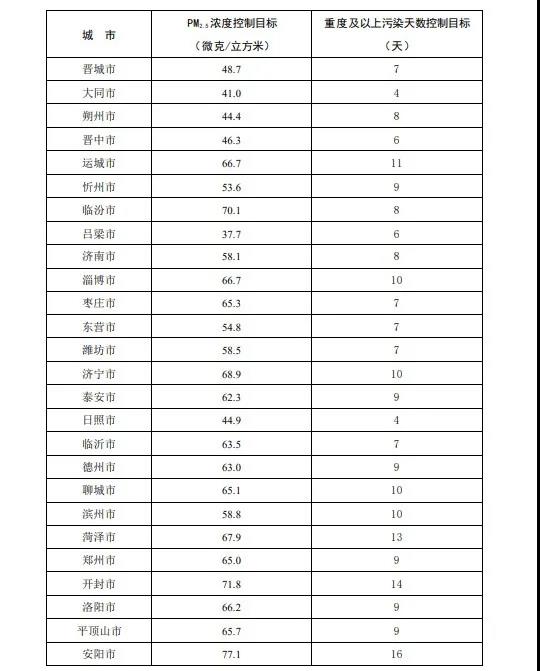
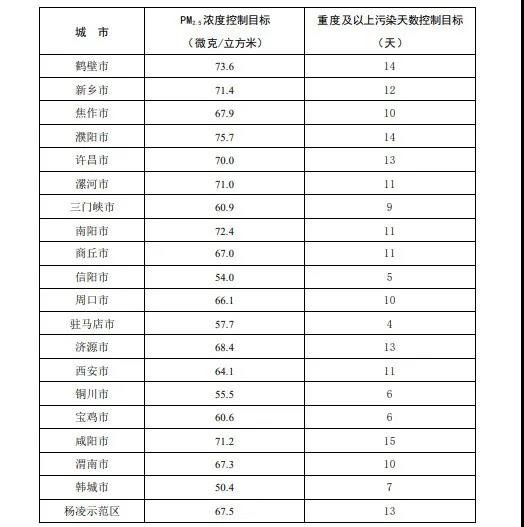
The primary objectives of the Plan are that, during the autumn–winter period (October 1, 2021, to March 31, 2022), all cities will achieve their targets for PM2.5 concentration and for the number of days with severe or worse pollution. According to estimates, in the key areas covered by the plan, the average PM2.5 concentration during the 2021–2022 autumn–winter season is expected to decline by 4.0% year on year, while the average number of heavily polluted days per city is projected to decrease by two days.
2021–2022 Autumn and Winter Comprehensive Plan for Tackling Atmospheric Pollution
The Outline of the 14th Five-Year Plan for National Economic and Social Development of the People’s Republic of China and the Long-Range Objectives for 2035 calls for waging a tough battle against pollution, strengthening synergistic control of multiple pollutants and coordinated regional governance, and essentially eliminating severe air pollution episodes. In recent years, through the implementation of intensive campaigns to comprehensively tackle air pollution during the autumn and winter seasons, air quality in key regions has continued to improve. During the 2020 autumn–winter period, fine particulate matter (PM2.5) concentrations in the Beijing–Tianjin–Hebei region and its surrounding areas, as well as in the Fenwei Plain, fell by 37.5% and 35.1%, respectively, compared with the same period in 2016, while the number of days with severe pollution declined by 70% and 65%, respectively. As a result, the public’s sense of gain and satisfaction with cleaner skies has markedly increased. Although these autumn–winter efforts have yielded positive results, the gains in air quality remain fragile. Severe pollution episodes continue to occur frequently in regions such as Beijing–Tianjin–Hebei and its surroundings, and the Fenwei Plain, posing risks to public health and directly undermining progress toward achieving the air quality improvement targets set in the 14th Five-Year Plan. As 2021 marks the inaugural year of the 14th Five-Year Plan, the first half of the year saw a noticeable rebound in output of “two high” industries and coal consumption, further intensifying pressure to sustain improvements in atmospheric environmental quality. It is imperative to fully recognize the importance and urgency of comprehensive air pollution control during the 2021–2022 autumn–winter season, implement all tasks and measures with precision and determination, and, through sustained autumn–winter campaigns, strive to win the decisive battle against severe pollution, thereby setting a strong foundation and getting off to a good start in the 14th Five-Year Plan’s broader effort to safeguard blue skies.
I. General Requirements
Basic approach: Fully implement the spirit of the 19th National Congress of the Communist Party of China and the Second, Third, Fourth, and Fifth Plenary Sessions of the 19th CPC Central Committee; uphold the overarching goals of pollution reduction and carbon mitigation; prioritize the reduction of severe pollution episodes and the lowering of PM2.5 concentrations; emphasize precision, science, and law-based approaches to pollution control; maintain unwavering direction and sustained intensity; focus on three key areas—industrial, energy, and transportation restructuring—resolutely curb the unchecked expansion of “high-pollution, high-energy-consumption” projects; advance clean heating in northern regions in an orderly manner; accelerate the shift of bulk cargo transport from road to rail; and carry out targeted campaigns to address emissions from the steel industry, diesel trucks, boilers and kilns, volatile organic compounds (VOCs), straw burning bans, and fugitive dust. Deepen performance‑based classification and tiered management of enterprises, strengthen regional joint prevention and control, and proactively respond to severe pollution events. Adhere to a problem‑oriented approach, intensify oversight and support efforts, reinforce assessment and accountability mechanisms, and ensure that responsibilities are firmly shouldered.
Scope of Implementation: Taking into account the atmospheric environmental conditions during the autumn and winter seasons in various regions and the impact of regional pollutant transport, the scope of the 2021–2022 autumn–winter campaign has been expanded, building on the “2+26” cities in the Beijing–Tianjin–Hebei region and its surrounding areas, as well as the cities in the Fenwei Plain. The additional areas include northern Hebei, northern Shanxi, eastern and southern Shandong, and parts of southern Henan. Specifically, these include: Beijing Municipality; Tianjin Municipality; Shijiazhuang, Tangshan, Qinhuangdao, Handan, Xingtai, Baoding, Zhangjiakou, Chengde, Cangzhou, Langfang, and Hengshui Cities in Hebei Province, along with the Xiongan New Area, Dingzhou, and Xinji City; Taiyuan, Yangquan, Changzhi, Jincheng, Datong, Shuozhou, Jinzhong, Yuncheng, Xinzhou, Linfen, and Lüliang Cities in Shanxi Province; Jinan, Zibo, Zaozhuang, Dongying, Weifang, Jining, Tai’an, Rizhao, Linyi, Dezhou, Liaocheng, Binzhou, and Heze Cities in Shandong Province; Zhengzhou, Kaifeng, Luoyang, Pingdingshan, Anyang, Hebi, Xinxiang, Jiaozuo, Puyang, Xuchang, Luohe, Sanmenxia, Nanyang, Shangqiu, Xinyang, Zhoukou, Zhumadian, and Jiyuan Cities in Henan Province; and Xi’an, Tongchuan, Baoji, Xianyang, Weinan (including Hancheng), and the Yangling Demonstration Zone in Shaanxi Province.
The cities of Xuzhou, Lianyungang, and Suqian in Jiangsu Province, as well as the cities of Huaibei, Fuyang, Suzhou, and Bozhou in Anhui Province, shall implement this plan by analogy.
Main objectives: During the autumn and winter period (October 1, 2021, to March 31, 2022), all cities shall achieve their targets for PM2.5 concentration and for the number of days with severe or worse air pollution.
II. Main Tasks
(1) Resolutely curb the unchecked expansion of “two high” projects.
All localities must thoroughly implement the decisions and arrangements of the CPC Central Committee and the State Council on resolutely curbing the unchecked expansion of “two high” projects. In accordance with the requirements set forth in documents such as the “Guiding Opinions on Strengthening Source‑Level Ecological and Environmental Prevention and Control for High‑Energy‑Consumption and High‑Emission Construction Projects,” they are to comprehensively review and identify proposed, under‑construction, and existing “two high” projects; adopt list‑based management for these projects; and carry out categorized handling and dynamic monitoring. Strict compliance with dual control over energy consumption, capacity replacement, regional pollutant reduction, and coal‑consumption substitution is required; any “two high” projects that fail to meet these standards must be resolutely rectified. Local authorities should conduct thorough self‑inspections and self‑corrections, rigorously investigate projects launched in violation of regulations or built before obtaining approval, and impose strict legal penalties on enterprises engaging in illegal or non‑compliant activities. Benchmarking against advanced domestic and international standards for product energy efficiency and environmental protection, efforts should be made to enhance the energy efficiency and environmental performance of ongoing and planned “two high” projects, while promoting the upgrading and retrofitting of existing ones. All illegal acts—such as unlicensed discharges or discharges not in compliance with permits—by “two high” enterprises must be severely punished, and typical cases of violations of the pollutant discharge permit system should be promptly publicized.
(II) Implement the requirements related to reducing steel production.
Implement the decisions and arrangements of the CPC Central Committee and the State Council on resolving excess capacity in the steel industry and reducing crude steel output; carry out follow-up reviews of steel‑capacity reduction efforts, and strictly prevent the resurgence of “strip‑steel” production. The addition of new steel‑smelting capacity is prohibited, and environmental准入 standards will be rigorously enforced; except for relocation or capacity‑replacement projects, no new capacity‑expansion projects shall be approved. Prior to commissioning, any capacity used for replacement must be phased out concurrently. Strictly enforce the requirements related to the 2021 crude steel output‑reduction initiative: all provinces are to disaggregate the reduction targets down to individual enterprises, formulate work plans based on the principles of “operability, verifiability, and statistical accountability,” conduct monthly progress reviews, and strengthen ongoing and post‑implementation oversight.
In accordance with the requirements of the Ministry of Industry and Information Technology and the Ministry of Ecology and Environment, it is essential to effectively implement staggered production measures during the heating season in the steel industry. Relevant cities are to be guided in formulating steel‑industry staggered‑production plans, with coordinated planning and meticulous deployment. Each measure—both output‑reduction targets and staggered‑production arrangements—must be rigorously inspected and enforced. Taking into account factors such as energy consumption, environmental performance, workplace safety, and technological equipment, market‑based and law‑based approaches should be adopted to implement differentiated management, thereby avoiding one‑size‑fits‑all policies. Enterprises rated A in environmental performance, as well as those employing an all‑scrap short‑process steelmaking route that have completed ultra‑low‑emission upgrades, may independently adopt emission‑reduction measures, provided they ensure that crude steel output does not increase year over year during the autumn and winter seasons. Other enterprises shall adhere to differentiated staggered‑production ratios based on their environmental‑performance ratings and assigned targets; the lower the rating, the higher the staggered‑production ratio. For enterprises identified since 2021 through central ecological‑environmental inspections, “look‑back” reviews of steel‑capacity‑reduction efforts, or other oversight mechanisms as having engaged in illegal or non‑compliant practices, maintained capacity utilization rates exceeding 120%, or failed to be listed in the Ministry of Industry and Information Technology’s public announcement of standardized steel‑industry enterprises, the staggered‑production ratio shall be further increased. Implementation plans for staggered production in each city must be grounded in the shutdown of specific blast‑furnace units, and reductions in production load alone shall not be permitted as a substitute. These plans must be mapped to specific enterprises, production lines, facilities, and time periods, and the staggered‑production ratios for associated coke ovens, sintering plants, pelletizing facilities, lime kilns, and other ancillary equipment must not fall below those applied to the blast furnaces.
Steel enterprises must integrate ultra‑low emissions into every process, every stage of production, and the entire product lifecycle, advancing ultra‑low emission upgrades with high quality. They should select mature, proven technologies tailored to their specific circumstances, ensuring that corporate leadership places genuine emphasis on the initiative, allocates sufficient funding, implements projects effectively, and elevates management standards. Local authorities are urged to strengthen their service orientation, coordinate to resolve challenges and issues encountered during enterprise transformation, and guide companies that have completed ultra‑low emission upgrades to promptly conduct evaluation and monitoring. For enterprises that fail to meet ultra‑low emission requirements, local governments should adopt differentiated emergency emission‑reduction measures based on environmental performance ratings, while continuously refining green electricity pricing policies and implementing tailored environmental management practices.
(3) Actively and prudently implement measures to address the use of loose coal.
Fully accomplish the objectives set forth in the “Northern Region Winter Clean Heating Plan (2017–2021)” issued by the National Development and Reform Commission and nine other ministries. Prioritize ensuring that residents can spend a safe, warm winter, concentrating resources to promote clean heating on a district-, county-, or township‑level, area‑wide basis. Adhering to the principle of using electricity where feasible, gas where appropriate, and coal when necessary, tailor clean‑heating technology pathways to local conditions and plan them scientifically, ensuring affordability and long-term sustainability. For residential “coal‑to‑gas” conversions, strictly follow the principle of “determining conversion based on gas availability.” All cities must conduct comprehensive surveys and assessments of village‑ and household‑level progress in phasing out loose coal and upgrading heating systems, as well as of designated high‑pollution fuel prohibition zones, and establish detailed inventories—broken down to the county, township, village, and household levels—for any remaining tasks. Cities that have been included in the central government’s three‑year pilot program for clean heating in northern regions should achieve near‑zero use of loose coal in plain areas, with the proportion of households converted exceeding 98%. In areas with suitable conditions, intensify efforts to eliminate loose coal in mountainous regions. Upholding the principle of “establish first, then dismantle; no dismantling without establishment,” prohibit the removal of existing heating infrastructure in 2021 for newly converted systems that still lack safe, stable gas supply or have not yet undergone one year of practical operation. Local authorities should strengthen inspections for safety hazards associated with “coal‑to‑gas” and “coal‑to‑electricity” conversions, as well as with the use of clean coal, promptly address identified issues, and implement robust risk‑prevention measures to ensure safe heating for residents. Provinces such as Hebei, Shanxi, Shandong, Henan, and Shaanxi should accelerate the replacement of agricultural loose coal with clean energy sources in sectors including crop cultivation, animal husbandry, and agro‑product processing. Based on reports from various localities, by the start of the 2021 heating season, a total of 3.48 million households had completed the transition away from loose coal. Specifically, Beijing, Hebei, Shanxi, Shandong, Henan, and Shaanxi reported completing 20,000, 780,000, 810,000, 1.48 million, 40,000, and 350,000 conversions, respectively.
Make every effort to ensure the reliable supply of gas and electricity. Local governments must earnestly fulfill their primary responsibility for safeguarding residential gas consumption, organize urban gas suppliers to honor contracts, and strengthen measures to secure gas supplies for households. Upstream gas suppliers are required to deliver contracted volumes in full and on schedule. During the heating season, any additional natural gas should be prioritized to meet residents’ heating needs. All localities should further refine lists of peak‑shaving users and reinforce emergency response plans to prioritize residential demand over non‑essential uses. Support should be provided for grid‑connection projects related to coal‑to‑electricity conversions and for the development of natural gas and gas‑distribution networks, with coordinated efforts to secure land for construction and streamline approval procedures. Strengthen efforts to ensure a stable supply of coal for power generation, maintain the operational capacity of thermal power units, and enhance electricity supply guarantees for “coal‑to‑electricity” users. At the same time, ensure proper operation and maintenance of supporting grid infrastructure to help these users stay warm throughout the winter. State‑owned enterprises in the oil, gas, pipeline, power, and railway sectors must assume their social responsibilities, increase investment in production capacity and infrastructure, and ensure a steady supply of gas and electricity. Localities are encouraged to actively adopt renewable heating solutions such as biomass, solar, and geothermal energy, and to vigorously support the deployment of innovative technologies—including advanced energy storage, thermal storage, heat pumps, and integrated smart energy systems—while exploring and promoting comprehensive energy services to improve overall energy efficiency.
Strictly prevent the re‑use of loose coal. In accordance with the law, areas that have completed clean heating upgrades and are operating stably shall be designated as high‑pollution fuel prohibition zones, with relevant supporting policies and measures formulated and implemented. Strengthen oversight and enforcement, crack down on illegal sales of loose coal, and prevent users who have already undergone clean heating upgrades from reverting to its use. For areas that have not yet adopted clean heating, only coal products meeting national or local standards may be used; the sale of substandard coal must be vigorously suppressed, and all loose‑coal distribution outlets shall be subject to rigorous inspection and supervision.
(4) Carry out in-depth comprehensive remediation of boilers and kilns.
Intensify efforts to phase out and upgrade coal-fired boilers—including tea‑boilers, commercial stoves, grain‑storage drying equipment, and other coal‑fired facilities—as well as outdated kilns. On the premise of ensuring reliable supplies of electricity, heat, and natural gas, accelerate the closure and consolidation of coal‑fired boilers and small, obsolete coal‑fired cogeneration units within a 30‑kilometer heating radius of combined heat and power (CHP) plants. By the end of December 2021, virtually eliminate coal‑fired boilers with a capacity of 35 steam tons per hour or less; for those retained, establish individual inventory records. For industrial boiler conversions from coal to gas, adhere to the principle of “conversion based on gas supply and demand,” and proceed in an orderly manner upon securing gas supply contracts. Completely phase out fuel‑type gasifiers with a furnace diameter of 3 meters or less, as well as intermittent fixed‑bed gasifiers that fail to meet environmental standards, and ban coal‑fired hot‑air furnaces. Replace coal‑fired heating, heat‑treatment, and drying furnaces with industrial waste heat or electric power; encourage the foundry sector to convert cupola furnaces (10 tons per hour or less) to electric furnaces, and expedite the conversion of cupola furnaces in industries such as rock wool to electric furnaces.
Implement upgrades and renovations of air pollution control facilities for boilers and industrial furnaces. Local authorities should focus on coal-fired, biomass-fired, gas-fired boilers, and industrial furnaces equipped with inefficient pollution-control systems, conducting inspections and spot checks to assess their compliance with emission standards, and requiring corrective actions for those failing to meet standards consistently. Promote efficiency improvements and upgrades to pollution-control equipment; facilities employing low‑efficiency processes such as integrated desulfurization–dust removal or integrated desulfurization–denitrification must undergo retrofitting to ensure stable compliance. For desulfurization technologies using magnesium oxide, the ammonia method, the single‑alkali method, or the double‑alkali method, a comprehensive maintenance overhaul must be completed before the autumn–winter season to prevent blockages in the desulfurization system and ensure its reliable operation. Advance low‑NOx combustion retrofits for gas-fired boilers, rigorously controlling the quality of key components—including low‑NOx burners, flue‑gas recirculation systems, staged combustion systems, and fuel‑and‑air‑flow regulation systems—to guarantee stable performance. Encourage the elimination of on/off valves in flue‑gas recirculation systems for gas-fired boilers; where retention is unavoidable, strengthen oversight through the installation of electric valves, pneumatic valves, or lead seals. Biomass-fired boilers shall use dedicated boiler units equipped with high‑efficiency dust‑removal systems such as cyclone plus baghouse filters, and are prohibited from co‑firing coal, municipal waste, industrial solid waste, or other materials. Boilers whose nitrogen oxide concentrations exceed regulatory limits must be fitted with denitrification equipment; in key regions, promote ultra‑low‑emission retrofits for biomass boilers in urban built-up areas. For those employing SCR denitrification technology, an inspection of catalyst condition must be carried out before the autumn–winter season to ensure the denitrification system operates smoothly and reliably. Gas-fired boilers should use highly desulfurized gas as fuel or be equipped with efficient desulfurization facilities; if nitrogen oxide concentrations exceed emission standards, they must also be fitted with denitrification equipment.
(5) Solidly advance the identification and rectification of prominent issues in VOCs control.
Strictly implement the requirements set forth in the “Notice on Accelerating the Resolution of Prominent Issues in Current Volatile Organic Compound (VOC) Control,” and ensure high‑quality completion of the identification and remediation efforts. By the end of October 2021, focusing on petrochemicals, chemicals, industrial coatings, packaging and printing, as well as oil storage, transportation, and sales, and in conjunction with local specialty industries, organize enterprises to conduct a comprehensive inspection covering ten key areas: storage tanks for volatile organic liquids, loading and unloading operations, open liquid surfaces, leak detection and repair, exhaust gas collection, bypass systems, pollution control facilities, gas stations, abnormal operating conditions, and the VOC content of products. Building on enterprises’ self‑inspections, local ecological and environmental authorities will carry out a round of spot checks and inspections, achieving full coverage of key polluting entities subject to discharge permit management. By the end of December 2021, local authorities shall, based on findings from these inspections and from summer ozone‑pollution prevention and control supervision and assistance efforts, guide enterprises in developing corrective action plans and expediting compliance with control requirements, thereby enhancing the targetedness and effectiveness of VOC control measures and ensuring that problems are addressed during the winter season when they arise. Strengthen oversight and enforcement of national and local standards setting limits on VOC content in products such as paints, inks, adhesives, and cleaning agents. Cultivate and promote a group of benchmark enterprises in VOC control, intensify publicity efforts, and generate a ripple effect.
(6) Accelerate the advancement of pollution control for diesel trucks.
Fully accomplish the target of phasing out in-service heavy‑duty diesel trucks meeting China III or lower emission standards in the Beijing–Tianjin–Hebei region and surrounding areas, as well as in the Fenwei Plain. All vehicles slated for retirement must be legally and compliantly collected and dismantled. Strengthen inspection efforts, and strictly prohibit retired vehicles from engaging in illegal operations in suburban areas, rural regions, or entering industrial and mining enterprises for use. Each city shall organize special inspections of heavy‑duty natural‑gas vehicles meeting China VI emission standards, employing roadside checks, door‑to‑door inspections, and other methods to verify compliance with environmental information disclosure, the condition of pollution control devices, and emission levels. Particular attention should be paid to detecting abnormalities in three‑way catalytic converters and downstream oxygen sensors. Any production or sale of counterfeit or substandard three‑way catalytic converters, as well as unauthorized recycling or dismantling of such components, will be severely punished. For vehicles found to have anomalies, in addition to imposing penalties as prescribed, the annual inspection records of the corresponding emission‑testing agencies must also be traced back for review.
Focusing on ports, mines, and large industrial enterprises, we will encourage the introduction of policies to phase out and upgrade non‑road mobile machinery meeting Emission Standard I or lower (or in use for 15 years or more), including non‑road vehicles manufactured to non‑road emission standards, as well as in‑yard operational vehicles meeting Emission Standard III or lower. We will actively promote the adoption of new‑energy technologies for in‑yard vehicles and equipment at ports, logistics parks, and industrial and mining enterprises; newly acquired or replaced vehicles and equipment at airports will primarily be powered by new energy sources; and we will take the lead in launching hydrogen fuel‑cell vehicle demonstration projects in industries such as steel. In accordance with requirements, we will complete the registration and coding of non‑road mobile machinery, conduct enforcement inspections, and rigorously address violations involving in‑yard machinery and vehicles that exceed emission limits or emit black smoke, ensuring full coverage of key facilities.
All cities shall establish inter‑departmental coordination mechanisms to combat non‑standard fuels, manage internal‑combustion engine fuels in accordance with the refined petroleum product regulatory framework, and resolutely crack down on non‑standard fuel products. They should strengthen oversight across the entire supply chain—covering import, production, storage, sales, transportation, and use—and comprehensively rectify unlicensed self‑constructed fuel tanks, mobile refueling vehicles (and vessels), and illegal refueling stations. Furthermore, they must intensify random sampling and testing of diesel actually used in vehicle and vessel fuel tanks, trace back any leads indicating non‑standard fuel issues, and hold producers, sellers, and transporters strictly accountable. Finally, they shall rigorously investigate and prosecute the sale of non‑ethanol gasoline in areas where ethanol‑blended gasoline is being promoted under a closed‑loop system.
(7) Promote the shift of bulk cargo transport from road to rail and from road to water.
All localities are to accelerate the development of railway dedicated lines and intermodal transshipment and handling facilities, enhance the transport capacity of existing dedicated lines, and promote the cargo‑friendly upgrading of railway terminals. The proportion of railway dedicated lines connecting major coastal ports, industrial and mining enterprises with annual freight volumes exceeding 1.5 million tonnes, and logistics parks is to be increased, while other enterprises are encouraged to adopt a “railway + new‑energy shuttle or enclosed belt‑conveyor corridor” transport model. The share of rail, waterway, enclosed belt‑conveyor systems, and new‑energy vehicles in the transport of bulk commodities such as ore and coke at major coastal ports, as well as at Tangshan Port and Huanghua Port, is to be steadily raised. Efforts should be made to promote the use of shore power by vessels when berthed. Focusing on ports and industries including steel, petrochemicals, chemicals, coal, coke, nonferrous metals, and building materials (including sand and gravel aggregates), as well as industrial parks, a baseline survey of bulk‑cargo transportation will be conducted, with each enterprise’s clean‑transport options—rail, waterway, pipeline, etc.—being verified individually. By the end of December 2021, “one‑enterprise‑one‑policy” plans for restructuring bulk‑cargo transport modalities in key sectors are to be finalized. Freight volumes on the Tangcao and Qiancao railways are to be rapidly increased. Directly administered municipalities and provincial capitals are to advance an urban logistics model featuring “in‑city consolidation and out‑of‑city distribution” through combined rail‑road transport. Policies supporting carbon‑emission reductions in rail and waterway freight transport are to be studied and formulated, with eligible “road‑to‑rail” and “road‑to‑water” conversions incorporated into local government performance‑evaluation frameworks, and efforts to shift bulk‑cargo transport from road to rail and waterway further intensified.
(8) Strengthen control and management of straw burning bans
Adhere to a combined approach of prevention and control, and vigorously promote the comprehensive utilization of crop straw tailored to local conditions. Strengthen the principal responsibility of governments at all levels, fully leverage the role of village- and group-level grassroots organizations, and improve the grid-based supervision system to achieve full coverage with no blind spots. Integrate human‑based and technology‑based measures, making comprehensive use of satellite remote sensing, high-definition video surveillance, drones, and other tools to enhance the accuracy of monitoring straw‑burning hotspots. Since October 2021, special inspections have been conducted during the autumn harvest period to enforce a ban on straw burning, with particular focus on four critical time windows—immediately after harvest, during the early night hours, before rainfall, and prior to sowing—and intensified patrols and checks in fields and at field edges. Strictly implement the accountability and reward‑and‑penalty mechanisms for local straw‑burning prevention and control, holding those responsible accountable for serious incidents of straw burning and severe air pollution. Relevant departments are providing guidance to the Northeast region to ensure effective implementation of straw‑burning bans and to mitigate the environmental impacts of transboundary transport.
(9) Strengthen comprehensive control of dust pollution.
Strengthen dust‑control measures, encourage localities to refine dust‑reduction targets, and implement monthly monitoring and ranking of dust levels at the district and county levels. Enhance fine‑grained management of construction‑site dust, ensuring that urban construction sites strictly adhere to the “six 100%” requirements. Intensify efforts to curb road‑surface dust by promoting mechanized wet sweeping with vacuum‑type equipment and stepping up cleaning and washing on key road segments, including outer ring roads, city entry/exit points, and urban–rural fringe areas. Conduct surveys and establish records for urban public spaces, long‑unused undeveloped construction sites, as well as abandoned industrial zones, logistics parks, and large parking lots, and promptly address dust issues through greening, paving, and other appropriate measures. Strengthen inspections and remediation of dust‑control netting along railway corridors, replacing non‑compliant structures without delay and recycling discarded ones. By the end of 2021, all large coastal and inland dry‑bulk terminals handling coal, ore, and similar materials, as well as major transportation arteries and railway material storage yards, shall have completed the installation of dust‑suppression facilities and the enclosure of material‑handling systems.
(10) Effectively respond to severe pollution episodes
Continue to optimize performance‑based tiered emergency emission‑reduction efforts. Local authorities should strictly adhere to the requirements set forth in the “Performance Grading and Emission‑Reduction Measures for Key Industries during Severe Pollution Episodes” and its supplementary guidelines, steadily advancing performance‑grading initiatives in priority sectors. For industry segments with local characteristics, they should develop their own performance‑grading criteria based on actual pollution‑emission levels and implement differentiated emission‑reduction measures. On this basis, further refine the emergency emission‑reduction inventory by identifying and listing enterprises that ensure public welfare, maintain normal urban operations, or belong to nationally strategic industries, while specifying targeted control measures for non‑essential enterprises—excluding small and micro businesses with air‑related emissions. Ensure that the emission‑reduction inventory comprehensively covers all air‑polluting entities, that the list of essential enterprises is accurate and effective, and that control measures for non‑essential enterprises are both implementable and verifiable. In addition, comply with the requirements of the “Notice on Further Strengthening Routine Off-Peak Production in the Cement Industry” and effectively carry out off‑peak production arrangements in the cement sector.
All localities must further standardize emergency emission‑reduction measures. For enterprises that hold separate pollution discharge permits, they must develop independent emergency emission‑reduction plans as standalone entities; it is prohibited to combine the production processes of multiple permit‑holding enterprises into a single, joint plan. Emergency emission‑reduction measures shall be formulated on a per‑production‑line basis, and practices such as reducing production loads or shortening operating hours—measures that do not comply with emergency‑reduction requirements—must be avoided. During the performance‑grading process, local authorities should strengthen the management of central control data records, ensuring that key data for priority industries are systematically incorporated into these records.
Strengthen the capacity for air quality forecasting and early warning. Local authorities should continuously improve the accuracy of air quality forecasts, promptly activate heavy-pollution weather alerts in accordance with the law, and implement emergency emission-reduction measures. At the same time, intensify oversight and law enforcement to ensure that these reduction measures are effectively implemented. Furthermore, when widespread severe pollution is forecast across a region, provinces and municipalities should issue appropriate-level alerts without delay and coordinate relevant cities to initiate region-wide emergency response coordination.
III. Safeguard Measures
(11) Strengthen Organizational Leadership
All localities must strengthen organizational leadership, treating the autumn‑winter campaign for comprehensive air pollution control as a key measure in the 14th Five‑Year Plan to win the battle for blue skies and eliminate severe pollution episodes. They should draw on the successful experiences of previous autumn‑winter campaigns, avoiding issues such as dereliction of duty or lax regulatory enforcement. At the same time, during implementation, they must resolutely prevent one‑size‑fits‑all approaches and refrain from adopting simplistic, heavy‑handed measures like blanket shutdowns or “stop first, decide later.” Each city shall refine the tasks outlined in its autumn‑winter plan for comprehensive air pollution control at every administrative level, breaking them down to districts, counties, and relevant departments, clearly defining timelines and assigning accountability. Key tasks should be incorporated into local oversight and follow‑up priorities, with a regular reporting and coordination mechanism established to track progress. By the end of October 2021, all provinces and municipalities shall submit to the Ministry of Ecology and Environment lists identifying specific villages and households for loose coal control, inventories of boilers, and delineations of high‑pollution fuel prohibition zones. A summary report on the autumn‑winter campaign is to be submitted by April 15, 2022.
(12) Strengthen policy support measures
Strengthen support through pricing policies. All provinces and municipalities shall earnestly implement the “Opinions on Price Policies for Clean Heating in Northern Regions,” ensuring basic stability in residential gas prices, reinforcing price oversight at the transmission and distribution stages, streamlining the gas supply hierarchy, and effectively reducing costs at each link. Further refine the peak–valley time-of-use pricing system, optimize the segmentation of peak and valley periods on the retail side for heating‑related electricity consumption, and expand the extent of tariff reductions during off‑peak hours throughout the heating season. Encourage localities to, based on their specific circumstances, apply green‑pricing policies to enterprises subject to production restrictions or phase‑out measures, as well as to industrial enterprises that meet ultra‑low emission standards.
Strengthen fiscal policy support. Local authorities must take concrete measures to optimize investment allocation, contain expenditure costs, and mobilize funding through multiple channels to support air pollution prevention and control. They should also ensure the effective use of special funds earmarked for local air‑quality improvement, focusing on priority areas. Strictly implement clean‑heating subsidies, and in light of the gradual expiration of these policies, refine relevant measures accordingly. The central government will, based on local conditions, provide appropriate operational support for a specified period. Clean‑heating subsidies should be tailored to local circumstances, with differentiated and targeted approaches that account for regional and demographic differences, prioritizing low‑income rural households and avoiding one‑size‑fits‑all solutions, thereby ensuring that residents can spend the winter warmly.
Strengthen support for credit financing. Support eligible enterprises in raising funds through the bond market for purposes such as air pollution control. Fully open the market for the investment, construction, operation, and maintenance of railway dedicated lines, encourage financial institutions to increase their financial services to railway and multimodal transport enterprises, and actively guide social capital to participate in the investment and construction of railway dedicated lines through various forms.
(13) Improve the monitoring and surveillance system
Strengthen the development of environmental quality monitoring capabilities: All localities shall, in accordance with the requirements of the “14th Five-Year Plan for Building National Monitoring Network Capacity for Coordinated Control of Fine Particulate Matter and Ozone,” enhance particulate matter component monitoring and VOCs monitoring during the autumn and winter seasons. Results of particulate matter component monitoring must be promptly reported to the China National Environmental Monitoring Center and shared within the relevant region.
Strengthen the monitoring and surveillance of pollution sources by, in accordance with the law, including key enterprises involved in VOCs and nitrogen oxides in the list of key pollutant‑discharging units, ensuring coverage of no less than 65% of industrial VOCs and nitrogen oxide emissions. Complete the installation of automatic monitoring equipment at the major atmospheric emission outlets of these key units and connect such systems to the ecological and environmental authorities. Conduct inspections of the operational status of already installed automatic monitoring devices, and promptly and rigorously investigate and address violations such as failure to ensure proper operation of automatic monitoring equipment or falsification of monitoring data. Encourage key enterprises to install monitoring systems for critical operating conditions of major production and treatment facilities, as well as for electricity and energy consumption and video surveillance. Accelerate efforts to enhance mobile source monitoring and regulatory capabilities, establishing a mobile source monitoring system that prioritizes motor vehicle emissions while also covering non‑road mobile machinery, ships, and other sources. By the end of December 2021, local authorities shall conduct emission testing of non‑road mobile machinery within designated emission control areas, finalize the planning of traffic air quality monitoring stations, and advance the monitoring of traffic air quality and traffic flow.
Urge enterprises to conduct self-monitoring in accordance with the provisions of their pollution discharge permits and relevant standards and specifications, thereby enhancing the quality of self‑monitoring data; carry out joint departmental spot checks on third‑party testing agencies, and by the end of March 2022, publicly disclose a list of institutions and individuals whose monitoring data are of poor quality or who have tampered with or falsified such data.
(14) Strengthen oversight and support efforts.
All localities shall focus on the key tasks for tackling air pollution during the autumn and winter seasons, conducting environmental supervision and law enforcement in a precise and efficient manner. Enterprises that consistently meet emission standards, maintain sound operational management, and achieve high environmental performance may, in accordance with relevant regulations, be included on the positive list for supervisory enforcement. For issues identified during such oversight, authorities must urge the concerned enterprises to earnestly fulfill their ecological and environmental protection responsibilities, enforce strict rectification requirements, ensure thorough remediation, and strengthen regulatory measures by drawing broader lessons from each case. For violations involving serious circumstances and consequences, or repeated offenses, stringent legal action shall be taken, and typical cases shall be publicly disclosed. In compliance with the law, procedures for modifying or reapplying for pollutant discharge permits shall be properly handled. For enterprises subject to permit‑based management, both on‑site and off‑site post‑permit inspections shall be carried out to ensure that enterprises discharge pollutants only with valid permits and in accordance with permit conditions. Joint enforcement efforts should be intensified, with multi‑agency collaborative operations conducted in areas such as fuel quality, coal quality, VOC‑related product quality, random checks of diesel vehicle exhaust emissions, and dust‑control management. An information‑sharing mechanism should be established to pool enforcement resources and enhance coordination. Furthermore, enforcement and oversight during periods of severe pollution emergencies must be strengthened, with enterprises rigorously urged to implement their obligations to reduce and limit emissions under emergency response plans.
Strengthen regulatory oversight and law enforcement regarding frequently occurring issues. Conduct inspections of enterprises’ installation and operation of air pollution control facilities, management of exhaust gas bypass systems, placement of pollutant discharge outlets, and maintenance of operational records and ledgers, while enhancing coordination between enforcement and monitoring efforts. Focus on investigating and addressing violations such as illegal direct discharges through bypasses or abandoned flues, failure to install pollution control equipment, abnormal operation of such equipment, emissions exceeding permitted limits, non-compliant discharge outlets, and falsification of record‑keeping.
The Ministry of Ecology and Environment coordinates the efforts of the national ecological and environmental system to continuously carry out supervisory and support activities in key regions during the autumn and winter seasons. Based on the evolving air quality situation at different stages, it dynamically determines the scope of cities subject to such oversight and assistance, tailoring tasks to the distinct characteristics of each city. Priority is given to specialized support initiatives, including inspections and compliance monitoring for emergency responses to severe pollution episodes, ensuring clean heating, and implementing comprehensive measures to control boilers and kilns. Since 2021, issues identified through these supervisory and support efforts have been tracked using a “list‑based accountability” approach, with local authorities required to maintain problem registers, develop remediation plans, and ensure their implementation. Follow-up reviews are conducted to verify the completion of corrective actions, with on-site verification strengthened to ensure that all necessary improvements are fully addressed.
(15) Strengthen Assessment and Supervision
The Office of the Leading Group for Air Pollution Prevention and Control in the Beijing–Tianjin–Hebei Region and Surrounding Areas conducts regular progress reviews of key tasks across all localities. During the autumn and winter seasons, the Ministry of Ecology and Environment issues monthly reports on air quality improvements nationwide; it sends warning notices to cities whose quarterly air quality improvement fails to meet target requirements, where progress on priority tasks is slow, or where the Air Quality Index (AQI) remains persistently at “unmeasurable” levels. For cities that fail to achieve their final‑stage air quality improvement targets or show sluggish progress on key tasks, the ministry publicly summons the principal officials of the local governments for talks. Any instances of tampering with or falsifying monitoring data will result in an automatic “unsatisfactory” assessment rating, with accountability pursued in accordance with laws and regulations.
In conjunction with the arrangements for the second round of central ecological and environmental protection inspections, areas that have inadequately implemented key tasks for comprehensive winter‑spring air pollution control or where environmental problems are particularly serious will be brought under the scope of these inspections. For regions with severe issues, targeted special inspections will be conducted as appropriate.
Source: Ministry of Ecology and Environment Author: Ministry of Ecology and Environment
Tags:
More information
Contact Us
Address:
No. 1, No. 1, New District Road No. 1, Gaocheng District, Shijiazhuang City, Hebei Province
WeChat/WhatsApp:
Phone:
Email:
