


-
About UsHebei Derui Chemical Co., Ltd. (hereinafter referred to as Derui Chemical) was established in January 2006 with a registered capital of RMB 51.8 million. The company specializes in the production and sale of agrochemicals, with its main products including thiamethoxam technical grade, imidacloprid technical grade, spirotetramat technical grade, and related formulated products.

-
Product CenterThe company is committed to building and continuously improving its management systems, and in 2020 it obtained certifications under GB/T 19001-2016/ISO 9001:2015, GB/T 24001-2016/ISO 14001:2015, and GB/T 45001-2020/ISO 45001:2018. Derui Chemical has consistently upheld the corporate mission of “pursuing green development and serving global agriculture,” while adhering to the core values of “integrity, innovation, pragmatism, and gratitude.” The company is eager to collaborate with its partners to contribute to the advancement of global agriculture.
-
BlogThe company places great emphasis on standardized management and sustainable development, successfully obtaining certification for its three major management systems—quality, environment, and occupational health and safety—in 2020. These certifications align with GB/T 19001-2016/ISO 9001:2015, GB/T 24001-2016/ISO 14001:2015, and GB/T 45001-2020/ISO 45001:2018. Derui Chemical remains committed to its corporate mission of promoting green development and serving global agriculture, upholding the core values of “integrity, innovation, pragmatism, and gratitude.” We look forward to partnering with stakeholders from all sectors, pooling our strengths, and advancing together to support the steady growth of global agriculture.

The CPC Central Committee and the State Council have issued the Outline for Building a Country Strong in Quality.
Release Date:
2023-02-07
BEIJING, Feb. 6 (Xinhua) — Recently, the CPC Central Committee and the State Council issued the Outline for Building a Country Strong in Quality, along with a notice calling on all regions and departments to conscientiously implement it in light of their specific circumstances.
The main contents of the Outline for Building a Country Strong in Quality are as follows.
Building a country strong in quality is a crucial measure for advancing high-quality development and facilitating the transformation of China’s economy from large to strong, as well as an important means of meeting the people’s aspirations for a better life. To coordinate and promote the building of a quality‑oriented nation and comprehensively elevate the overall level of quality across the country, this Outline has been formulated.
I. Context and Background
Quality is a vital safeguard for human production and daily life. Since the 18th National Congress of the Communist Party of China, under the strong leadership of the Party Central Committee with Comrade Xi Jinping at its core, China’s quality‑related endeavors have achieved leap‑frog development, and historic progress has been made in building a country strong in quality. Public awareness of quality has risen markedly, capabilities in quality management and brand development have been significantly strengthened, and the overall level of product, engineering, and service quality has steadily improved, with greater assurance of quality and safety. A number of major technological equipment, large‑scale projects, key consumer goods, and high‑tech products in emerging sectors have reached internationally advanced standards, while the quality of services in commerce, tourism, finance, logistics, and other sectors has seen notable improvements. Industrial and regional quality competitiveness continues to strengthen, the effectiveness of quality infrastructure is increasingly evident, and quality’s contribution to enhancing total factor productivity and fostering economic growth has become even more prominent, leading to a marked increase in the public’s sense of gain regarding quality.
The world today is undergoing a transformation of a magnitude unseen in a century, as a new round of scientific and technological revolution and industrial transformation deepens, triggering profound changes in quality‑related concepts, mechanisms, and practices. As a key enabler of thriving international trade, advancing industrial development, and enhancing people’s well‑being, quality is increasingly at the forefront of economic, trade, technological, and cultural domains. At present, however, the improvement of China’s quality standards still lags behind the country’s economic and social development, and the foundations for quality‑driven growth remain insufficiently robust.
In the face of new circumstances and requirements, we must shift the focus of development toward enhancing quality and efficiency, cultivate new competitive advantages in economic development centered on technology, standards, brands, quality, and services, and drive the transformation of “Made in China” into “Created in China,” of “China Speed” into “China Quality,” and of “Chinese Products” into “Chinese Brands.” We must unswervingly advance the building of a country strong in quality.
II. General Requirements
(1) Guiding Principles. Guided by Xi Jinping Thought on Socialism with Chinese Characteristics for a New Era, we will ground ourselves in the new stage of development, fully, accurately, and comprehensively implement the new development philosophy, foster a new development pattern, and coordinate development with security. With promoting high-quality development as the overarching theme, improving the quality of supply as the primary focus, reform and innovation as the fundamental driving force, and meeting the people’s ever-growing needs for a better life as the ultimate goal, we will vigorously advance the strategy of building a country strong in quality. We will firmly establish a quality-first mindset, refine quality policies, strengthen comprehensive quality management, promote quality transformation and innovation, strive to enhance the quality of products, projects, and services, intensify brand-building efforts, bolster the quality competitiveness of industries, improve the quality and efficiency of economic development, raise the public’s overall quality literacy, and actively align with advanced international technologies, rules, and standards. In doing so, we will build a country strong in quality across all dimensions, providing robust quality support for the comprehensive construction of a modern socialist country and for realizing the Chinese Dream of national rejuvenation.
(II) Main Objectives
By 2025, the overall level of quality will have been further and comprehensively enhanced; the influence of Chinese brands will have steadily increased; the public’s sense of gain and satisfaction with quality will have markedly improved; the role of quality in driving economic and social development will be more prominent; and phased achievements will have been made in building a country strong in quality.
— The quality and efficiency of economic development have improved markedly. The economic structure has been further optimized, innovation capacity has risen significantly, and substantial progress has been made in building a modernized economic system. Resource and energy consumption per unit of GDP continues to decline, while new drivers of growth and new competitive advantages have been substantially strengthened.
— Industrial quality competitiveness continues to strengthen. Quality bottlenecks that have constrained industrial development are being steadily overcome, the overall modernization of industrial and supply chains has been significantly enhanced, and the quality and efficiency of the primary, secondary, and tertiary sectors have improved steadily. The adoption rate of standardized agricultural production is rising steadily, the manufacturing sector’s quality competitiveness index has reached 86, and service-sector supply effectively meets the needs of industrial transformation and upgrading as well as the upgrading of consumer demand. The scale of quality‑oriented industries has expanded markedly, and a number of leading, high‑quality industrial clusters have been established.
— The quality of products, projects, and services has improved significantly. Supply and demand for quality are better aligned: the pass rates for routine monitoring of agricultural product safety and for food sampling inspections have both reached over 98%; the pass rate for manufacturing product quality has reached 94%; the compliance rate in engineering quality spot checks continues to rise; the pass rate for consumer goods effectively supports the needs of a high‑quality lifestyle; and overall satisfaction with service quality has been comprehensively enhanced.
— Brand development has made further progress. Mechanisms and support systems for cultivating, developing, and strengthening brands have been further refined, leading to a marked improvement in brand‑building capabilities. A stronger societal ethos has taken root, with enterprises striving to create world‑class brands and the public placing greater trust in them. Leading brands that excel in quality and boast distinctive characteristics continue to emerge, giving rise to a large cohort of Chinese brands that are both high‑quality and competitively advantaged.
— Quality infrastructure has become more modern and efficient. The management systems and mechanisms for quality infrastructure have been further improved, with a more rational spatial layout; metrology, standardization, certification and accreditation, and inspection and testing have achieved a higher level of coordinated development. A number of national-level quality‑standard laboratories have been established, and a group of highly efficient and practical integrated quality‑infrastructure service hubs have been built.
— The quality governance system has been further improved. Quality policies and regulations have been strengthened, the quality supervision framework has become more comprehensive, mechanisms for preventing and controlling major quality and safety risks have grown more effective, overall quality management capabilities have risen, the pool of quality professionals has continued to expand, the structure and number of quality‑related technical personnel now better align with the demands of modern quality management, public awareness of quality is steadily increasing, and the environment for quality‑driven development has been further optimized.
By 2035, the foundation for building a country strong in quality will be further consolidated, an advanced quality culture will have taken firm root, and the overall strength of quality and branding will have reached a higher level.
III. Promoting High-Quality, High-Efficiency Economic Development
(3) Strengthen the innovation-driven momentum for quality development. Establish a deeply integrated quality‑innovation system that brings together government, industry, academia, research institutions, and end users, and collaboratively advance technological, managerial, and institutional innovations in the field of quality. Intensify fundamental and original research in quality science, concentrate on implementing a series of key projects to address bottlenecks in industrial and supply chains, and achieve breakthroughs in major, landmark quality technologies and equipment. Launch digital empowerment initiatives for quality management, promoting the information‑based, networked, and intelligent transformation of the entire quality‑management process, including quality planning, quality control, quality assurance, and quality improvement. Enhance intellectual‑property protection—including patents, trademarks, copyrights, geographical indications, new plant varieties, and integrated‑circuit layout designs—and improve public‑service capabilities in this area. Develop a specialized quality‑service system, coordinate efforts across technology R&D, standard‑setting, and industrial application, and ensure smooth channels for translating and applying innovations in quality.
(4) Establish a green orientation for quality development. Launch initiatives to benchmark and enhance resource efficiency in key industries and among priority products, accelerate research and development of critical core technologies for low‑carbon, zero‑carbon, and negative‑carbon pathways, and promote the low‑carbon transformation of high‑energy‑consumption sectors. Fully implement green design, green manufacturing, and green construction; improve the unified system of green product standards, certification, and labeling; and vigorously develop green supply chains. Optimize technical standards for resource circulation and reuse to achieve environmentally friendly and efficient resource recovery. Establish and refine a standards‑and‑metrology framework for peaking carbon emissions and achieving carbon neutrality, and advance the establishment of internationally recognized carbon measurement baselines, as well as mechanisms for carbon monitoring and performance evaluation. Develop and implement a standards system for ecological restoration of land and spatial resources. Put in place policies to promote green product consumption and foster sustainable lifestyles.
(5) Strengthen quality‑driven development to benefit the people. Launch initiatives to enhance public well‑being through quality, align with the trend of consumption upgrading, and encourage enterprises to accelerate product innovation, service enhancement, and quality improvement. Promote the expansion and elevation of new forms of consumption—such as customization, experiential offerings, smart products, and fashion—to meet diverse, multi‑tiered consumer demands. Conduct campaigns to foster “assured consumption,” urging businesses to uphold integrity and self‑discipline, create a safe consumption environment, and strengthen after‑sales service guarantees. Improve diversified mechanisms for redress, encourage enterprises to obtain insurance covering product, project, and service quality, refine the quality‑deposit system, implement advance compensation for consumer disputes, publicly disclose information on consumer complaints, and reinforce consumer rights protection, ensuring that the public can shop with confidence, eat with peace of mind, and use products comfortably.
IV. Enhancing the Quality Competitiveness of Industries
(6) Strengthen the quality‑driving foundation of industries. Focusing on critical gaps in industrial foundational quality, implement industry‑specific projects to enhance basic quality, intensify research and development efforts in key areas, and achieve breakthroughs in engineering application and industrial deployment. Conduct R&D and application validation of critical, cross‑cutting technologies for material quality improvement, thereby enhancing the stability, consistency, and suitability of materials. Refine performance specifications for basic parts and components, boosting their reliability, durability, and technological sophistication. Promote the deep integration of fundamental manufacturing processes with quality management, digital intelligence, and network technologies, improving production agility and lean manufacturing. Support the engineering‑level development of general‑purpose foundational software, industrial software, platform software, and application software, achieving breakthroughs in key technologies for industrial quality analysis and control. Strengthen capacity building across the industrial technology infrastructure—including technological innovation, standards development, metrology and testing, conformity assessment, intellectual property, and industrial data—accelerating the upgrading of the industrial foundation.
(7) Enhance the level of quality‑based competition across industries. Promote industrial upgrading, strengthen comprehensive quality management throughout the value chain, and focus on elevating quality control in critical links and key sectors. Launch benchmarking and standard‑setting initiatives to leverage advanced standards in upgrading traditional industries and fostering high‑start‑up development in emerging sectors. Advance efforts to improve agricultural varieties, enhance product quality, build strong brands, and implement standardized production, thereby comprehensively raising the quality and efficiency of agricultural output. Accelerate technological iteration and quality upgrades in traditional manufacturing, reinforce synergistic innovation in technology, quality, and management within strategic emerging industries, cultivate and expand quality‑driven industries, and steer manufacturing toward higher‑end, smarter, and greener development, while vigorously developing service‑oriented manufacturing. Speed up the emergence of new business forms and models in the service sector, harnessing quality‑driven innovation to reinvent service delivery, business processes, and management practices; extend producer services toward greater specialization and higher positions in the value chain, and upgrade consumer services to higher quality and greater diversity. Improve service‑sector quality standards, strengthen quality monitoring, and optimize the market environment for services. Expedite the deep integration of new technologies—such as big data, networking, and artificial intelligence—to foster the convergence of modern services with advanced manufacturing and modern agriculture.
(8) Enhancing the quality‑driving leadership of industrial clusters. Support pioneering and pillar industries in strengthening the application of advanced technologies, fostering quality innovation, and upgrading quality‑related infrastructure, thereby cultivating a number of industrial clusters that boast distinct technological and quality advantages and integrated, mutually reinforcing value chains. Deepen innovation in cluster‑level quality management mechanisms, establishing a favorable ecosystem for quality development characterized by coordinated management, shared quality resources, and collaborative division of labor among enterprises. Establish a series of cooperative platforms for innovation in cluster‑level quality standards, intensify research and development of cutting‑edge technologies, advance the formulation of advanced standards, and promote best practices in quality management. Leveraging national-level new areas, national high‑tech industrial development zones, free trade pilot zones, and other platforms, create hubs for technological, quality, and managerial innovation, and foster high‑quality, leading‑edge industrial clusters.
(9) Forge new competitive advantages in regional quality development. Strengthen policy guidance on quality, aligning regional quality development with productive‑force deployment, locational strengths, environmental carrying capacity, and social development needs. Encourage the eastern region to assume a leading role in driving quality‑driven transformation and innovation, bolstering its new competitive edge in quality and achieving overall quality improvement. Guide the central and western regions to develop distinctive local industries tailored to their specific conditions, promote quality upgrades in key regional industries, and cultivate comparative advantages in quality development. Facilitate the northeast region in optimizing its quality‑development environment, accelerating the transition from old to new growth drivers, and advancing industrial restructuring, upgrading, and quality revitalization. Improve mechanisms for regional cooperation and mutual assistance in quality, fostering coordinated quality‑related development across regions. Deepen efforts to build quality‑strong provinces, push forward the development of quality‑strong cities and enterprises, and establish benchmarks for building a country strong in quality.
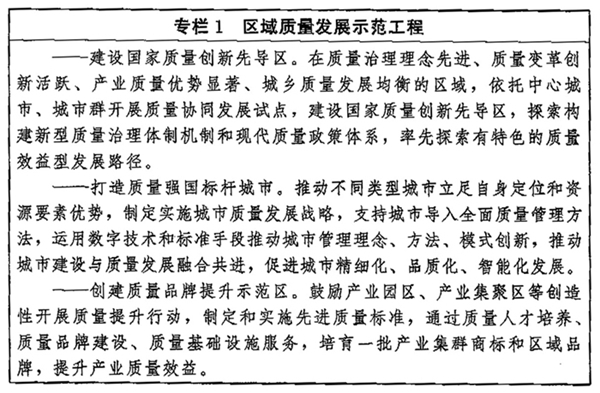
V. Accelerate the upgrading and enhancement of product quality
(10) Enhance the quality and safety of agricultural, food, and pharmaceutical products. Strictly implement the “four strictest” requirements for food safety, adopt comprehensive oversight covering all entities, all product categories, and the entire supply chain, and ensure public safety “from farm to table.” Strengthen safeguards for agricultural product quality and safety by formulating interoperable standards for quality monitoring and traceability, intensifying surveillance, and rigorously cracking down—on the basis of laws and regulations—on the illegal or non‑compliant use of prohibited and restricted substances. Tightly control cases of excessive residues of agricultural and veterinary drugs in products directly entering the market, bolster the development of high‑quality agricultural production bases, introduce a certification system for compliance with specified standards, and advance the certification and management of green foods, organic agricultural products, and Good Agricultural Practices. Deeply implement the Geographical Indication Agricultural Products Protection Program and launch pilot projects to standardize modern agriculture across the entire industrial chain. Thoroughly carry out the national food safety strategy and promote initiatives that ensure food safety and consumer confidence. Adjust and optimize the spatial layout of the food industry, and accelerate technological upgrading and transformation. Improve the food safety standards framework, encourage food producers to establish and implement Hazard Analysis and Critical Control Point (HACCP) systems, and strengthen quality and safety controls throughout production and operation processes. Expedite the establishment of a comprehensive, highly efficient regulatory system for agricultural and food safety that covers the entire process, leveraging credit‑based and smart technologies to enhance quality and safety oversight, and raise the overall quality and safety standards across the agricultural and food supply chain. Strengthen full‑life‑cycle management of medicines and vaccines; expedite the review and approval of urgently needed clinical drugs and treatments for rare diseases, as well as medical devices; enhance capabilities in drug testing and inspection and in batch release of biological products (including vaccines); refine the review mechanisms for traditional Chinese medicine; accelerate research and development of chemical APIs and traditional Chinese medicines, and upgrade their quality standards; and improve the consistency of quality and efficacy between generic drugs and originator and patented medications. Intensify construction of cold‑chain logistics infrastructure for agricultural, food, and pharmaceutical products, improve information‑based traceability systems, and achieve end‑to‑end traceability for key product categories.
(11) Optimize the variety of consumer goods on offer. Implement initiatives to enhance the quality of consumer products, accelerate the upgrading of quality standards, and raise the quality of research, development, design, and manufacturing. Shift the focus of product quality from compliance at the production stage to alignment with consumer needs, thereby expanding product variety, improving quality, and building strong brands. Speed up iterative innovation in traditional consumer goods, promote personalized customization and flexible manufacturing, and drive a transformation in product quality based on material selection, aesthetic craftsmanship, and user experience. Strengthen forward-looking R&D on product functionalities, expand the supply of high‑quality, innovative consumer goods, and introduce premium‑quality certification schemes to use innovative supply as a driver of consumer demand. Enhance the evaluation and grading of agricultural products according to nutritional quality. Increase the availability of consumer goods tailored to specific groups, such as the elderly, children, and persons with disabilities, while reinforcing safety requirements, functional suitability, and ease of use. Benchmark against international advanced standards and advance the principle of “same line, same standard, same quality” for both domestic and foreign‑trade products. Encourage the import of high‑quality consumer goods, improve the quality and unit value of exports, and achieve a balanced approach to both high‑quality imports and exports. Develop a regulatory catalog for consumer product safety and quality, and impose stringent safety and quality oversight on key consumer goods that pose significant risks to public health and safety of life and property.
(12) Promote the upgrading of industrial product quality to the mid- and high-end. Leverage industrial design as a driving force for quality improvement, vigorously develop high-quality manufacturing, and strengthen comprehensive quality control across the entire process—research and development, design, production, and after-sales service. Intensify applied basic research and cutting-edge technology development, reinforce integrated design that harmonizes functionality, performance, and reliability in complex systems, and enhance the capability and quality of major technological equipment manufacturing. Establish a testing and evaluation system for the first-of-its-kind (set) major technological equipment, bolster testing and evaluation capacity, and facilitate the industrialization of original technologies and complete sets of equipment. Improve the supervision system for major engineering equipment to ensure the quality, safety, and investment efficiency of critical installations. Accelerate the intelligent transformation of traditional equipment and vigorously advance the development of high‑quality, general‑purpose smart machinery. Implement a quality and reliability enhancement program to raise the reliability of products—including machinery, electronics, and automobiles—as well as their fundamental components and devices, thereby promoting overall quality upgrades.
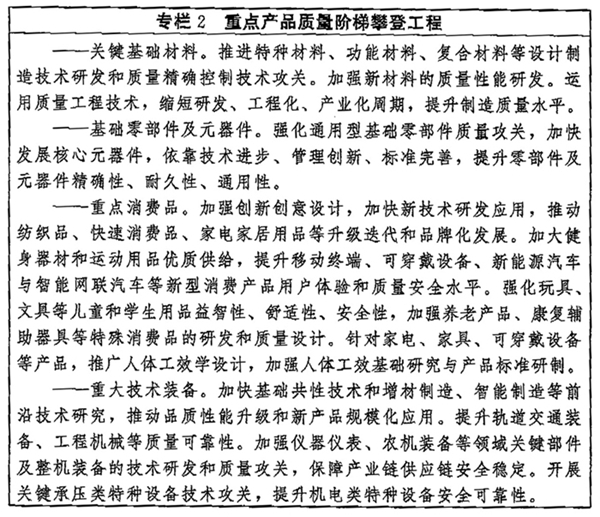
VI. Enhancing the Quality of Construction Projects
(13) Strengthen quality assurance in engineering projects. Fully implement the quality‑related responsibilities of all parties involved, reinforcing the primary responsibility of the project owner and the principal responsibilities of survey, design, construction, and supervision entities. Strictly enforce systems such as the written commitment to lifelong liability for project quality, the permanent signage system, and the quality information filing system, while strengthening mechanisms for tracing and holding accountable those responsible for quality issues. Implement the legal person responsibility system for construction projects, ensuring reasonable schedules, costs, and quality standards. Promote standardization of engineering quality management, institute a post‑responsibility system for construction operations, and rigorously manage quality throughout the entire process—covering incoming equipment and materials, construction procedures, and project acceptance. Improve the warranty system for construction projects and strengthen operation and maintenance management. Enhance end‑to‑end quality oversight across the entire construction value chain, refine the quality supervision and inspection regime that combines routine inspections with random checks and tests, bolster the quality supervision workforce, and explore the use of government procurement of services to engage external entities in supporting quality supervision and inspection. Further improve the tendering and bidding system for construction projects, incorporate enterprises’ quality performance into the evaluation criteria, and strengthen post‑tender contract compliance monitoring.
(14) Enhance the quality of construction materials. Accelerate the research, development, and application of new types of building materials that are high‑strength, highly durable, recyclable, and environmentally friendly; promote the upgrading and replacement of traditional materials such as steel, glass, and ceramics to improve their performance and quality. Vigorously develop green building materials, refine product standards and certification‑evaluation systems for green materials, and encourage their use. Encourage enterprises to establish full‑life‑cycle quality‑control systems covering the production, fabrication, and installation of prefabricated building components, and implement on‑site supervision and inspection of these components at manufacturing facilities. Implement a lifelong accountability system for manufacturers and suppliers of building materials, strictly enforce quality responsibilities on material‑using entities, and strengthen comprehensive quality management throughout the entire process for key materials that affect structural strength, safety, and durability. Strengthen quality oversight of building materials, intensify random inspections of critical products such as exterior wall insulation, cement, and electrical wires and cables, and institute measures for addressing defective materials and ensuring product traceability. Conduct targeted rectification campaigns in priority sectors—including residential and public buildings—to drive quality improvements across the entire industry chain, from production to construction.
(15) Build an upgraded version of “Made in China” construction. Uphold the principle of long-term planning and quality first, adopt a life-cycle‑oriented development philosophy, establish a modern quality management system for engineering construction, and cultivate the “Made in China” brand. Improve technical standards for engineering consulting services—including surveying, design, supervision, and cost estimation—and encourage the development of full‑process engineering consulting and specialized services. Refine the review and validation mechanisms for engineering design schemes, emphasizing regional characteristics, ethnic identity, and contemporary aesthetics, to deliver high‑quality, safe, durable, environmentally harmonious, and socially acclaimed engineering designs. Strengthen forward‑looking research and R&D investment in advanced construction technologies, accelerate the development and integrated application of digital technologies such as building information modeling, and innovatively advance the research, evaluation, and dissemination of cutting‑edge construction methods. Enhance the high‑level application of advanced quality management models and practices, setting benchmarks for quality‑focused projects. Promote state‑of‑the‑art construction equipment and intelligent construction approaches to elevate the quality and safety performance of construction works. Vigorously develop green buildings, deepen the integration of renewable energy and resource‑efficient materials into construction, and achieve low‑carbon, environmentally friendly, and energy‑saving outcomes throughout the entire lifecycle of construction projects.
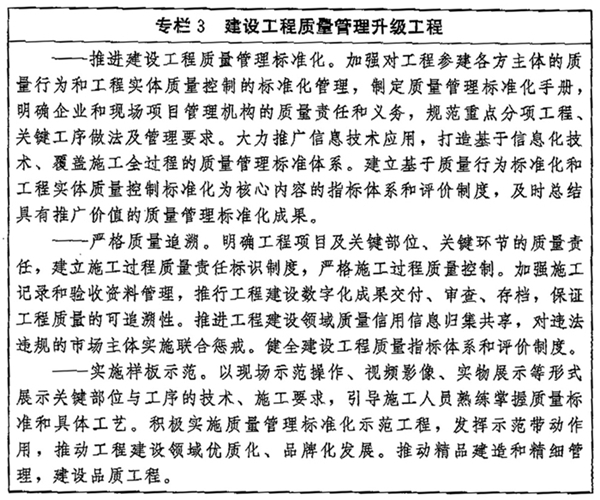
VII. Increasing the Supply of High-Quality Services
(16) Enhance the professionalization of production‑related services. Vigorously develop socialized agricultural services, offering specialized support such as agricultural technology extension, production management outsourcing, and contract farming and planting. Foster services in areas like intelligent solutions, systematic integration, and business process reengineering; elevate the quality of science‑and‑technology‑driven services—including industrial design, inspection and testing, intellectual property, and quality consulting—while promoting precise alignment and deep integration between industrial chains, innovation networks, and value chains. Coordinate and advance inclusive finance, green finance, science‑and‑technology finance, and supply‑chain finance to improve the precision and accessibility of financial services in upgrading the real economy. Actively develop multimodal transport, smart logistics, and supply‑chain logistics; enhance the quality of cold‑chain logistics; optimize international logistics corridors; and further facilitate customs clearance at ports. Regulate and promote new business forms and models, such as online sales and livestream e‑commerce. Accelerate the development of new foreign‑trade formats, including overseas warehouses. Strengthen service capabilities in modern logistics, production control, and information data management to bolster the integrated advantages of industrial chains. Reinforce after‑sales service capacity for major equipment, specialized machinery, and durable consumer goods, thereby raising the quality of installation, repair, and maintenance.
(17) Promote the upgrading of the quality of lifestyle services. Vigorously develop mass‑market catering services and enhance their quality and safety standards. Innovate and diversify domestic‑service offerings, fostering high‑quality service brands. Advance the professionalization and standardization of property management and housing‑rental services. Elevate the management and service standards of the tourism sector, regulate the tourism market order, improve the tourist consumption experience, and develop premium tourism products such as rural tourism, health‑and‑wellness tourism, and red tourism. Strengthen emergency rescue capabilities for home‑based living and outdoor travel. Greatly expand public transportation, and guide the orderly development of personalized mobility services such as ride‑hailing taxis and on‑demand bus services. Encourage airlines and airports to establish comprehensive passenger‑service quality management systems, thereby enhancing aviation service capacity and quality. Actively cultivate sports events and community fitness programs, and improve the quality of public sports‑facility services. Promote the standardized and orderly development of new business models such as online shopping and mobile payments, and encourage diversified, integrated development among retail formats including supermarkets and e‑commerce platforms. Support localities with the necessary conditions to build new‑type consumer experience centers and host a variety of experiential activities. Strengthen oversight of lifestyle‑service quality to ensure that the public enjoys a high‑quality life.
(18) Enhance the quality and efficiency of public services. In response to the needs of urban and rural residents for greater convenience and higher‑quality living, we will strengthen the development of community‑based service facilities and improve the quality of public amenities such as healthcare and cultural institutions. We will promote integrated processing, one‑stop service, online handling, and inter‑provincial access for government services, thereby increasing their accessibility. We will build a high‑quality education system, upgrading and expanding basic public education, vocational and technical education, and higher education. We will vigorously advance the digital transformation of public cultural venues such as libraries and museums, accelerating the integration of online and offline services. We will reinforce the development of grassroots platforms for public employment and entrepreneurship, strengthening public employment services including vocational skills training and labor‑market guidance. We will enhance the establishment of quality standards and evaluation systems for elderly care services, expanding the effective supply of daytime care, care for persons with disabilities, meal assistance, mobility support, and other elderly‑care services, while actively developing mutual‑aid models of elderly care. We will improve the medical quality management system, refine the urban–rural healthcare service network, and gradually broaden the coverage of family‑doctor contracted services in both urban and rural areas. We will refine mechanisms for monitoring, early warning, and response to public health emergencies, strengthen the laboratory testing network, and bolster scientific and technological support as well as quality assurance for supplies. We will continue to advance the building of core public health capacities at border ports, further enhancing our ability to prevent and control the cross‑border transmission of infectious diseases. We will also intensify the adaptation of public infrastructure to meet the needs of older adults, children, and persons with disabilities, ensuring barrier‑free access.
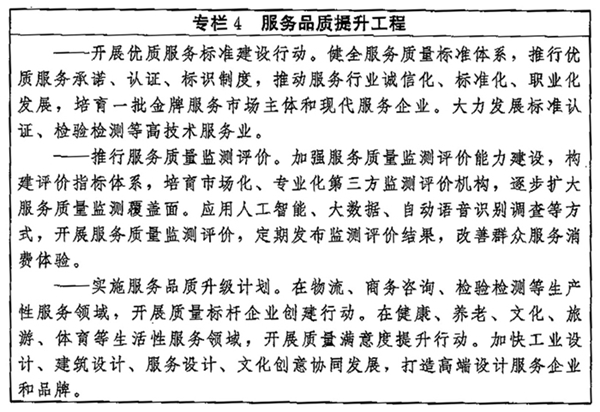
VIII. Enhancing Enterprises’ Capacity for Quality and Brand Development
(19) Accelerate the application of quality‑related technological innovation. Strengthen the role of enterprises as the main innovators, guide them to increase investment in quality‑related R&D, promote the adoption of new technologies, processes, and materials, and facilitate product variety development and quality upgrades. Encourage enterprises to enhance the development of quality‑innovation centers and advance the research, development, and application of cutting‑edge quality technologies such as quality design, testing and inspection, and reliability engineering. Support enterprises in leading the establishment of quality‑innovation consortia, implementing major quality‑improvement projects, and collaboratively addressing common quality challenges across industrial and supply chains. Encourage and assist small, medium, and micro enterprises in undertaking technological upgrades, quality improvements, and brand building, thereby enhancing their capacity for quality‑related technological innovation.
(20) Enhance the level of comprehensive quality management. Encourage enterprises to formulate and implement production‑and‑operation strategies that prioritize quality, innovate quality‑management concepts, methods, and tools, and promote the adoption of a new‑type quality‑management system covering all employees, all factors, the entire process, and all data, thereby accelerating the maturation of quality‑management capabilities. Strengthen the application of next‑generation information technologies and build enterprise quality‑assurance capacities; establish digital and intelligent quality‑control models; conduct assessments and evaluations of suppliers’ quality‑control capabilities; and make the quality‑creation process more transparent and visually traceable. Guide enterprises in undertaking digital upgrades to quality management, sharing best practices through benchmarking, obtaining quality‑management system certifications, and participating in the development of quality standards. At the same time, reinforce quality‑education and training for all employees, improve the chief quality officer system, and place great emphasis on building teams of quality managers, quality engineers, and skilled quality technicians.
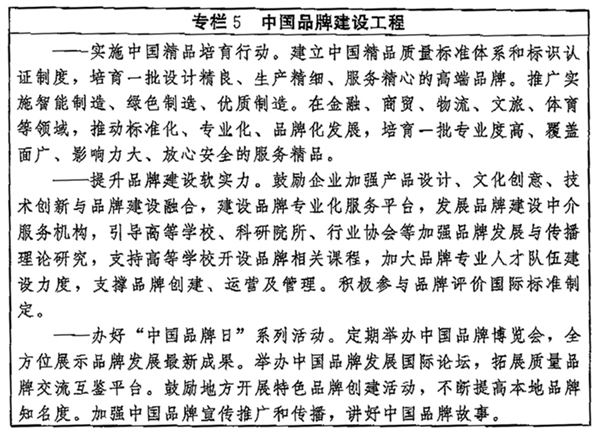
(21) Strive to build renowned domestic and international brands. Improve mechanisms for brand cultivation and development, launch initiatives to foster Chinese brands, and cultivate high‑quality Chinese products and time‑honored enterprises with centuries of history. Encourage enterprises to implement quality‑and‑brand strategies, establish brand‑cultivation management systems, and strengthen capabilities in brand design, market promotion, and brand stewardship, thereby enhancing their ability to manage and operate brands throughout their entire lifecycle. Conduct research on brand theory and value assessment, refine standards for evaluating brand value, and promote the application of such assessments and their outcomes. Coordinate the recognition of “China Timeless Brands” and local time‑honored brands, and improve the corresponding registration system. Continue to organize the series of events for “China Brand Day.” Support enterprises in strengthening brand protection and rights enforcement, and rigorously crack down, in accordance with the law, on illegal practices such as brand counterfeiting and trademark infringement, thus creating a favorable environment for the growth of high‑quality brands.
IX. Building a High-Level Quality Infrastructure
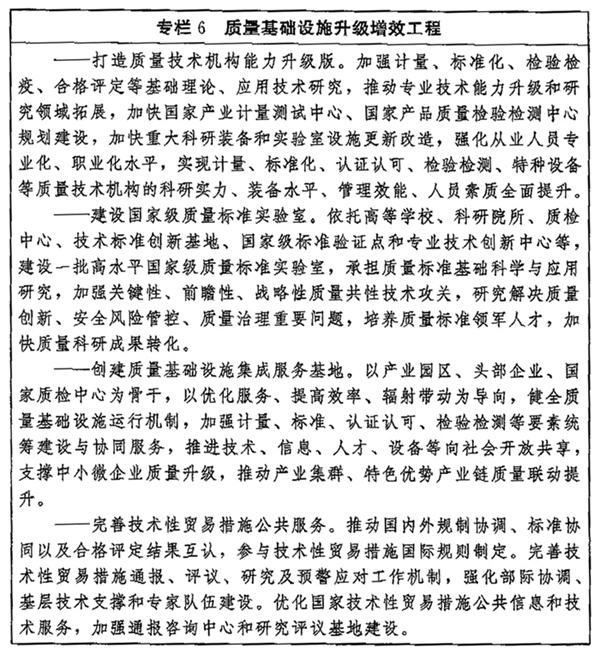
(22) Optimize the management of quality infrastructure. Establish an efficient and authoritative national quality‑infrastructure governance system, and advance tiered and categorized management of quality infrastructure. Deepen reform and innovation in metrology institutions, promote the development of a modern, advanced national measurement system, improve the legally mandated value‑transfer system and the market‑driven traceability system, and standardize and guide the development of the metrology‑services market. Further advance innovation in the operation mechanisms of standardization, optimize the dual‑structure comprising government‑issued standards and market‑driven standards, continuously enhance the quality and efficiency of standard‑setting, and foster coordinated domestic and international standardization efforts. Deepen market‑oriented reforms of inspection and testing institutions, strengthen the functional positioning and professional development of public‑service institutions, and promote intensive operations and industrialized growth of commercial entities. Reform the qualification‑approval system for inspection, testing, and certification bodies, fully implement the notification‑and‑commitment approach and streamline approval services, and refine and standardize the procedures for accrediting such institutions. Strengthen oversight of inspection, testing, and certification bodies, enforce principal‑responsibility requirements, and regulate professional conduct. Conduct monitoring and comprehensive evaluation of quality‑infrastructure operations to elevate the management standards of quality‑technical service providers.
(23) Strengthen capacity building for quality infrastructure. Rationally plan the layout of national, regional, and industry‑specific quality technical service institutions, and develop a quality infrastructure that is comprehensive, well‑structured, efficient, and practical. Implement initiatives to enhance quality‑infrastructure capabilities, achieve breakthroughs in key technologies such as quantum‑based metrology and flattened value‑transfer systems, build digital platforms for standardization, foster new standardized service tools and models, intensify research and development of inspection, testing, and calibration technologies and equipment, and accelerate the evolution of certification and accreditation technologies from a focus on individual components toward systemic, integrated approaches. Expedite the establishment of national‑level quality‑standards laboratories, and carry out the development and validation of advanced quality standards, innovative inspection and testing methods, cutting‑edge metrological instruments, and state‑of‑the‑art inspection and testing facilities. Improve mechanisms for cultivating, developing, and protecting brands in the inspection, testing, and certification sectors, and promote the emergence of well‑known, reputable brands in these fields. Increase investment in quality‑infrastructure capacity, gradually expanding funding for intangible assets such as metrological verification and calibration, standard development and implementation, and inspection, testing, and certification services, while encouraging all sectors of society to participate jointly in the construction of quality infrastructure.
(24) Enhance the effectiveness of quality infrastructure services. Launch initiatives to leverage quality infrastructure, focusing on key areas such as scientific and technological innovation, high‑quality manufacturing, rural revitalization, and ecological and environmental protection. Vigorously provide technical services in metrology, standardization, and conformity assessment; promote the open sharing of data, instruments, and equipment; and better meet market demands. Deeply implement the “Standardization Plus” initiative to foster the comprehensive and in‑depth development of standardization across all sectors. Roll out a Quality Infrastructure Expansion Partnership Program, establish collaborative service networks, and build integrated quality‑infrastructure service hubs to offer one‑stop solutions for industrial clusters and supply‑chain quality upgrades. Support the integrated convergence of metrology, standards, certification and accreditation, and inspection and testing within regions, and encourage cross‑regional integration, complementarity, and coordinated development of these elements. Develop a public service system for technical trade measures, strengthening monitoring, analysis, early warning, evaluation, and response to technical barriers to trade and sanitary and phytosanitary measures. Strengthen domestic–international alignment in quality standards, inspection and quarantine, and certification and accreditation, thereby advancing the integrated development of domestic and foreign trade.
X. Promoting the Modernization of Quality Governance
(25) Strengthen the rule of law in quality governance. Improve the legal and regulatory framework for quality, revise and refine the Product Quality Law, and advance legislation in areas such as product safety, product liability, and quality infrastructure. In accordance with laws and regulations, rigorously crack down on the production and sale of counterfeit and substandard goods, infringement of intellectual property rights, and violations of engineering quality standards; promote cross-sectoral and cross-regional cooperation in regulatory enforcement; and enhance coordination between administrative law enforcement and criminal justice. Support the initiation of public-interest litigation and class-action lawsuits related to quality, and ensure the effective implementation of punitive damages for product quality violations. Enhance mechanisms for guaranteeing product and service quality and for resolving disputes, and introduce third-party arbitration for quality-related disputes. Strengthen public education and awareness-raising on quality‑related laws and regulations, and widely disseminate knowledge of quality‑related legal provisions.
(26) Improve the quality policy framework. Refine the quality statistics indicator system and conduct quality‑related statistical analysis. Enhance diversified, multi‑tiered quality incentive mechanisms, and strengthen the national quality award system; encourage local authorities, in accordance with relevant regulations, to provide incentives to organizations and individuals that demonstrate advanced quality management and achieve outstanding results. Establish quality‑grading standards and rules, implement product and service quality classification, guide premium pricing for high‑quality offerings, and promote precision‑based regulation. Develop a sound quality‑disclosure regime that combines mandatory and voluntary requirements, and encourage enterprises to make quality commitments and publicly disclose self‑declarations of compliance with applicable standards. Improve government procurement policies and tendering procedures, refine transaction rules tailored to procurement needs, quality standards, and prevailing market practices, strengthen procurement‑needs management, and foster a demand‑driven procurement system that rewards quality and ensures value for money. Build a comprehensive financing‑and‑credit‑enhancement framework covering quality, standards, branding, patents, and other key factors; bolster financial services supporting quality improvement, technological upgrading, and equipment modernization; and increase financial support for quality‑innovation among small, medium, and micro enterprises. Integrate quality education into compulsory schooling at the primary and secondary levels; support higher education institutions in strengthening quality‑related disciplines and program offerings; improve vocational training and professional title systems for quality‑specialized technical and skilled personnel; ensure effective alignment between professional title and qualification frameworks; and focus on cultivating quality‑oriented professionals, research talent, and managerial leaders. Establish a quality‑policy evaluation system, and reinforce outcome feedback and follow‑up improvements.
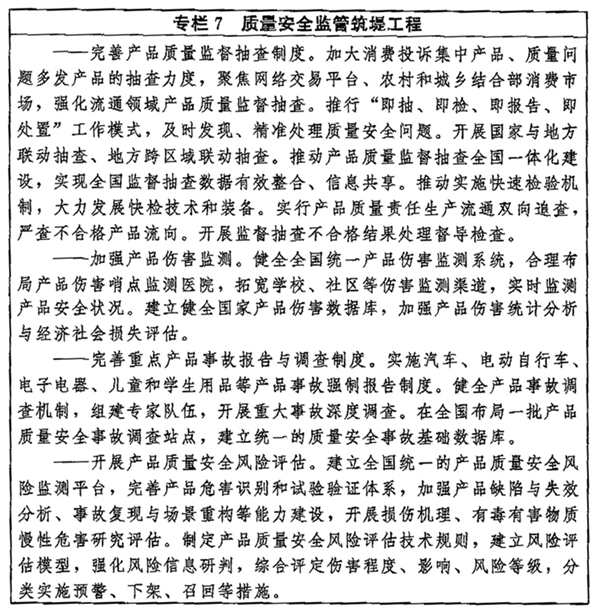
(27) Enhance the effectiveness of quality supervision. Improve the new regulatory mechanism that relies on “double-random, one-public” inspections and “Internet-plus‑regulation” as its core tools, supplemented by targeted oversight and underpinned by credit‑based regulation. Innovate approaches to quality oversight, refine market access systems, deepen reforms of industrial product production licensing and mandatory certification regimes, and adopt a differentiated approach to easing entry barriers for general industrial products and service sectors, while strengthening end-to-end supervision across all stages—before, during, and after market release. For products that affect public health and safety, as well as those involving public safety and ecological security, and for key service sectors, implement stringent regulatory measures in accordance with the law. Refine the product quality supervision and random‑inspection system, intensify quality inspections of industrial and consumer goods, promote integrated pre‑, in‑, and post‑market inspections covering both online and offline channels, explore the establishment of a nationwide coordinated inspection mechanism, achieve full coverage of enterprise‑level inspections for priority products nationwide, and reinforce follow‑up actions based on inspection findings. Establish and improve a risk‑monitoring mechanism for product quality and safety, enhance the product injury surveillance system, and conduct risk identification, assessment, and response. Put in place a mandatory reporting system for product quality and safety incidents, and carry out investigations and handling of major quality and safety accidents. Strengthen the institutional framework for product recall management, bolster technical support for recalls, and tighten oversight of defective‑product recall procedures. Develop a traceability system for key product categories, refine quality‑and‑safety traceability standards, promote data openness and sharing, and build a traceability chain that ensures verifiable origins, trackable destinations, and assignable accountability. Reinforce anti‑counterfeiting oversight and management. Introduce a “regulatory sandbox” regime for quality and safety, providing room for tolerance and correction to foster the development of new products and business models. Strengthen comprehensive governance of market order, cultivate a fair‑competition market environment, and encourage quality‑driven competition and survival of the fittest. Strictly enforce quality and safety inspection and supervision of imported and exported goods, continuously refine risk‑early‑warning and rapid‑response mechanisms for import‑export product quality and safety, and intensify efforts to crack down on counterfeit and substandard goods in key areas such as urban–rural fringe zones and rural regions. Enhance quality oversight of goods sold on online platforms, improve cross‑regional and cross‑industry coordination and linkage mechanisms, and advance integrated online‑offline regulatory frameworks.
(28) Promote social co-governance of quality. Innovate quality governance models, improve a diversified governance mechanism based on the rule of law, led by the government, and involving all sectors of society, and strengthen grassroots governance, corporate accountability, and industry self-regulation. Deeply implement quality‑enhancement initiatives, mobilizing industries, regions, and enterprises to comprehensively strengthen quality management and drive all‑round quality upgrades. Support mass organizations and frontline work teams in carrying out public‑oriented quality activities such as quality improvement, quality innovation, and skills competitions. Leverage the bridging and linking roles of industry associations, chambers of commerce, academic societies, and consumer organizations to provide technical services in standard setting, brand development, and quality management, and advance industry‑wide integrity and self‑discipline in quality. Guide consumers to adopt green, healthy, and safe consumption principles and actively participate in quality‑promotion and social‑supervision efforts. Harness the publicity and guidance functions of the media to disseminate advanced quality concepts and best practices, and expose illegal activities such as the production and sale of counterfeit and substandard goods. Encourage social forces to engage in quality‑culture building, and promote the creation of film, television, and literary works that reflect the distinctive characteristics of quality culture. Using national campaigns such as “Quality Month” as platforms, launch comprehensive nationwide quality‑awareness initiatives, uphold the entrepreneurial spirit and the craftsman spirit, and foster a favorable environment in which the government prioritizes quality, enterprises pursue quality, society values quality, and everyone takes an active interest in quality.
(29) Strengthen international cooperation on quality. Deepen bilateral and multilateral exchanges and cooperation in the field of quality, enhance dialogue and consultations with international organizations, regional bodies, and relevant countries, and carry out collaborative initiatives in quality-related education and training, cultural exchange, and talent development. In alignment with the implementation of the Regional Comprehensive Economic Partnership Agreement, establish cross‑regional platforms for the transfer of metrology technologies and for sharing standards information, and promote interconnectedness of quality infrastructure. Improve early‑warning and coordination mechanisms for trade‑related quality disputes, and actively participate in the formulation of rules and standards pertaining to technical barriers to trade. Engage in the establishment of mechanisms for addressing cross‑border consumer disputes and for cooperative law enforcement and regulatory oversight, and advance bilateral and multilateral cooperation on quality supervision, law enforcement, and consumer rights protection. Regularly host the China Quality Conference, and proactively participate in and co‑organize international quality conferences.
XI. Organizational Support
(30) Strengthen Party leadership. Uphold the Party’s overall leadership over quality-related work, ensuring that Party leadership is integrated into every field, aspect, and stage of quality‑related efforts, so as to guarantee the effective implementation of the CPC Central Committee’s decisions and arrangements. Establish a coordinated mechanism for advancing the building of a country strong in quality, improve the quality supervision and management system, strengthen inter‑departmental collaboration and vertical coordination, and promote the strategic implementation of the “Quality‑Strong Nation” initiative in a holistic and orderly manner.
(31) Ensure rigorous implementation of all tasks. Party committees and governments at all levels shall place the building of a country strong in quality high on their agenda and integrate it into national economic and social development plans, special plans, and regional plans. All localities and relevant departments shall, based on their specific circumstances, effectively align the key tasks outlined in this纲要 with national economic and social development plans and advance them in tandem, fostering synergy between policies in such areas as industry, finance, fiscal affairs, science and technology, trade, the environment, and human resources, and quality‑related policies, so as to ensure that all tasks are implemented and yield tangible results.
(32) Conduct inspection and evaluation. Strengthen central quality oversight, establishing an effective mechanism for supervision, inspection, and the implementation of corrective measures. Deepen the assessment of quality‑related work, incorporating assessment results into the performance evaluations of Party and government leadership teams and leading cadres at all levels. Units and individuals that have made outstanding contributions to the implementation of this Outline shall be commended in accordance with relevant national regulations. Establish an evaluation mechanism for the implementation of the Outline; the State Administration for Market Regulation, in coordination with relevant departments, will intensify follow-up analysis and provide guidance and oversight, promptly reporting major issues to the CPC Central Committee and the State Council.
Tags:
More information
Contact Us
Address:
No. 1, No. 1, New District Road No. 1, Gaocheng District, Shijiazhuang City, Hebei Province
WeChat/WhatsApp:
Phone:
Email:
