


-
About UsHebei Derui Chemical Co., Ltd. (hereinafter referred to as Derui Chemical) was established in January 2006 with a registered capital of RMB 51.8 million. The company specializes in the production and sale of agrochemicals, with its main products including thiamethoxam technical grade, imidacloprid technical grade, spirotetramat technical grade, and related formulated products.

-
Product CenterThe company is committed to building and continuously improving its management systems, and in 2020 it obtained certifications under GB/T 19001-2016/ISO 9001:2015, GB/T 24001-2016/ISO 14001:2015, and GB/T 45001-2020/ISO 45001:2018. Derui Chemical has consistently upheld the corporate mission of “pursuing green development and serving global agriculture,” while adhering to the core values of “integrity, innovation, pragmatism, and gratitude.” The company is eager to collaborate with its partners to contribute to the advancement of global agriculture.
-
BlogThe company places great emphasis on standardized management and sustainable development, successfully obtaining certification for its three major management systems—quality, environment, and occupational health and safety—in 2020. These certifications align with GB/T 19001-2016/ISO 9001:2015, GB/T 24001-2016/ISO 14001:2015, and GB/T 45001-2020/ISO 45001:2018. Derui Chemical remains committed to its corporate mission of promoting green development and serving global agriculture, upholding the core values of “integrity, innovation, pragmatism, and gratitude.” We look forward to partnering with stakeholders from all sectors, pooling our strengths, and advancing together to support the steady growth of global agriculture.

First Observation | The General Secretary Stresses Wetland Conservation as Essential for Harmonious Coexistence Between Humanity and Nature
Release Date:
2023-02-03
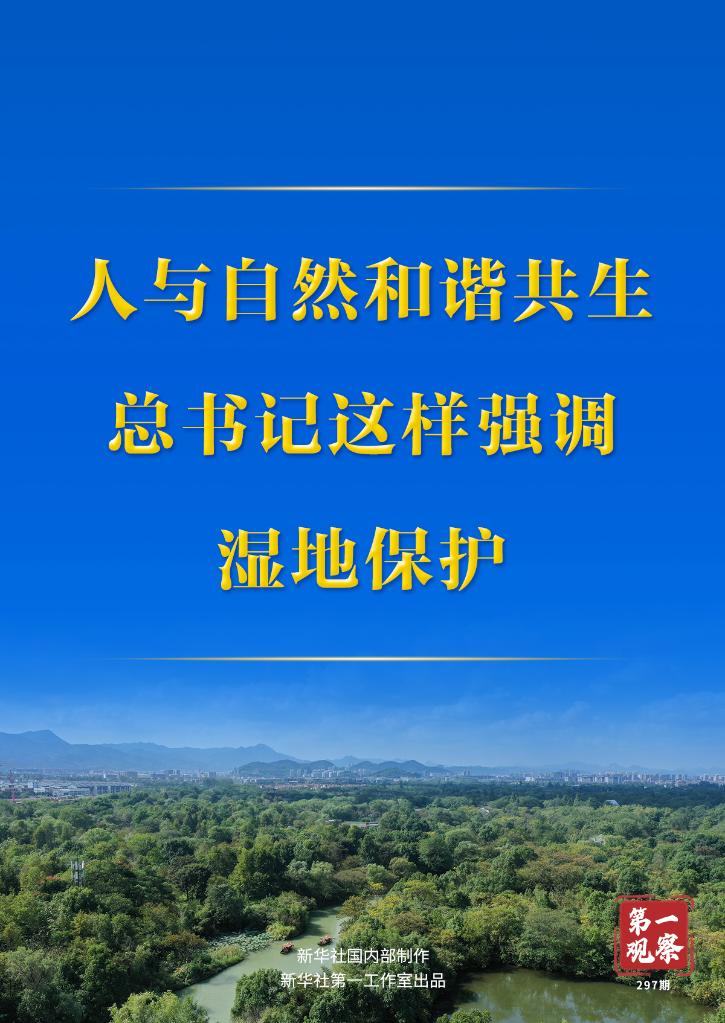
“We must unswervingly prioritize conservation and do our utmost to safeguard wetland ecosystems and aquatic environments,” General Secretary Xi Jinping emphasized, thereby charting the course for wetland protection.
February 2 is World Wetlands Day, and this year’s theme is “Wetland Restoration.” From ancient times to the present, humans have settled near water, and civilizations have flourished alongside it. However, as the conflict between conservation and utilization has intensified, more than 35 percent of the world’s natural wetlands have disappeared over the past five decades.
China’s wetland area totals 56.35 million hectares, accounting for approximately 4% of the global total. With the advent of the new era and the accelerated pace of ecological civilization development, the vital ecological functions of wetlands—such as climate regulation and biodiversity conservation—have become increasingly prominent.
Over the years, General Secretary Xi Jinping has remained deeply committed to wetland conservation, with his inspection and research visits spanning numerous key wetland ecosystems.
On January 20, 2020, while on an inspection tour in Yunnan, General Secretary Xi Jinping inquired in detail about the protection and management of Dianchi Lake and the progress in improving water quality, expressing concern about the overall efforts to strengthen ecological and environmental protection and to build a robust ecological security barrier in Southwest China. “We must demonstrate unwavering determination, adhering to the principle that mountains, rivers, forests, farmland, lakes, and grasslands constitute a community of life, and intensify comprehensive, systematic, and source‑level governance,” the General Secretary said, prescribing a scientifically sound approach to restoration based on the commitment to protecting wetlands.
This is not the first time the General Secretary has conducted an inspection of wetland ecosystems during a visit to Yunnan. In January 2015, standing by the shores of Erhai Lake, General Secretary Xi Jinping emphasized, “Economic development must proceed, but not at the expense of damaging the ecological environment,” a statement that epitomizes the dialectical unity of harmonious coexistence between humanity and nature.
Wetlands are unique ecosystems shaped by the interaction between water and land, and to harness their flood‑storage and drought‑mitigation functions, it is essential to manage the relationship between humans and water.
On August 19, 2020, while inspecting the water levels and conditions of Lake Chao in Anhui Province, the General Secretary emphasized the need to uphold the designated status and planning of ecological wetland flood‑storage areas and to prevent their encroachment and gradual erosion.
“After the floodwaters recede, we must prevent a situation in which people return to areas that were previously inundated. To achieve harmonious coexistence between humanity and nature, we cannot compete with nature for space,” the General Secretary emphasized carefully.
The relationship between humanity and nature is a communal one characterized by the unity of heaven and humanity and mutual benefit, which constitutes a key tenet of Xi Jinping’s Thought on Ecological Civilization.
As people’s aspirations for a better life continue to grow, urban wetlands have become increasingly vital recreational spaces, closely linked to public well-being. The General Secretary has issued important instructions on the protection of urban wetlands on multiple occasions.
Hangzhou Xixi Wetland is the nation’s first national wetland park. As early as 2003, Xi Jinping, then Secretary of the Zhejiang Provincial Party Committee, endorsed the launch of the Xixi Wetland Comprehensive Conservation Project.
On March 31, 2020, General Secretary Xi Jinping visited the Xixi National Wetland Park in Hangzhou and emphasized four “no’s”: tourism development must not come at the expense of the ecological environment; excessive commercial development must be avoided; construction that harms the ecosystem must be prohibited; and private clubs must have no place—ensuring that the park remains a green space shared by the people.
The ecological environment is a critical issue that bears on people’s livelihoods. Transforming cities into harmonious havens where people live in balance with one another and with nature, and integrating pristine landscapes and clean waters into urban life, reflects both a commitment to addressing environmental challenges and a profound reflection on the process of urbanization.
Wetland conservation and restoration require the concerted efforts of the global community.
On November 5, 2022, in a video address to the opening ceremony of the 14th Conference of the Parties to the Convention on Wetlands, President Xi Jinping put forward the proposition of “deepening understanding, strengthening cooperation, and jointly advancing global action for wetland conservation,” addressing the world. From a Chinese approach to global action, wetland conservation and development have once again seized a new opportunity.
With both vision and action, President Xi Jinping, in his address, further proposed a series of pragmatic measures—promoting international exchanges and cooperation, safeguarding the four migratory bird flyways that pass through China, establishing an “International Mangrove Center” in Shenzhen, and supporting the convening of the Global Coastal Forum—thereby charting a clear and feasible path for further building consensus among all stakeholders and forging concerted efforts to protect these vital ecosystems.
2023 marks the inaugural year for fully implementing the spirit of the 20th National Congress of the Communist Party of China. The report to the 20th National Congress emphasizes that “we must firmly establish and put into practice the philosophy that lucid waters and lush mountains are invaluable assets, and plan development from the perspective of harmonious coexistence between humanity and nature,” and that “we will promote the restoration and sustainable use of grasslands, forests, rivers, lakes, and wetlands.”
Continuing to strengthen the protection of wetlands’ authenticity and integrity, adding 18 new internationally important wetlands—including Beijing’s Yanyan Lake in Yanqing—and accelerating the implementation of mangrove conservation initiatives… On this new journey, guided by Xi Jinping’s Thought on Ecological Civilization, China will adopt even more resolute and robust measures for conservation and restoration, ensuring that future generations inherit a wealth of vibrant, breathtaking wetlands.
Planning: Huo Xiaoguang
Lead Authors: Han Jie, Hu Lu, Yan Fujing
Coordinated by: Liu Zheng, Wang Xuan
Visuals | Editors: Zhang Aifang, Wang Qiuyun
Produced by the Domestic Department of Xinhua News Agency
Produced by Xinhua News Agency Studio No. 1
[Editor-in-charge: Shi Ge]
Tags:
More information
Contact Us
Address:
No. 1, No. 1, New District Road No. 1, Gaocheng District, Shijiazhuang City, Hebei Province
WeChat/WhatsApp:
Phone:
Email:
