


-
About UsHebei Derui Chemical Co., Ltd. (hereinafter referred to as Derui Chemical) was established in January 2006 with a registered capital of RMB 51.8 million. The company specializes in the production and sale of agrochemicals, with its main products including thiamethoxam technical grade, imidacloprid technical grade, spirotetramat technical grade, and related formulated products.

-
Product CenterThe company is committed to building and continuously improving its management systems, and in 2020 it obtained certifications under GB/T 19001-2016/ISO 9001:2015, GB/T 24001-2016/ISO 14001:2015, and GB/T 45001-2020/ISO 45001:2018. Derui Chemical has consistently upheld the corporate mission of “pursuing green development and serving global agriculture,” while adhering to the core values of “integrity, innovation, pragmatism, and gratitude.” The company is eager to collaborate with its partners to contribute to the advancement of global agriculture.
-
BlogThe company places great emphasis on standardized management and sustainable development, successfully obtaining certification for its three major management systems—quality, environment, and occupational health and safety—in 2020. These certifications align with GB/T 19001-2016/ISO 9001:2015, GB/T 24001-2016/ISO 14001:2015, and GB/T 45001-2020/ISO 45001:2018. Derui Chemical remains committed to its corporate mission of promoting green development and serving global agriculture, upholding the core values of “integrity, innovation, pragmatism, and gratitude.” We look forward to partnering with stakeholders from all sectors, pooling our strengths, and advancing together to support the steady growth of global agriculture.

Xinhua Insight: How Can We Tailor Our Approach to the “Big Food” Vision to Local Conditions?
Release Date:
2023-01-29
Xinhua News Agency, Jinan, January 29 — Question: How can we implement the “Grand Food View” in a way that is tailored to local conditions?
Xinhua News Agency’s “Xinhua Viewpoint” reporter Shao Luwen
The Central Rural Work Conference held last month emphasized the need to adopt a holistic approach to food security, build a diversified food supply system, and explore multiple avenues for expanding food sources.
Adopting a holistic approach to food security stems from the goal of better meeting the people’s aspirations for a high-quality life, responding to shifts in dietary patterns, and, while ensuring an adequate grain supply, also guaranteeing the effective provision of diverse foods such as meat, vegetables, fruits, and aquatic products. This is both a key component and an objective requirement for advancing agricultural modernization.
How can we better understand the “grand food view,” and how can it be put into practice in ways that are tailored to local conditions? A reporter from “Xinhua Insight” conducted interviews on these questions.
Changes in the structure of food consumption: staple foods are becoming less “staple,” while side dishes are becoming less “side.”
The “Grand Food View” was put forward several years ago. At the 2015 Central Rural Work Conference, the call was made to “establish a grand agricultural and grand food mindset,” and in the 2016 No. 1 Central Document, this concept was again emphasized as a key component of advancing supply-side structural reform in agriculture. The report to the 20th National Congress of the Communist Party of China underscored the importance of fostering a grand food view, developing facility-based agriculture, and building a diversified food supply system.
Experts emphasize that, to implement the “Grand Food View,” the key lies in advancing China’s agricultural development model through “three expansions”: expanding from arable land resources to the entire national land base; broadening from traditional crops and livestock and poultry resources to a richer array of biological resources; and shifting food‑security policy from a supply‑side‑centric approach to one that places greater emphasis on demand‑side management.
According to data from the Ministry of Agriculture and Rural Affairs, China’s population of over 1.4 billion consumes 700,000 tons of grain, 98,000 tons of edible oil, 1.92 million tons of vegetables, and 230,000 tons of meat every day.
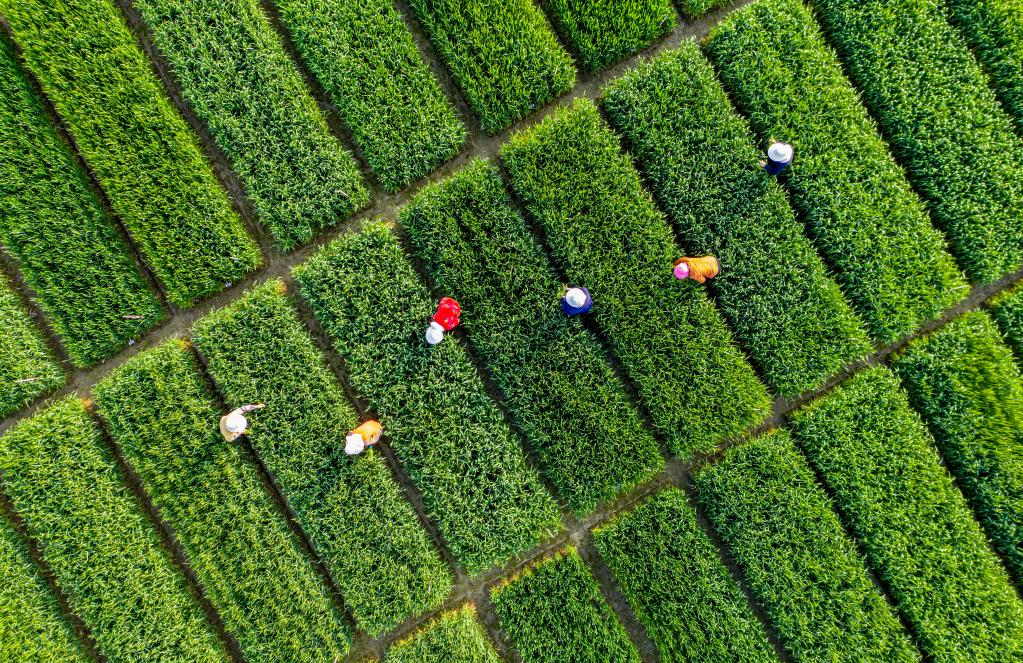
2022 On March 30, at the provincial-level modern agricultural demonstration zone’s wheat-breeding base in Baihu Town, Lujiang County, Hefei City, Anhui Province, farmers were weeding the wheat breeding fields. Photo by Zuo Xuechang, Xinhua News Agency.
“While safeguarding and managing arable land effectively, it is especially important at present to adopt a holistic approach to food security, align production and supply with market demand, and build a diversified supply system,” said Cheng Guoqiang, a professor at the College of Agricultural and Rural Development of Renmin University of China. He added that this “big food” perspective calls for not only ensuring adequate grain supplies but also securing stable access to vegetables and oil.
According to data from the National Bureau of Statistics, per capita grain consumption among urban residents declined from 152 kilograms in 1978 to 124.8 kilograms in 2021, while per capita grain consumption among rural residents fell from 248 kilograms in 1978 to 170.8 kilograms in 2021.
Yang Zhongqi, a chief expert at the Chinese Academy of Forestry, stated that for a long time, 80 percent of Chinese households’ food supply came from staple grains. However, this pattern is now undergoing a fundamental shift. Today, staples are becoming less “staple,” while non‑staple foods are growing in importance, and consumers are moving from simply “having enough to eat” to seeking “healthy eating.” Aligning with the evolving trends in people’s dietary patterns is precisely the starting point and ultimate goal of adopting a holistic approach to food security.
Professor Han Qing of the College of Economics and Management at China Agricultural University stated that shifting from the traditional concept of food security to the new-era “big food” vision—and building high-quality, efficient ecological agriculture—has become an imperative for accelerating the green transformation of agriculture. Adopting a “big food” perspective will help establish a new‑type food security assurance system.
Explore diversified food supply and draw on forests, rivers, grasslands, and other natural resources to meet our food needs.
During interviews, reporters found that many regions are aligning with their local resource and environmental conditions to implement the “Grand Food View” in a way tailored to their specific circumstances, thereby expanding avenues for food supply.
China boasts abundant large-water-body resources, and by developing ecological fisheries in these waters and cultivating fish in deep and distant seas, it can secure substantial supplies of high-quality protein. Seeking food from rivers, lakes, and oceans, several coastal provinces are actively exploring innovative approaches.
Shandong’s coastline stretches over 3,500 kilometers, accounting for roughly one-sixth of the national total, and is rich in marine resources. As a comprehensive pilot province for the development of marine ranches, Shandong has leveraged these “blue granaries” to achieve automated, intelligent, and near‑wild‑type aquaculture. At present, the province boasts 105 marine ranch demonstration zones (projects) at or above the provincial level, including 44 at the national level—representing 40 percent of the national total.
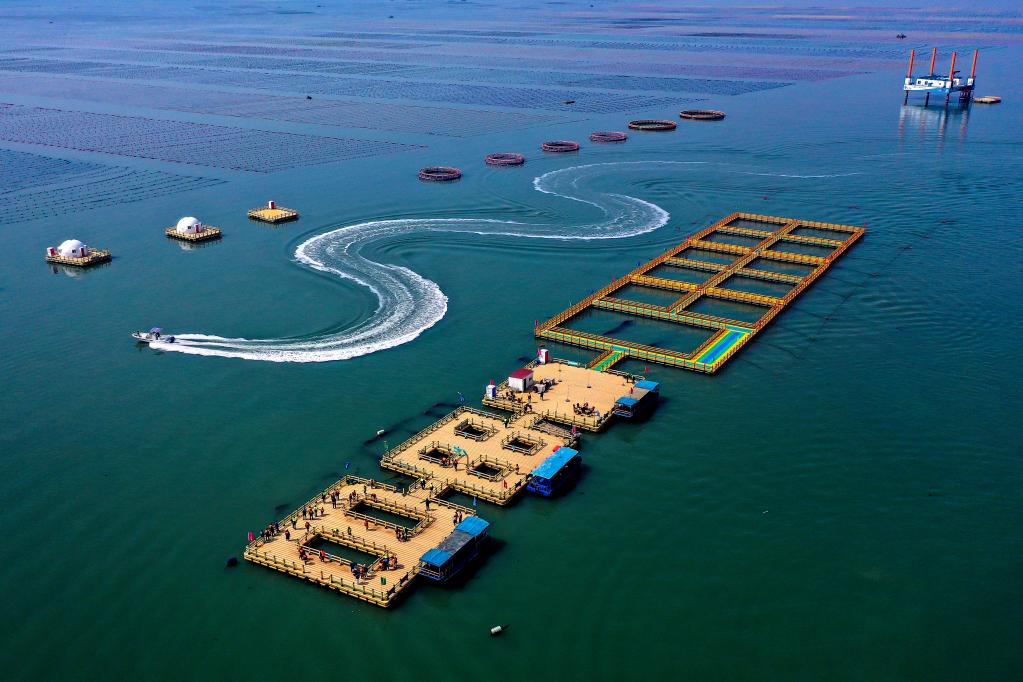
At the Ailun Bay National-level Marine Ranch in Rongcheng, Shandong, tourists take a sightseeing boat to the offshore observation platform for a visit (photo taken by drone on April 11, 2021). Photo by Li Xinjun, Xinhua News Agency.
China is the world’s largest producer and exporter of edible mushrooms. In line with the “grand food view,” some regions are turning to plants, animals, and microorganisms to meet their needs for calories and protein. Across the vast black soils of Northeast China, resources such as nuts, wild berries, and high‑quality edible mushrooms abound. Today, edible mushrooms like wood ear have grown into a major industry, with numerous local enterprises specializing in mushroom cultivation and strain development, effectively satisfying the market’s diverse demand for these products.
Located in the “golden dairy belt,” Inner Mongolia has leveraged its resource advantages to develop a distinctive livestock sector. In 2021, the region’s dairy cow herd stood at 1.434 million, with milk production reaching 6.73 million tons, and the total output value of the dairy industry’s entire value chain exceeded RMB 200 billion. In 2022, Inner Mongolia introduced nine policy measures to revitalize the dairy industry, with annual government special funds and regional fiscal allocations earmarked for dairy-sector development expected to total RMB 2.25 billion.
Facility agriculture is an agricultural production approach that leverages industrial‑scale production principles and engineering technologies to create optimal growing conditions for crops, thereby achieving high yields, superior quality, and enhanced efficiency. It also represents a key pathway for implementing the “grand food view.” According to Zhang Youjun, a researcher at the Institute of Vegetables and Flowers of the Chinese Academy of Agricultural Sciences, the development and integration of biotechnology, information technology, and agricultural facility technologies can effectively reduce agriculture’s reliance on natural resources.
In Shandong Province, which ranks first nationwide in total vegetable production, production bases—led by Shouguang, known as the “Home of Chinese Vegetables”—have been leveraging the Internet of Things and digital technologies in recent years to continuously enhance the quality and efficiency of facility agriculture. Shandong has also set forth plans to prioritize mechanization in solar greenhouses, standardization of plastic tunnels, large-scale development of multi-span greenhouses, and intelligent management of mushroom houses and cultivation rooms. By 2025, the province aims to renovate and expand mechanizable solar greenhouses to cover 500,000 mu and mechanizable plastic tunnels to reach 1 million mu. Mechanization rates are targeted at 90% for land preparation, 80% for irrigation and fertilization, and 60% for environmental control, with an overall mechanization level in facility-based cropping reaching 55%.
Promote a shift in agricultural products from “quantity” to “quality,” and optimize and upgrade residents’ dietary patterns.
A review by reporters reveals that, to shift food supply from a single‑source model to diversified provision, many regions are actively refining relevant policies. The Heilongjiang Province Industrial Revitalization Action Plan (2022–2026) calls for advancing the deep processing of agricultural and sideline products and establishing the province as a pioneering region in implementing the “big food” concept. Meanwhile, Fujian Province’s Implementation Plan for Promoting Agricultural and Rural Modernization during the 14th Five-Year Plan period advocates adopting the “big food” perspective, leveraging the diversity of agricultural resources and favorable climatic conditions to vigorously cultivate distinctive, competitive industries.
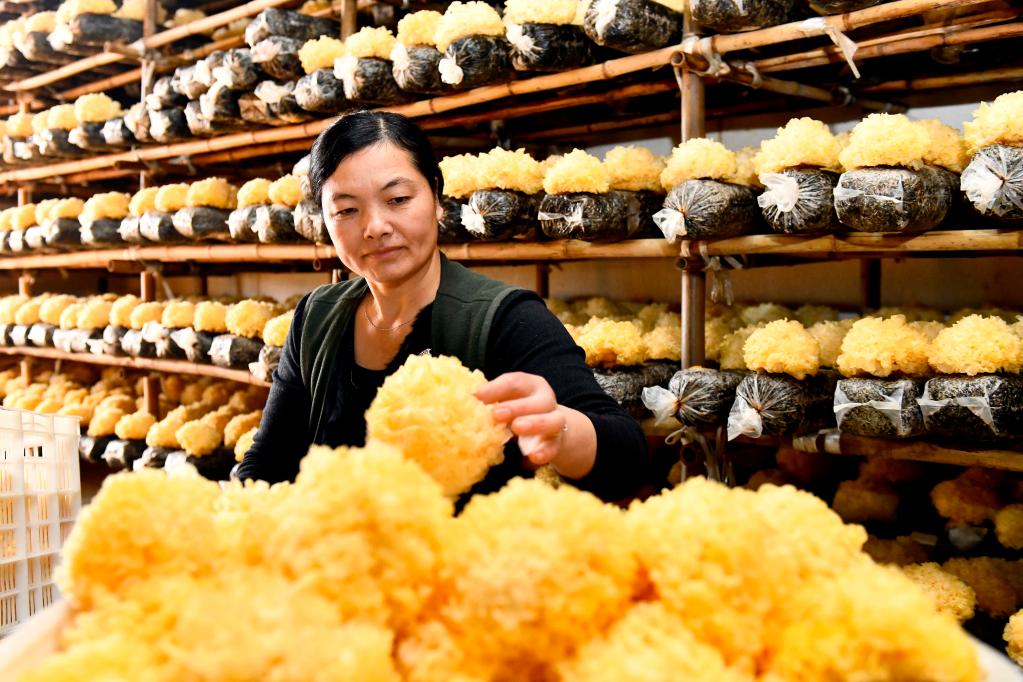
At the Yinfeng Edible Mushroom Cooperative in Huimin County, Shandong Province, farmers harvest white fungus (photo taken on November 18, 2021). Photo by Xinhua News Agency reporter Guo Xulei.
The experts interviewed believe that, to better implement the “grand food view,” it will be necessary in the future to continuously raise the level of agricultural modernization. This will require strengthening planning guidance, policy support, and financial investment to channel resources, technologies, and talent more effectively into facility agriculture, thereby enhancing its overall production capacity.
Professor Luo Mingzhong of the Institute for Rural Revitalization at South China Agricultural University stated that, in implementing the “Grand Food View,” it is essential to cultivate high‑quality farmers and develop a cohort of new agricultural business and service entities—such as economically robust family farms, farmer cooperatives, and leading agricultural industrialization enterprises—to drive a shift in agricultural products from quantity‑oriented to quality‑oriented.
The widespread adoption of the “Grand Food View” concept also requires fostering a new mindset about food consumption across society, thereby driving the optimization and upgrading of residents’ dietary patterns. In particular, it calls for the comprehensive dissemination of knowledge on nutrition and health, encouraging reduced‑quantity, nutritious, healthy, and environmentally friendly consumption while opposing food waste. “By popularizing nutritional knowledge and providing education, we can help the general public develop a new approach to food consumption that is rational, balanced, and moderate,” said Han Lei, a director of the Shandong Provincial Nutrition Society and head of the Department of Nutrition at the Affiliated Hospital of Qingdao University.
Tags:
More information
Contact Us
Address:
No. 1, No. 1, New District Road No. 1, Gaocheng District, Shijiazhuang City, Hebei Province
WeChat/WhatsApp:
Phone:
Email:
