


-
About UsHebei Derui Chemical Co., Ltd. (hereinafter referred to as Derui Chemical) was established in January 2006 with a registered capital of RMB 51.8 million. The company specializes in the production and sale of agrochemicals, with its main products including thiamethoxam technical grade, imidacloprid technical grade, spirotetramat technical grade, and related formulated products.

-
Product CenterThe company is committed to building and continuously improving its management systems, and in 2020 it obtained certifications under GB/T 19001-2016/ISO 9001:2015, GB/T 24001-2016/ISO 14001:2015, and GB/T 45001-2020/ISO 45001:2018. Derui Chemical has consistently upheld the corporate mission of “pursuing green development and serving global agriculture,” while adhering to the core values of “integrity, innovation, pragmatism, and gratitude.” The company is eager to collaborate with its partners to contribute to the advancement of global agriculture.
-
BlogThe company places great emphasis on standardized management and sustainable development, successfully obtaining certification for its three major management systems—quality, environment, and occupational health and safety—in 2020. These certifications align with GB/T 19001-2016/ISO 9001:2015, GB/T 24001-2016/ISO 14001:2015, and GB/T 45001-2020/ISO 45001:2018. Derui Chemical remains committed to its corporate mission of promoting green development and serving global agriculture, upholding the core values of “integrity, innovation, pragmatism, and gratitude.” We look forward to partnering with stakeholders from all sectors, pooling our strengths, and advancing together to support the steady growth of global agriculture.

Which sectors are receiving loan allocations? How are financial measures being leveraged? — Examining shifts in capital flows through 2022 financial data.
Release Date:
2023-01-21
RMB 21.31 trillion! Recently, the financial sector released its 2022 report card on supporting economic stability, with new RMB loans exceeding RMB 21 trillion for the year—underscoring the robust backing that finance is providing to the real economy. Which sectors received the bulk of last year’s new credit? And how will the financial system step up its efforts this year?
At the start of 2023, Zhejiang Jinggu Co., Ltd.’s production workshops are brimming with a fresh atmosphere, as its newly acquired production lines are churning out low‑carbon wheels that meet the latest industry standards. “In October last year, we secured a RMB 75 million loan from China CITIC Bank, and the new equipment we purchased was quickly put into operation,” said Shi Qingyun, the company’s chief financial officer. He added that the enterprise bears an effective interest rate of just 0.7% on the loan, which carries a two-year term, significantly reducing costs and providing strong support for upgrading equipment and enhancing product competitiveness.
The smooth disbursement of this loan was made possible by the special re-lending policy for equipment upgrading and renovation. Under this policy, after financial institutions extend loans to enterprises, the People’s Bank of China provides re‑lending support, while the fiscal authorities offer interest subsidies.
Since last year, the People’s Bank of China has introduced a series of structural monetary policy tools, focusing on key areas and weak links in the national economy—such as inclusive finance, green development, and technological innovation—to guide financial institutions in appropriately allocating credit. By the end of 2022, the outstanding balance of these structural monetary policy tools stood at approximately RMB 6.4 trillion, helping to maintain steady growth in the overall volume of money and credit and playing a positive role in stabilizing the macroeconomic fundamentals.

The photo shows, on August 1, 2022, Agricultural Bank of China staff visiting a grain and oil wholesale market in Shimahe Subdistrict, Jiangbei District, Chongqing, to assess the financing needs of local merchants. Photo by Xinhua News Agency reporter Huang Wei.
Recently, People’s Bank of China Vice Governor Xuan Changneng stated that in 2022, China’s outstanding RMB loans increased by 21.31 trillion yuan, with greater stability in the overall growth of credit, thereby providing an appropriate liquidity environment to stabilize the macroeconomic landscape. Meanwhile, guided by a range of structural monetary policy tools—including science-and‑technology innovation reloans and policy-based development finance instruments—the credit structure has continued to improve, delivering targeted support to vulnerable groups and key sectors.
Data show that, as of the end of 2022, the outstanding balance of medium- and long-term loans to the manufacturing sector increased by 36.7% year on year, 25.6 percentage points higher than the overall loan growth rate; the outstanding balance of medium- and long-term loans to the infrastructure sector rose by 13% year on year, 1.9 percentage points above the overall loan growth rate; the outstanding balance of loans to technology‑focused small and medium‑sized enterprises grew by 24.3% year on year, 13.2 percentage points faster than the overall loan growth rate; and the outstanding balance of loans to “specialized, refined, distinctive, and innovative” enterprises expanded by 24% year on year, 12.9 percentage points above the overall loan growth rate.
Wen Bin, Chief Economist at China Minsheng Bank, believes that in 2022, new loans increased by an additional RMB 1.36 trillion year on year, further strengthening support for the real economy. Amid multiple pressures, a comprehensive package of policies to stabilize growth has been continuously strengthened, guiding financial institutions to maintain robust lending and boosting the vitality of market entities while bolstering market confidence.
Walking into the production workshop of Fujian Jincheng High-Tech Industrial Co., Ltd., one can hear the roar of massive machinery and see production equipment running at full speed. “With preferential funding from the Industrial and Commercial Bank of China, we undertook a technological upgrade. Our optimized production lines are operating at full capacity to ensure timely order fulfillment,” said Zheng Zhibiao, deputy general manager of Jincheng High-Tech. He added that during a critical period last October, when the company was facing severe cash-flow constraints, the Fujian Branch of ICBC extended a 30-million-yuan “Relief Loan,” helping the enterprise to move forward with greater agility.
In recent years, amid recurring COVID-19 outbreaks and an unstable international environment, China’s economy has faced significant downward pressure, further complicating operations for private small and micro enterprises. To continuously improve the financing environment for these businesses, the financial sector has intensified its support through innovative structural monetary policy tools, refined credit‑support policies, and expanded diversified financing channels, thereby bolstering their access to bank loans and bond financing.
Data show that, as of the end of 2022, the outstanding balance of inclusive small and micro loans in China increased by 23.8% year on year, 12.7 percentage points higher than the growth rate of total outstanding loans; the number of credit‑eligible small and micro enterprises stood at 56.52 million, up 26.8% year on year.
“The effective loan demand and repayment capacity of inclusive small and micro enterprises have both been affected by the pandemic, and financial support has provided crucial backing and safeguards for them,” said Ma Jianyang, head of the Financial Markets Department of the People’s Bank of China. He added that, going forward, the People’s Bank will guide financial institutions to further strengthen credit support for private small and micro enterprises, expand the scale of bond financing for private firms, and continue to enhance the quality of financial services for this sector.
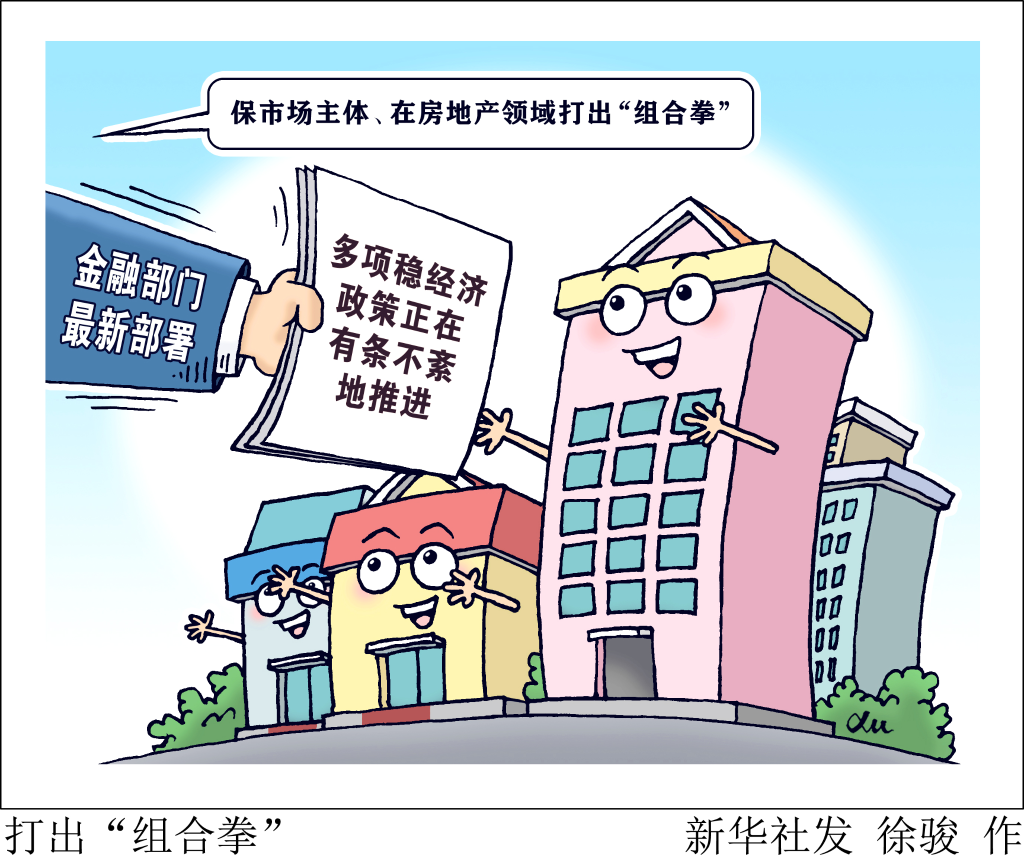
The real estate sector is closely linked to numerous upstream and downstream industries, making it of great significance to the healthy development of the economy. To ensure stable and orderly financing for the real estate market, in 2022 financial regulators introduced measures such as the “Sixteen Financial Measures,” which integrated a range of tools—including credit, guarantees, and bonds—focusing on ensuring timely delivery of pre-sold homes and improving the balance sheets of high-quality, leading property developers, thereby promoting the steady and sound development of the real estate industry.
Thanks to concerted policy measures on both the supply and demand sides, the financing environment for the real estate sector has improved recently. Data show that from September to November 2022, cumulative new real estate development loans exceeded RMB 170 billion, an increase of more than RMB 200 billion year on year. In the fourth quarter of 2022, domestic real estate firms issued bonds totaling over RMB 120 billion, up 22% from the same period last year.
At present, the foundation for China’s economic recovery remains fragile, and the triple pressures of shrinking demand, supply shocks, and weakening expectations remain substantial. “As COVID‑19 control measures are optimized and economic circulation resumes, business confidence will gradually rebound, and economic vitality will be progressively unleashed,” said Xuan Changneng. He added that the People’s Bank of China will continue to work to reduce overall financing costs for enterprises and personal consumption expenses, guide financial institutions to increase support for private small and micro‑enterprises in manufacturing and the service sector, encourage large‑ticket spending on housing, automobiles, and other durable goods, strengthen comprehensive financial support for service‑related consumption in key areas such as education, culture, and sports, and ensure stable and orderly real estate financing.
Source: Xinhua News Agency Reporters Wu Yu and Li Lunheng
Tags:
More information
Contact Us
Address:
No. 1, No. 1, New District Road No. 1, Gaocheng District, Shijiazhuang City, Hebei Province
WeChat/WhatsApp:
Phone:
Email:
