


-
About UsHebei Derui Chemical Co., Ltd. (hereinafter referred to as Derui Chemical) was established in January 2006 with a registered capital of RMB 51.8 million. The company specializes in the production and sale of agrochemicals, with its main products including thiamethoxam technical grade, imidacloprid technical grade, spirotetramat technical grade, and related formulated products.

-
Product CenterThe company is committed to building and continuously improving its management systems, and in 2020 it obtained certifications under GB/T 19001-2016/ISO 9001:2015, GB/T 24001-2016/ISO 14001:2015, and GB/T 45001-2020/ISO 45001:2018. Derui Chemical has consistently upheld the corporate mission of “pursuing green development and serving global agriculture,” while adhering to the core values of “integrity, innovation, pragmatism, and gratitude.” The company is eager to collaborate with its partners to contribute to the advancement of global agriculture.
-
BlogThe company places great emphasis on standardized management and sustainable development, successfully obtaining certification for its three major management systems—quality, environment, and occupational health and safety—in 2020. These certifications align with GB/T 19001-2016/ISO 9001:2015, GB/T 24001-2016/ISO 14001:2015, and GB/T 45001-2020/ISO 45001:2018. Derui Chemical remains committed to its corporate mission of promoting green development and serving global agriculture, upholding the core values of “integrity, innovation, pragmatism, and gratitude.” We look forward to partnering with stakeholders from all sectors, pooling our strengths, and advancing together to support the steady growth of global agriculture.

Central state-owned enterprises are intensively rolling out specialized integrations, with more sectors likely to see new moves.
Release Date:
2023-01-16
|
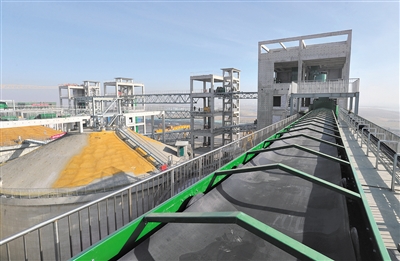
Workers are on site at the construction project of the Haigang Grain Reserve Base, operated by Qinhuangdao Direct‑Affiliated Grain Depot Co., Ltd. Photo by reporter Yang Shiyao.
This is the Upper Marsyangdi A Hydropower Dam, located in Lamjung District, Nepal, which was invested in and constructed by PowerChina Overseas Investment Co., Ltd. Photo by Hari Maharjan/Xinhua.
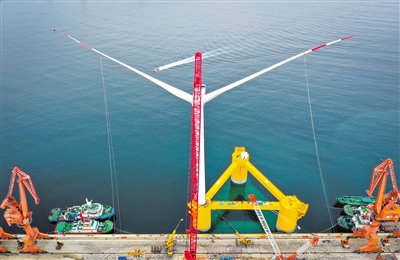
China’s first deep-sea floating wind power unit, the “Fuyao,” independently developed under the leadership of China Shipbuilding Group’s CSSC Haizhuang Wind Power Co., Ltd. and in collaboration with relevant institutions, is quietly awaiting towing at Guanggang Terminal in Maoming, Guangdong (drone photo). Photo by reporter Liu Dawei. |
|
On January 14, China Three Gorges Corporation and China Communications Construction Company signed an agreement on a specialized integration project for hydropower and water‑conservation construction resources. Over the past week, state-owned enterprises have staged a series of high‑profile specialized integrations, with the energy and healthcare sectors taking the lead. In line with the arrangements set forth at the meeting of heads of central enterprises, in 2023 state-owned capital and central SOEs will further advance the optimization of state‑owned capital allocation and structural adjustment, while intensifying efforts to promote specialized consolidation. Industry insiders note that sectors such as equipment manufacturing, inspection and testing, pharmaceuticals and healthcare, coal and power, clean energy, mineral resources, and engineering contracting will be key areas for deepening and expanding specialized integration. The layout of the energy sector is accelerating its optimization. “The specialized consolidation initiatives advanced recently exhibit very distinct industry-specific characteristics, with a strategic focus on emerging industries and key sectors vital to national development and people’s livelihoods,” said Zhou Lisha, Research Director at the Institute for Modern State-Owned Enterprises of Tsinghua University, in an interview with a reporter from the Economic Information Daily. She added that the energy sector is the most representative example. Taking the specialized integration of biomass projects as an example, on January 10, State Grid Corporation of China and State Power Investment Corporation held a handover ceremony for the management rights of their biomass power generation projects, marking the official transfer of Guoneng Bio from State Grid to SPIC. Biomass power generation is an important renewable energy source. Guoneng Biomass has an installed capacity of 1.136 million kilowatts, total assets of RMB 15.86 billion, and annually utilizes 10 million tons of agricultural and forestry residues, benefiting more than one million people across the industry’s upstream and downstream sectors. Weng Jieming, Deputy Director of the State-owned Assets Supervision and Administration Commission, stated that this integration will help central enterprises across all segments of the power transmission and generation industries to further focus on their core responsibilities and main businesses, thereby better supporting the national energy strategy; it will also promote the transformation and upgrading of the biomass power generation sector, contributing to local socio-economic development; and it will facilitate deeper reform and innovation, accelerating the building of world-class enterprises. Moreover, on January 6, China Huaneng signed a series of centralized agreements with 13 central enterprises, including CNOOC, China National Building Material Group, and China Shipbuilding Industry Corporation, covering 22 photovoltaic and wind power projects. This marks one of the most extensive and project‑rich specialized integrations in the new‑energy sector among central enterprises in recent years. The parties to the agreements will collaborate on smart operations and maintenance services through various means, such as resource sharing, business synergy, online services, and management improvements. Recently, the specialized integration between China National Coal Group and State Power Investment Corporation in the coal‑power sector has also drawn significant attention. This integration involves a combined installed power capacity exceeding 10 million kilowatts, making it one of the largest asset‑related collaborations in China’s coal‑power industry in recent years. Industry insiders note that in recent years, central state-owned enterprises have accelerated their deployment in the new‑energy sector, with rapid expansion of business scale and a marked improvement in their capacity to ensure energy supply. However, some projects still face challenges such as being small‑scale, fragmented, and weak. “The optimization of the structural layout of central state-owned enterprises in the energy sector is expected to accelerate,” Zhou Lisha believes. She argues that the professional integration of coal‑power operations will help implement and solidify the “dual‑linked” model—linking coal with coal‑power and coal‑power with renewable energy—and promote high‑quality development of the coal‑power industry. Meanwhile, as new‑energy businesses gradually concentrate in core new‑energy firms and leading companies, this approach will effectively prevent a rush to enter the sector and curb excessive competition. Integrated initiatives across multiple sectors, including healthcare. As integration in the energy sector accelerates, significant progress has also been made in areas such as healthcare, food security, and rare earths. A reporter from the Economic Information Daily learned that China Power Construction Corporation and General Technology Group have formally signed both a Memorandum of Cooperation on Healthcare Institution Reform and a Framework Agreement on Strategic Cooperation. “This time, China Power Construction Corporation has brought 30 medical institutions under the scope of state‑owned enterprise healthcare reform. To date, reforms have been completed at most of these facilities, and the institutions signed today represent the final batch of projects,” revealed Ding Yanzhang, Chairman of China Power Construction Corporation. He added that, going forward, China Power Construction will work with General Technology Group to accelerate the implementation of specific operational steps at Guozhong Kangjian and the Eleventh Bureau of China Hydropower. At present, the two subsidiaries have agreed to establish a joint task force to deepen reform, promptly finalize audit and valuation results, sign agreements for capital increase and share expansion, and ensure that all industrial and commercial registration changes are completed in the first quarter. Reforming medical institutions affiliated with state-owned enterprises is a key component of shedding the social functions traditionally borne by enterprises, and an important avenue for advancing specialized integration and optimizing the allocation of healthcare resources. “Upon completion of this reform, General Technology Group will operate 343 medical institutions, managing approximately 48,000 hospital beds, and its nationwide network will be further strengthened,” said Yu Xubo, Chairman of General Technology Group. Weng Jieming called on the two groups to remain committed to a public‑service orientation, focus on the core areas of medical services, implement lean management, and strengthen and enhance state‑owned medical and health‑care enterprises. He also urged them to deepen integration and synergy, ensure the effective implementation of projects, and make greater contributions to building a Healthy China. Beyond the healthcare sector, in the food industry, China National Cereals, Oils and Foodstuffs Corporation (COFCO) Group and Sinograin Group have established China Enterprise United Oils Co., Ltd., a company controlled by COFCO, which officially commenced operations in January 2023. Meanwhile, the handover ceremony for China South-to-North Water Diversion Group Co., Ltd. was held on January 11, marking the formal transfer of the company under the supervision of the State-owned Assets Supervision and Administration Commission of the State Council. China Rare Earth recently announced that it has signed a “Conditional Share Acquisition Agreement” with China Minmetals Rare Earth Group, under which the company plans to use part of the proceeds from a non‑public issuance of shares to acquire a 94.67% stake in Jianghua Rare Earth held by China Minmetals Rare Earth Group. Continuously advance through market-oriented approaches. At the recently held meeting of heads of central enterprises, it was emphasized that in 2023, state-owned assets and central SOEs should focus on accelerating the upgrading and development of the industrial system, while deepening efforts to optimize the allocation of state capital and adjust its structure. A “Joint Chain‑Building Initiative” will be launched to promote integrated development across industrial chains, with a series of matchmaking events organized to foster coordinated growth among upstream, midstream, and downstream enterprises, thereby effectively enhancing the resilience and security of industrial and supply chains. Guidelines for adjusting the layout and structure of key sectors such as energy conservation and environmental protection, and construction, will also be formulated. Furthermore, market‑based approaches will be employed to intensify specialized consolidation. Mou Siyu, an economist at the Research Center of the State-owned Assets Supervision and Administration Commission of the State Council, stated that this year, state-owned enterprises under central government oversight will intensify their deployment in strategic emerging industries and accelerate the green transformation of their development model. Focusing on functions such as strategic security, industrial leadership, national economic and people’s livelihood needs, and public services, they will advance strategic restructuring and specialized integration through market-oriented approaches. In Zhou Lisha’s view, specialized integration encompasses both the consolidation of internal resources and the acquisition of external ones, with the primary objective of enhancing operational efficiency, achieving economies of scale, and ultimately bolstering the overall competitiveness of the entire value chain. “Specialized consolidation in 2023 will accelerate significantly, with more sectors and enterprises moving forward with its implementation,” says Liu Xingguo, a researcher at the China Enterprise Confederation. He believes that certain industries facing urgent needs to strengthen, improve, and expand are likely to become priority areas for the specialized consolidation of central state-owned enterprises, including network and software services, new materials, new energy and energy storage, environmental protection, resource exploration and extraction, inspection and testing, medical services and pharmaceuticals, as well as engineering contracting. From a corporate‑level perspective, this year’s specialized integrations are focused on leveraging platform‑based functions to foster coordinated synergy between industrial groups and investment‑operating companies. Zhou Lisha noted, “Many of the platforms driving these specialized integrations are those of state‑owned capital investment firms, such as COFCO Group, General Technology Group, State Power Investment Corporation, China National Building Material Group, and China Baowu Steel Group.” According to a reporter from the Economic Information Daily, in addition to specialized consolidation among central state-owned enterprises, this year will also see strategic restructuring focused on key local industries, accelerating the development of a pattern in which central and local SOEs are closely linked, collaborate smoothly, share resources, and complement each other’s strengths. Zhou Lisha suggests that, following specialized consolidation, the focus should shift from “integration” to “synergy,” thereby enhancing enterprises’ resource allocation efficiency and core competitiveness. At the same time, efforts should be concentrated on optimizing resource allocation across a broader scope, fostering the seamless integration of central enterprises with external resources. (Reporter: Wang Lu) [Editor-in-charge: Wang Jianing]
Source: Economic Information Daily
|

Tags:
More information
Contact Us
Address:
No. 1, No. 1, New District Road No. 1, Gaocheng District, Shijiazhuang City, Hebei Province
WeChat/WhatsApp:
Phone:
Email:
