


-
About UsHebei Derui Chemical Co., Ltd. (hereinafter referred to as Derui Chemical) was established in January 2006 with a registered capital of RMB 51.8 million. The company specializes in the production and sale of agrochemicals, with its main products including thiamethoxam technical grade, imidacloprid technical grade, spirotetramat technical grade, and related formulated products.

-
Product CenterThe company is committed to building and continuously improving its management systems, and in 2020 it obtained certifications under GB/T 19001-2016/ISO 9001:2015, GB/T 24001-2016/ISO 14001:2015, and GB/T 45001-2020/ISO 45001:2018. Derui Chemical has consistently upheld the corporate mission of “pursuing green development and serving global agriculture,” while adhering to the core values of “integrity, innovation, pragmatism, and gratitude.” The company is eager to collaborate with its partners to contribute to the advancement of global agriculture.
-
BlogThe company places great emphasis on standardized management and sustainable development, successfully obtaining certification for its three major management systems—quality, environment, and occupational health and safety—in 2020. These certifications align with GB/T 19001-2016/ISO 9001:2015, GB/T 24001-2016/ISO 14001:2015, and GB/T 45001-2020/ISO 45001:2018. Derui Chemical remains committed to its corporate mission of promoting green development and serving global agriculture, upholding the core values of “integrity, innovation, pragmatism, and gratitude.” We look forward to partnering with stakeholders from all sectors, pooling our strengths, and advancing together to support the steady growth of global agriculture.

Striving Forward with Vigor Toward the Future: The Spirit of the 20th National Congress at the Grassroots Level
Release Date:
2022-11-14
 |
|
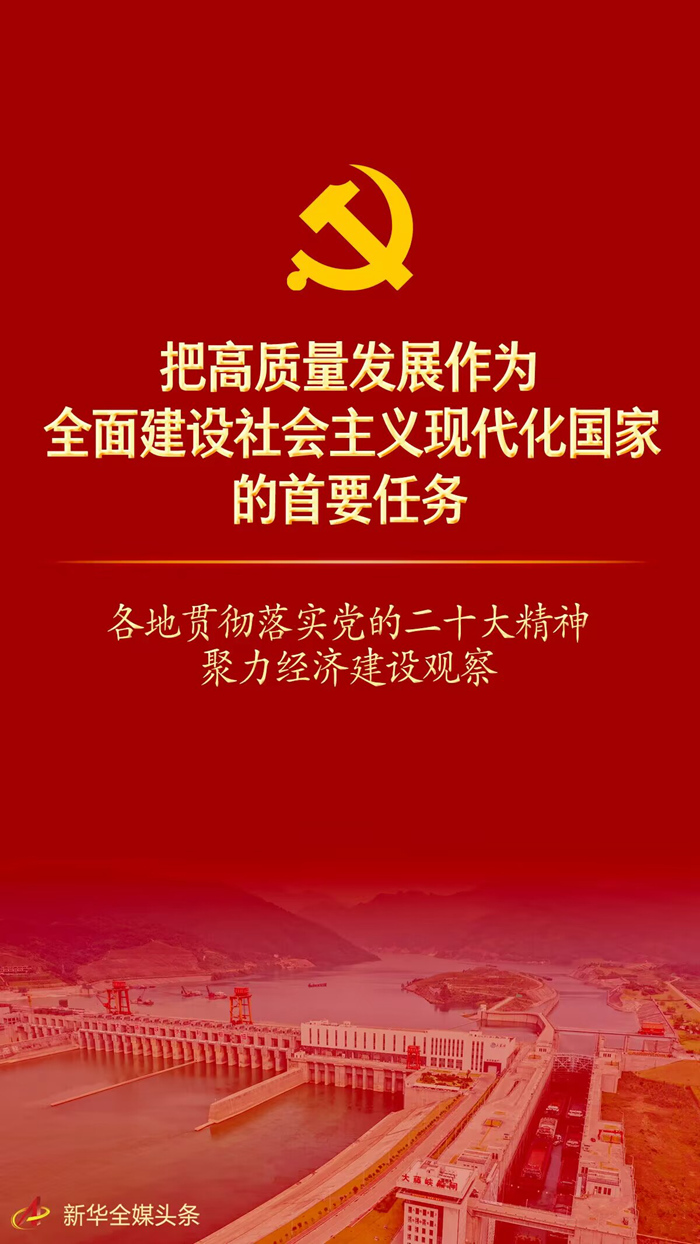
BEIJING, Nov. 13 (Xinhua) — Headline: Making High-Quality Development the Primary Task in Fully Building a Modern Socialist Country — Observations on Local Efforts to Implement the Spirit of the 20th National Congress of the Communist Party of China and Focus on Economic Development |
|
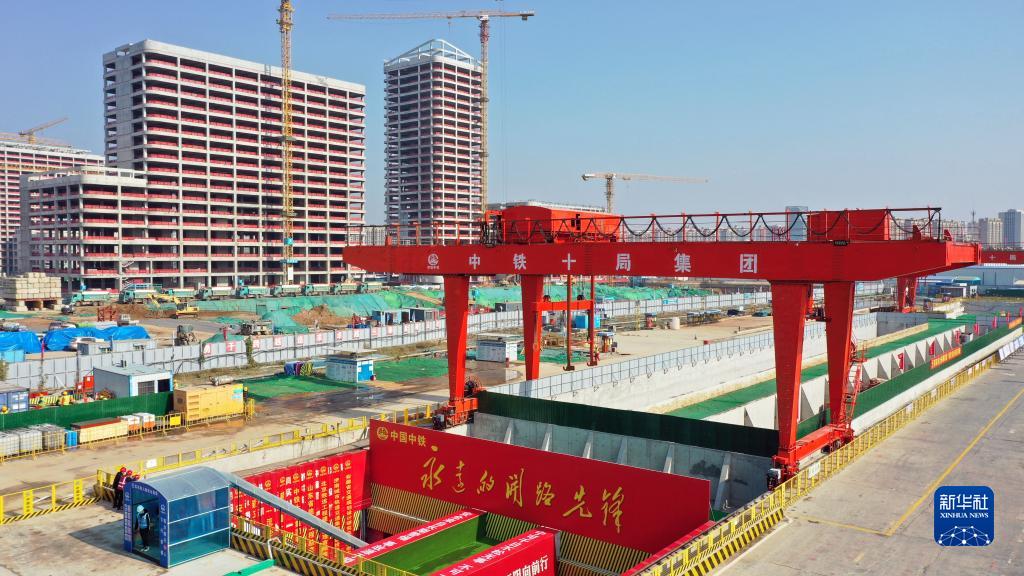
General Secretary Xi Jinping pointed out in the report to the 20th National Congress of the Communist Party of China that high-quality development is the primary task in fully building a modern socialist country. In recent days, Xinhua News Agency reporters on the ground have observed that across the country, localities are earnestly and pragmatically implementing the spirit of the 20th National Congress of the Communist Party of China, fully, accurately, and comprehensively applying the new development philosophy, and accelerating the establishment of a new development pattern. As a result, the pace of high-quality development has grown even more resolute, laying a solid material and technological foundation for building a modern socialist country in all respects. Uphold the theme of promoting high-quality development and consolidate the momentum of economic stabilization and recovery. On November 5, the western section of Jinan Metro Line 6 officially entered the tunnel-boring phase. Upon opening, the line will connect numerous major passenger hubs and key development areas, becoming a “golden corridor” that accelerates the flow of production factors throughout the urban area.
The first tunnel-boring machine on the entire Jinan Metro Line 6, named “Qilu No. 1,” successfully commenced operation at Yujiazhuang Station, marking the official entry of the western section of the project into a new phase of tunneling construction. (Photo by Xinhua News Agency reporter Guo Xulei, taken on November 5, 2022.) “The report to the 20th National Congress of the Communist Party of China underscores the need to promote both qualitative improvement and reasonable quantitative growth in the economy. Shandong will, grounded in high-quality development, select a batch of major, high‑quality projects that can commence construction in the fourth quarter or urgently require preliminary procedures, ensuring early commencement and swift implementation to lay a solid foundation for high‑quality development,” said Wang Dong, Deputy Director of the Shandong Provincial Development and Reform Commission. Since the beginning of this year, in the face of a complex and challenging international environment and daunting domestic tasks related to reform, development, and stability, the Party Central Committee with Comrade Xi Jinping at its core has demonstrated profound insight into both the global and domestic landscape, effectively coordinated epidemic prevention and control with economic and social development, balanced development and security, and upheld the principle of prioritizing stability while seeking progress within that stability. As a result, China’s economy has continued to advance steadily on the path of high-quality development.
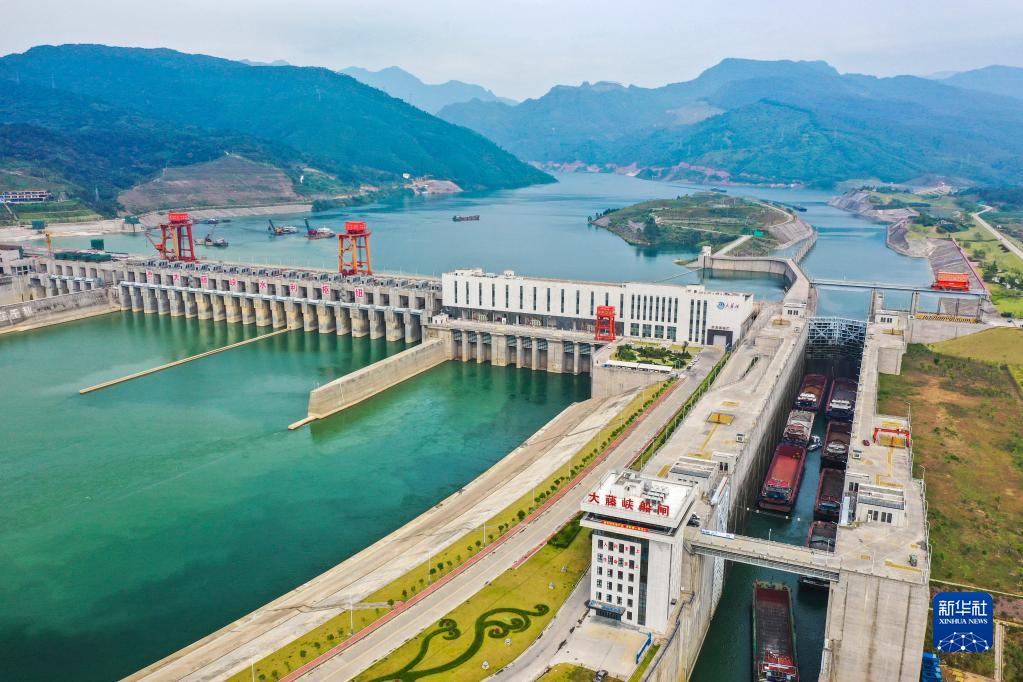
The Dafengxia Water Control Project in Guangxi, currently under construction, and its operational ship lock (photo taken on September 29, 2022, by drone). Photo by Xinhua News Agency reporter Cao Yiming. The Xining–Chengdu section of the Lanzhou–Xining–Guangzhou high-speed railway corridor, a key component of the national “Eight Vertical and Eight Horizontal” high-speed rail network, has commenced full‑scale construction; at the Dafengxia Water Control Project—one of the 172 major national water‑saving and water‑supply projects—the first unit on the right bank has officially been connected to Guangxi’s main power grid and put into operation; meanwhile, the dome‑lifting operation for Unit 1 of the China General Nuclear Power Group’s San’ao Nuclear Power Project in Zhejiang has been completed… Localities are accelerating the implementation of major projects, which, in the short term, will help boost domestic demand, while in the medium to long term, they will facilitate the development of a modern infrastructure system, building momentum and accumulating strength for the comprehensive construction of a socialist modern country. To accelerate the establishment of a new development paradigm, we must take meeting domestic demand as our fundamental starting point, seamlessly integrate the strategy of expanding domestic demand with the deepening of supply-side structural reform, and focus on enhancing the supply system’s ability to align with domestic needs, thereby fostering a higher‑level dynamic equilibrium in which demand drives supply and supply, in turn, creates new demand.
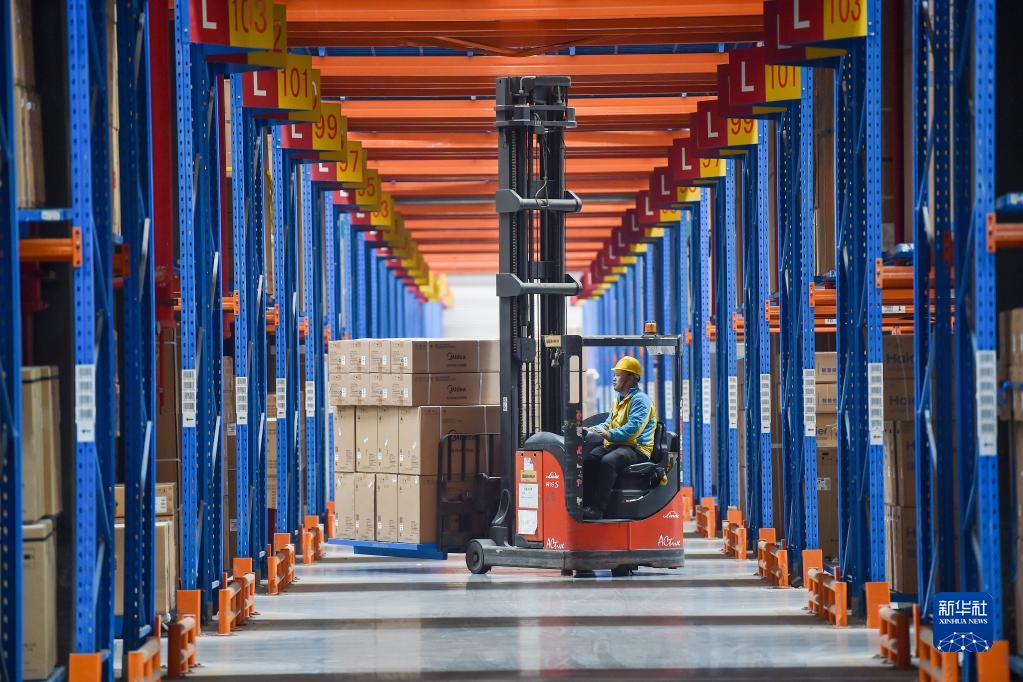
At the Suning East China Logistics Center in Jiangning District, Nanjing, Jiangsu Province, workers operate forklifts to move goods (photo taken on November 10, 2022). Xinhua News Agency (Photo by Fang Dongxu) During the Double 11 shopping festival, sales of high-end home appliances, digital products, and “national trend” brands surged, with upgrade‑oriented categories posting particularly strong growth. As consumers shift from asking “do we have it?” to “is it good?”, premium products and services have become key drivers of vitality in the consumer market. “Changsha will adopt a multi-pronged approach to encourage bulk consumption, including new-energy vehicles, foster the sound development of new business forms and models, and continuously strengthen the fundamental role of consumption in economic growth, thereby providing support for consolidating the economy’s recovery and upward momentum,” said Huang Libin, Deputy Director of the Changsha Municipal Bureau of Commerce in Hunan Province. In Yushu City, Jilin Province—known as the “No. 1 Granary in China”—the autumn harvest is drawing to a close. “This year, we expect per-mu yields of corn and soybeans to be higher than last year,” said Lang Xiaofeng, deputy director of the Yushu Municipal Bureau of Agriculture and Rural Affairs. In line with the arrangements set forth at the 20th National Congress of the Communist Party of China, efforts are being made to comprehensively strengthen the foundation of food security, continue promoting conservation tillage practices such as straw mulching and return-to-field, protect the black soil, and accelerate the development of agricultural informatization, ensuring that Chinese bowls are filled with more and better-quality Chinese grain.
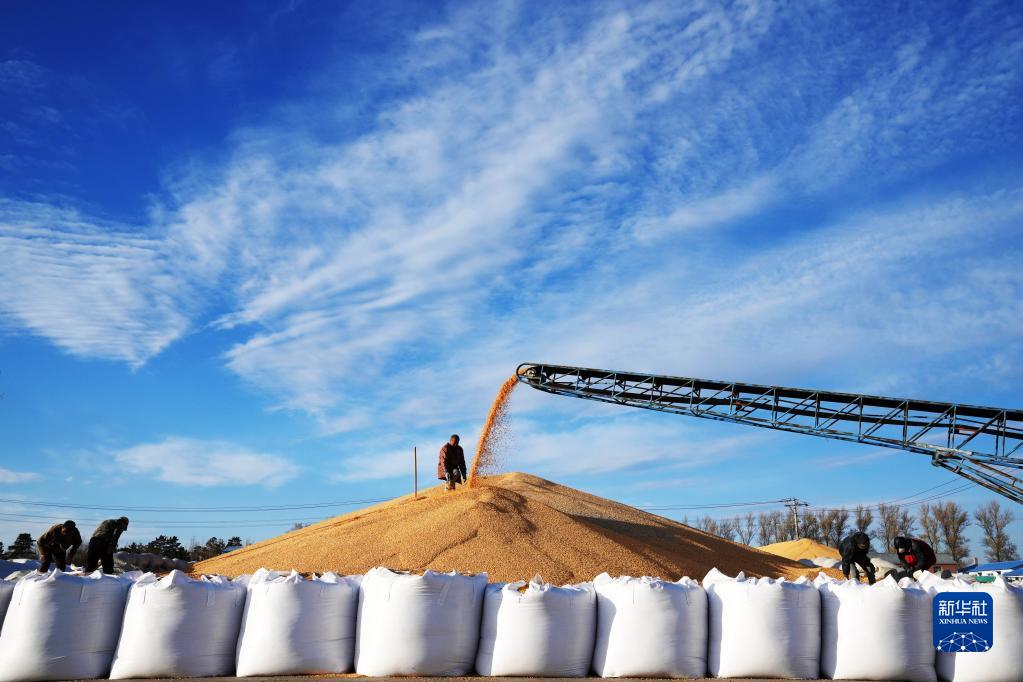
Staff members of Zhaoguang Farm Co., Ltd., a subsidiary of the Beian Branch of Beidahuang Group, work busily atop a pile of corn at a drying yard (photographed on October 19, 2022). Photo by Xinhua News Agency reporter Wang Jianwei. Recently, northern China has gradually entered the heating season. Amid escalating volatility in the international energy market, Shanxi, a major energy-producing province, is firmly committed to boosting production and ensuring supply. “We are strengthening oversight of the fulfillment of medium- and long-term coal‑power contracts, working to raise daily coal output at mines, stabilizing the province’s coal inventories, and enhancing emergency preparedness to ensure reliable winter heating and supply,” said Yao Shaofeng, Director of the Shanxi Provincial Energy Administration. We will continue to focus on the real economy as the key driver of economic development and build a modern industrial system. General Secretary Xi Jinping attaches great importance to the development of the real economy, emphasizing that “no matter how far economic development progresses, the real economy remains the foundation for China’s economic growth and for gaining the upper hand in international economic competition.” The report to the 20th National Congress of the Communist Party of China calls for steadfastly focusing on the real economy as the key driver of economic development, advancing a new type of industrialization, and accelerating the building of a manufacturing powerhouse, a quality powerhouse, a spacefaring powerhouse, a transportation powerhouse, a cyber powerhouse, and a digital China. Home to numerous large-scale data centers operated by China Mobile, China Unicom, Tencent, Huawei Cloud, and others, with a total investment exceeding RMB 16 billion, Guian New Area in Guizhou has become one of the regions worldwide with the highest concentration of ultra-large data centers.
The Huawei Cloud Data Center in Gui’an New Area (on the right side, bounded by the road) and the Tencent Gui’an Qixing Data Center (on the left) — photographed on May 24, 2022, using a drone. Photo by Xinhua News Agency reporter Ou Dongqu. The development of Digital China is opening up new opportunities for the vast western regions. “Guizhou will thoroughly study and implement the spirit of the 20th National Congress of the Communist Party of China, firmly grasping ‘data’ as the core production factor and ‘computing power’ as the core productive force, thereby pioneering best practices for industrial transformation and upgrading and for advancing the construction of Digital China,” said Li Gang, Deputy Director of the Guizhou Provincial Big Data Development Administration. Manufacturing is the foundation of a nation and the cornerstone of national strength. At the Hongqi Prosperity Plant of China FAW, numerous intelligent robots employ cutting-edge automated assembly technologies; a fully automated, high-speed, continuous steel–aluminum hybrid stamping line enables the production of components with complex geometries; and welding and assembly operations extensively utilize automated welding and material-handling equipment, achieving 100% automation in welding and 100% automation in in-line material transport. Traditional manufacturing is accelerating its transformation and upgrading, while strategic emerging industries are flourishing… Oriented toward high-end, intelligent, and green development, the manufacturing sector is undergoing profound changes, propelling China’s rapid transition into a manufacturing powerhouse. Inside the main computer room of the National Supercomputing Center in Tianjin, home to the “Tianhe‑1” system, more than a hundred black server racks stand neatly aligned, their indicator lights flashing rapidly. “Enterprise users and collaborating research institutions engage in real-time online interactions, with nearly 15,000 computational R&D tasks completed each day,” said Feng Jinghua, chief engineer at the National Supercomputing Center in Tianjin. “The report to the 20th National Congress of the Communist Party of China emphasized promoting the integrated and clustered development of strategic emerging industries. We will continue to strengthen scientific and technological innovation, deepen collaboration with leading scientists, and jointly tackle key challenges, focusing our R&D efforts on major industrial and strategic priorities. By fostering coordinated growth across the entire industrial chain—both upstream and downstream—we aim to achieve further breakthroughs in China’s supercomputing sector,” said Feng Jinghua. We will refine the institutional mechanisms that foster scientific and technological innovation, ensuring that innovation‑driven development is more robust and continues to bolster the building of a modern industrial system. At the warp‑knitting workshop of the Huayu Zhengying Group in Jinjiang, Fujian, inspection equipment powered by “5G plus Ethernet‑based machine vision” transmits production footage in real time, while AGV logistics robots shuttle back and forth. “The innovation ecosystem and capabilities of private enterprises have both seen significant improvement,” said Jiang Jiaxing, Director of the Jinjiang Municipal Science and Technology Bureau. He added that Jinjiang will continue to foster a favorable environment conducive to the growth of technology‑driven SMEs, driving the deep integration of the innovation chain, industrial chain, financial chain, and talent chain. The launch of “Jiuzhang” and “Zu Chongzhi” has propelled China’s quantum computers to world‑leading computational power, while the national mega‑science facility “Artificial Sun” has set a world record by sustaining 120 million degrees Celsius for 101 seconds. In recent years, numerous major scientific and technological breakthroughs have emerged in Anhui, and several high‑level R&D platforms have been rapidly established there. “To implement the CPC Central Committee’s directives in the report of the 20th National Congress on improving the science and technology innovation system and deepening reform of the science and technology management system, we will further advance reforms in the evaluation of scientific and technological achievements and continue to build a comprehensive innovation ecosystem that spans from original research and development to technological application and成果 transformation,” said Xia Ji, Deputy Director of the Anhui Provincial Department of Science and Technology. Accelerate the establishment of a new development paradigm and better translate institutional strengths into effective national governance. In November, Shanghai is bustling with distinguished guests. “China will promote the sharing of opportunities from its vast market with all countries and stakeholders,” “China will foster the sharing of opportunities arising from institutional openness,” and “China will advance the sharing of opportunities to deepen international cooperation”... In his address at the opening ceremony of the Fifth China International Import Expo, President Xi Jinping underscored China’s unwavering resolve and confidence in advancing high‑level opening-up.
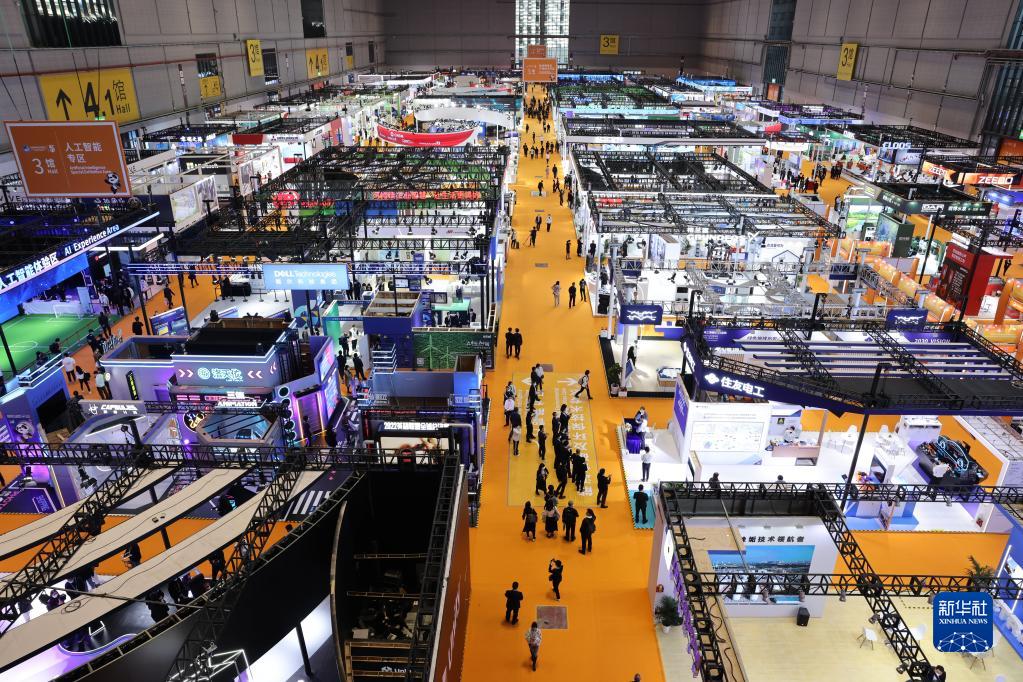
The Technology Equipment Exhibition Area of the 5th China International Import Expo, photographed on November 5, 2022. Photo by Xinhua News Agency reporter Jin Liwang. Recently, the “Catalogue of Industries Encouraged for Foreign Investment (2022 Edition)” was released, focusing on high-quality development in the manufacturing sector and further optimizing the regional distribution of foreign investment. Meanwhile, multiple government departments announced the establishment of 29 additional National Import Trade Promotion Innovation Demonstration Zones across the country, demonstrating a concrete commitment to opening up. General Secretary Xi Jinping pointed out in the report to the 20th National Congress of the Communist Party of China that we must uphold the direction of reform toward a socialist market economy, pursue high-standard opening-up, and accelerate the establishment of a new development pattern featuring domestic circulation as the mainstay and domestic and international circulations reinforcing each other. He also emphasized “speeding up the building of a modernized economic system and focusing on raising total factor productivity.” On the morning of November 8, a Western Land-Sea New Corridor rail-sea intermodal train loaded with products such as corn starch, ferrochrome, and generators departed from Chongqing’s Yuzui Station. Two days later, it arrived at Qinzhou Port in Guangxi, where it was transferred to ocean vessels for export to destinations including Indonesia and Argentina.
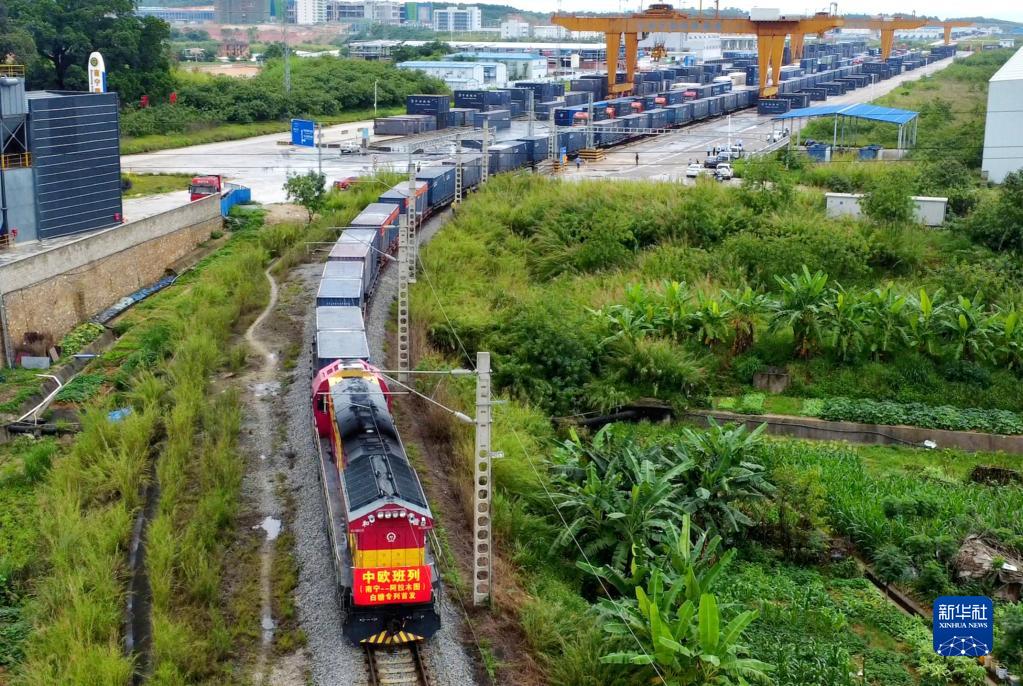
A China–Europe freight train carrying 2,600 tons of white sugar departed from Nanning International Railway Port bound for Almaty, Kazakhstan (photo taken by drone on May 15, 2022). Photo by Xinhua News Agency reporter Zhang Ailin. “‘Accelerating the development of the New Western Land-Sea Corridor’ is a requirement put forward in the report to the 20th National Congress of the Communist Party of China. In the future, the construction of the New Western Land-Sea Corridor will connect the Belt and the Road, support both domestic and international dual circulation, and promote the more robust integration and development of regional economies,” said Wang Yupeng, Chairman of the Land-Sea New Corridor Operations Co., Ltd. We will deepen reform and innovation, unswervingly expand opening-up, focus on removing deep-seated institutional and systemic barriers, continuously highlight the strengths of the socialist system with Chinese characteristics, and constantly bolster the momentum and vitality of socialist modernization, thereby better translating our institutional strengths into effective national governance. On the afternoon of November 1, at the Dongcheng District Government Service Center in Beijing, Guo Hua, the third-generation operator of Yuebin Restaurant—founded in 1980—received the nation’s first business license for an individual industrial and commercial household to directly change its operator following the implementation of the Regulations on Promoting the Development of Individual Industrial and Commercial Households. “I’ve officially changed the restaurant’s operator from my father to myself, fulfilling a long‑held wish of both my father and me,” said Guo Hua. Previously, regulatory restrictions required that, to transfer ownership, the decades‑old business license had to be canceled. The new regulations now permit direct changes in operators, helping to preserve time‑honored establishments in the hutongs. The Measures for the Implementation of the Individual Pension Scheme have been issued, and the Opinions on Further Improving the Policy Environment and Intensifying Support for the Development of Private Investment have been released… In line with the spirit of the 20th National Congress of the Communist Party of China, a series of reform measures have been introduced and put into effect. Major economies enjoy vast economic space and, as they accelerate the establishment of a new development paradigm, will undoubtedly unleash inexhaustible momentum and vitality, while tapping into their ample strengths and potential. Amid the roar of machinery, the 200-mu premium rice‑cultivation base in Dapanzhuang, Yanjiang Village, Yizheng Economic Development Zone, Jiangsu Province, recently celebrated its first harvest. This marks the inaugural bountiful year for the village, following efforts by Zhou Weizhong, the village’s resident Party secretary, to guide villagers in trial‑planting high‑quality rice varieties. “The report to the 20th National Congress of the Communist Party of China stated that, in the endeavor to build a modern socialist country in all respects, the most arduous and daunting tasks still lie in rural areas. In light of our village’s basic conditions—large population, limited land, and a predominantly small-scale peasant economy—we will tailor our approach to local circumstances, explore more distinctive agricultural projects, enhance the added value of rural products, and lead our fellow villagers toward shared prosperity,” said Zhou Weizhong. Across the land of China, localities are actively implementing the spirit of the 20th National Congress of the Communist Party of China, advancing rural revitalization and people-centered new urbanization in tandem. The Beijing–Tianjin–Hebei region, the Yangtze River Delta, and the Guangdong–Hong Kong–Macao Greater Bay Area are increasingly serving as engines of high-quality development. Meanwhile, the Yangtze and Yellow Rivers—the nation’s “mother rivers”—are charting a course of ecological priority and green development. Coordinated regional development is deepening, the potential of an ultra-large-scale market continues to unfold, and the prospects for high-quality growth are growing ever brighter. (Reporters: An Bei, Wei Yukun, Pan Jie, Li Xiaoting, Dong Ruifeng, Wang Jingyu) Video Reporters: Ji Xiaozhuang, Deng Haoran, Guo Jiewen, Ye Ziyuan, Li Aibin, Jin Jian, Zhao Xiaoyu, Li Xiaobo, Li Yuzhe, Fang Yadong, Shao Rui, Xiao Yonghang, Duolei, Sun Min, Yuan Xun, and Fang Jinyang (Cameraman) |
Tags:
More information
Contact Us
Address:
No. 1, No. 1, New District Road No. 1, Gaocheng District, Shijiazhuang City, Hebei Province
WeChat/WhatsApp:
Phone:
Email:
