


-
About UsHebei Derui Chemical Co., Ltd. (hereinafter referred to as Derui Chemical) was established in January 2006 with a registered capital of RMB 51.8 million. The company specializes in the production and sale of agrochemicals, with its main products including thiamethoxam technical grade, imidacloprid technical grade, spirotetramat technical grade, and related formulated products.

-
Product CenterThe company is committed to building and continuously improving its management systems, and in 2020 it obtained certifications under GB/T 19001-2016/ISO 9001:2015, GB/T 24001-2016/ISO 14001:2015, and GB/T 45001-2020/ISO 45001:2018. Derui Chemical has consistently upheld the corporate mission of “pursuing green development and serving global agriculture,” while adhering to the core values of “integrity, innovation, pragmatism, and gratitude.” The company is eager to collaborate with its partners to contribute to the advancement of global agriculture.
-
BlogThe company places great emphasis on standardized management and sustainable development, successfully obtaining certification for its three major management systems—quality, environment, and occupational health and safety—in 2020. These certifications align with GB/T 19001-2016/ISO 9001:2015, GB/T 24001-2016/ISO 14001:2015, and GB/T 45001-2020/ISO 45001:2018. Derui Chemical remains committed to its corporate mission of promoting green development and serving global agriculture, upholding the core values of “integrity, innovation, pragmatism, and gratitude.” We look forward to partnering with stakeholders from all sectors, pooling our strengths, and advancing together to support the steady growth of global agriculture.

Through coordinated development, the Beijing–Tianjin–Hebei region has delivered an impressive performance.
Release Date:
2023-04-05
Original Title: One Map for Planning, One Unified Strategy for Development, Integrated Growth, and Coordinated Advancement—Beijing–Tianjin–Hebei Delivers an Impressive Performance
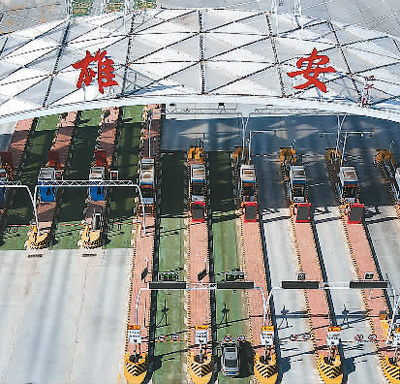
Expressway in the Xiongan New Area. Photo by Sun Lijun (People’s Pictures)
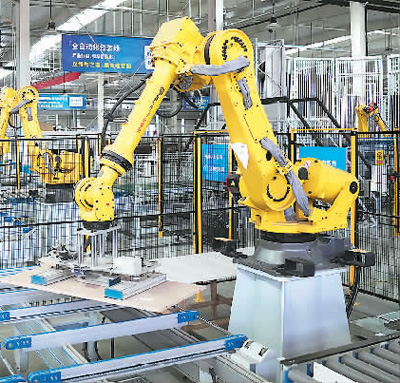
At a furniture company relocated from Beijing to the Lutai Economic Development Zone in Tangshan, Hebei Province, robotic arms are at work. Photo by Xinhua News Agency reporter Yang Shiyao.
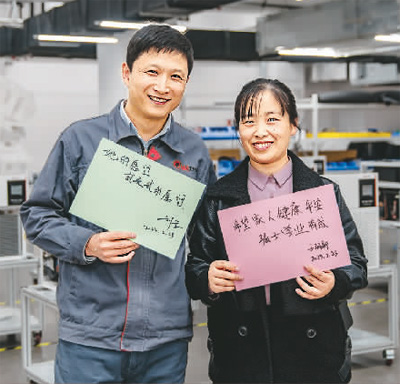
At Leibaitaike (Tianjin) Technology Co., Ltd., Liu Xue (left) and his wife, Yu Lixin, display the wishes they have written down. Liu Xue worked in Beijing for many years. In 2019, he and his wife were assigned to the Jingjin Zhongguancun Science and Technology City in Baodi, Tianjin, to help establish the company’s branch there. The family has now registered their household residency in Tianjin. Photo by Xinhua News Agency reporter Li Mengxin.
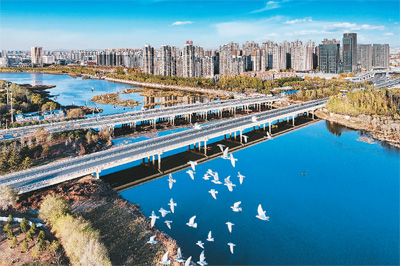
At the Beijing–Hebei border of the Tongyan Expressway, soaring birds, a blue sky and clear waters, and urban architecture together paint a harmonious scene. Photo by our reporter He Yong.
On March 31, in Beijing’s urban sub-center, rows of tower cranes stand tall and sparks fly as construction of the sub-center station—Asia’s largest underground integrated transportation hub—is in full swing.
On April 1, the Baiyangdian Scenic Area in Hebei was graced by rippling blue waters and swaying cattails, while rare birds such as the spot-billed duck occasionally chased and played in the water, once again bringing to life the ecological tableau of “lotus ponds and reed seas, a paradise for migratory birds.”
On April 2, at the First Affiliated Hospital of Tianjin University of Traditional Chinese Medicine, Wang Liqun, a patient from Xingtai, Hebei, used an out-of-town medical insurance card to complete instant settlement, enjoying seamless access to quality care under the “one-card” system. Recently, Beijing, Tianjin, and Hebei have fully abolished the requirement for prior registration when seeking medical treatment in another region, allowing residents of all three areas to directly receive reimbursement under their local medical insurance schemes.
Over the nine years of coordinated development, Beijing, Tianjin, and Hebei have pursued integrated planning, unified construction, and holistic growth, achieving pioneering breakthroughs in four key areas—industry, transportation, ecology, and public services—and presenting an impressive record to the world. Statistical data show that in 2022, the region’s gross regional product surpassed RMB 10 trillion, 1.8 times its 2013 level at current prices, marking a significant leap in the overall strength of the Beijing–Tianjin–Hebei area.
From formulating strategies, laying the groundwork, and seeking breakthroughs, to pressing forward with relentless determination—overcoming obstacles and tackling tough challenges—the coordinated development of the Beijing–Tianjin–Hebei region has consistently maintained strong momentum, continuously charting a new chapter in its development.
Industrial承接 and matchmaking are “speeding up”
“The coordinated development of the Beijing–Tianjin–Hebei region is of great significance, and our understanding of this issue must be elevated to the level of a national strategy.” In February 2014, General Secretary Xi Jinping presided over a symposium in Beijing, where he listened to a special report on the progress of the Beijing–Tianjin–Hebei coordinated development initiative and stated that achieving such coordinated development constitutes a major national strategy.
Over the past nine years, by firmly grasping the key task of relieving Beijing of non-capital functions, the three regions of Beijing, Tianjin, and Hebei have accelerated efforts to facilitate industrial relocation and alignment.
By seamlessly integrating strict controls on new additions with the relocation and upgrading of existing entities, Beijing has accelerated its efforts to streamline and strengthen its economy. Since 2017, the city has relocated and upgraded a total of 2,093 general manufacturing enterprises, while the number of newly established market entities in high‑tech, cutting‑edge, and sophisticated sectors—such as technology, business services, and culture—has continued to grow, with their share rising from 40% in 2013 to 65.6% in 2022.
One core for relocation, two wings soaring in tandem. Beijing’s Urban Sub-Center and the Xiong’an New Area serve as the “bridgeheads” for coordinated industrial development.
Looking at the Urban Subcenter—According to the series of reports titled “Quantifying the Nine-Year Achievements of Beijing–Tianjin–Hebei Coordinated Development” released by the Beijing Municipal Bureau of Statistics, in 2022, Tongzhou District, where the urban subcenter is located, vigorously developed key industries aligned with its core functions—administrative offices and business services—while the tertiary sector’s value added accounted for 61.7% of the district’s GDP, an increase of 11.9 percentage points compared with 2013.
Turning to the Xiongan New Area, construction has begun on central state‑owned enterprise headquarters projects, and industrial clusters are steadily taking root, with the “City of the Future” brimming with vitality.
At the construction site of Sinochem Group’s headquarters in the Xiong’an New Area, dozens of steel columns have already been erected within a foundation pit nearly 100 meters in diameter, while three towering tower cranes stand tall, creating a scene of bustling activity. “To accelerate project implementation, we’re maintaining 24-hour operations on site, all while prioritizing safety and quality,” said Liu Fenglong, project manager at the Third Company of China Construction Second Bureau. He added that they are simultaneously advancing structural construction and preliminary interior finishing to shorten the schedule as much as possible, laying a solid foundation for companies to move in.
“Since the Spring Festival, inspection teams have been arriving in Xiong’an almost every day, and several institutions and enterprises have expressed their intention to develop here,” said Zhang Fei, Deputy Director of the Reform and Development Bureau of the Xiong’an New Area. “The advantages of being a policy‑driven hub, combined with companies’ own growth needs, have made Xiong’an highly attractive to many businesses.” According to reports, more than 140 central state‑owned enterprises have already established branches in the new area. In 2023, Xiong’an aims to attract 30 second- and third‑tier subsidiaries of central SOEs to set up operations there.
Meanwhile, Tianjin and Hebei have been actively facilitating the orderly relocation of industries, sparking robust economic vitality. In 2022, Tianjin attracted 198.94 billion yuan in investment from Beijing and Hebei, while Hebei hosted 4,395 newly established entities that relocated from Beijing and Tianjin. Since 2014, a cumulative total of 43,900 such entities have moved to Hebei, with nearly 80 percent originating from Beijing.
Collaborative development goes beyond mere spatial relocation; it also presents an opportunity to pursue industrial transformation, upgrading, and technological renewal. The Beijing–Tianjin–Hebei region is jointly focusing on its strengths—such as next-generation information technology, biopharmaceuticals, and the automotive sector—and working together to build advanced manufacturing clusters.
“Our production base is located in Langfang, Hebei, while most of our R&D experts are based in Beijing, and we rely on the Port of Tianjin for product exports,” said Li Qingguo, Deputy General Manager of Jiuzhi Optoelectronic Materials Technology Co., Ltd. He added that, thanks to the coordinated development of the Beijing–Tianjin–Hebei industrial chain, the company has reaped direct benefits.
Across the Beijing–Tianjin–Hebei region, similar stories of Beijing and Tianjin conducting R&D while Hebei handles commercialization are unfolding one after another. To date, the Beijing–Hebei Caofeidian Collaborative Development Demonstration Zone has signed agreements for 465 Beijing‑based projects, the Tianjin Binhai–Zhongguancun Science Park has registered more than 4,000 new enterprises, and the total value of technology transfer contracts originating in Beijing and flowing to Tianjin and Hebei has exceeded RMB 210 billion.
“The Beijing–Tianjin–Hebei region has consistently prioritized innovation-driven development, striving to elevate the quality of growth through higher standards, steadily increasing investment in innovation, leveraging high-end industries to lead development, fostering vibrant new business forms and models, and strengthening and expanding key innovation players,” said a spokesperson from the Beijing Municipal Bureau of Statistics. In 2021, the Beijing–Tianjin–Hebei region collectively allocated RMB 394.91 billion to research and experimental development, 2.1 times the level recorded in 2013.
Jiang Xiaojuan, a professor at the University of the Chinese Academy of Social Sciences, stated that in the future, sectors such as the digital economy could become new growth drivers for industrial collaboration among Beijing, Tianjin, and Hebei. The governments of the three regions can further strengthen cooperation to leverage low-cost synergies and foster an even more favorable business environment.
Integrated transportation networks are becoming more interconnected.
Coordinated development begins with transportation. In the Beijing–Tianjin–Hebei region, the integrated transport network is becoming increasingly robust.
“The core area of Beijing–Tianjin–Xiong’an will be accessible within half an hour, and a 1- to 1.5-hour commuting circle linking the major cities of the Beijing–Tianjin–Hebei region is rapidly taking shape. A comprehensive transportation network featuring multiple hubs, a grid-like structure, and full coverage has essentially been established,” said Zhao Tong’an, Deputy Director of the Hebei Provincial Department of Transport.
Not long ago, Gu Zicheng, deputy director of the Management Committee of the Beijing–Tianjin Zhongguancun Science City, once again traveled from Tianjin’s Baodi District to Beijing to attract investment. This time, the journey was far less arduous than before. Thanks to the official opening of the Beijing–Tangshan and Beijing–Binhai intercity railways just before this year’s New Year, Baodi Station now serves as a stop. “In the past, driving from Baodi to Beijing took more than an hour; now, by high-speed rail, the trip takes as little as 18 minutes,” Gu Zicheng remarked. He added that high-speed rail has dramatically cut travel time between Baodi and Beijing–Hebei, making commuting much more convenient.
Since the launch of the Beijing–Tianjin–Hebei Coordinated Development Strategy nine years ago, the core rail network of the region has largely taken shape. Data show that by the end of 2022, the total operating railway mileage in the Beijing–Tianjin–Hebei area reached 10,848 kilometers, an increase of 38.3% compared with the end of 2014.
In Beijing, in addition to the Jingtang and Jingbin intercity railways, the Beijing–Zhangjiakou High-Speed Railway and the Beijing–Chengde section of the Beijing–Harbin High-Speed Railway have been completed and opened to traffic; Beijing Chaoyang Station, Beijing Fengtai Station, and Qinghe Station are now in operation. In Tianjin, the Jinbo and Jinqin railways provide direct connections to Hebei, and the city ranks first nationwide in railway network density. In Hebei, the total length of operational railways has reached 8,243 kilometers, with high-speed rail links connecting every prefecture-level city, and travel between Shijiazhuang and Beijing now takes just one hour.
On the highway front, a large number of expressways—including the Beijing–Kunming, Beijing–Lijing, Tianjin–Shijiazhuang, and Daxing International Airport highways—have been completed and opened to traffic, fully connecting all radial segments of the national expressway network within the capital region. The total length of expressways in the Beijing–Tianjin–Hebei region has reached 10,585.5 kilometers, an increase of 32.6% compared with the end of 2014.
“A few years ago, residents were still talking about “dead-end roads” at provincial borders; today, all the expressways connecting Beijing and Hebei have been fully linked, and those “dead-end roads” are now a thing of the past,” noted Zhao Yang, Director of the Coordinated Development Division of the Beijing Municipal Commission of Transport. He added that, by now, a comprehensive road network linking Beijing, Tianjin, and Hebei has been fully established.
As road conditions improve, customized passenger transport has quietly gained traction. At 6 p.m. on March 30, Zheng Yan, who works in Beijing’s China World Trade Center, finished her shift and boarded a customized express bus, reaching her home in Yanjiao Town, Sanhe City, Langfang, Hebei Province, in just one hour.
“In 2022, the Beijing–Langfang North Three Counties Custom Express Bus service was launched, providing tailored passenger transport for cross-provincial commuters,” said Zhao Tong’an. To date, three main routes and ten branch lines have been opened between Langfang’s North Three Counties and Beijing’s Guomao area, benefiting 89,000 people. Moving forward, the custom express bus network will expand to include routes from Yanjiao to areas such as Wangjing, Zhongguancun, and Yizhuang, based on passenger demand, with the goal of fully establishing a one-hour commuting circle around Beijing.
With smooth internal connectivity and robust external links, and advancing on both maritime and land fronts, the modernization of the Tianjin-Hebei port cluster is accelerating.
Amid azure seas and skies, at the Tianjin Port Eurasia International Container Terminal, more than 1,000 containers from Incheon, South Korea, were offloaded from the vessel “Hyundai Dynasty” and neatly stacked in the yard. By integrating global resources and prioritizing the development of container shipping routes, Tianjin Port has, in recent years, anchored itself in the Beijing–Tianjin–Hebei region and worked tirelessly to become a pivotal hub connecting domestic and international networks, achieving an average annual growth rate in container throughput exceeding 7% over the past four years.
Hebei’s coastal ports have steadily strengthened their position as major hubs for bulk cargo transportation, with 246 productive berths and a designed throughput capacity of 1.16 billion tons. Total throughput reached 1.28 billion tons, and the number of container‑shipping routes jointly operated by Tianjin and Hebei has grown to seven, while the intermodal container transport network linking trunk and feeder services is rapidly being refined.
Zhao Yang stated that by the end of the 14th Five-Year Plan period, the Beijing–Tianjin–Hebei region will have essentially established a comprehensive transportation corridor network comprising “four verticals, four horizontals, and one ring,” achieving optimized and enhanced hub functions, integrated and convenient transport services, and a sound and fully developed mechanism for coordinated development.
The ecological environment continues to improve.
Over the past nine years, the improvement in the ecological environment of the Beijing–Tianjin–Hebei region has been plain to see. As the environmental protection agencies of the three regions have progressively established and refined collaborative mechanisms, a new ecological landscape—characterized by evergreen mountains, flowing green waters, and consistently fresh air—is rapidly taking shape.
A sampling tube extends through the vehicle’s sunroof, drawing air into an on-board mass spectrometer. The instrument generates a data point every five seconds, providing real-time readings of ambient volatile organic compounds… The mobile monitoring vehicle cruising along Beijing’s roads is a microcosm of the coordinated prevention and control efforts for atmospheric pollution across the Beijing–Tianjin–Hebei region.
To wage a sustained and effective “Blue Sky Defense Campaign,” Beijing, Tianjin, and Hebei have jointly formulated a comprehensive action plan to tackle air pollution during the autumn and winter seasons. The three regions exchange daily air quality forecasts and monthly air quality monitoring data, and have established a joint consultation mechanism for responding to severe pollution episodes. According to relevant data, in 2022, the annual average concentrations of fine particulate matter (PM2.5) in all three areas declined by more than 60% compared with 2013, while the number of days with good or excellent air quality increased significantly.
Together, we are safeguarding a clear blue sky, as Beijing, Tianjin, and Hebei have forged a synergistic force that multiplies their collective efforts. According to statistics, the three regions have collectively rectified and upgraded more than 163,000 “scattered, chaotic, and polluting” enterprises; Beijing has essentially eliminated coal use in its plain areas; Tianjin has largely replaced coal-fired boilers and industrial kilns with clean energy sources; and Hebei has largely phased out coal-fired boilers below 35 steam tons.
At the same time, the “Clear Water Defense Campaign” was also launched. As Beijing, Tianjin, and Hebei are situated along the upper, middle, and lower reaches of the Haihe River Basin—both upstream and downstream, and on both banks—the three regions have committed to joint basin-wide governance, working together to safeguard high-quality water in the upstream areas and deliver clean water to the downstream regions.
Beijing has implemented comprehensive watershed management and ecological water replenishment in the Yongding River, Chaobai River, and other basins. Today, five major river systems, including sections of the Yongding River, once again flow continuously from source to mouth, and groundwater levels across the plain have been rising for six consecutive years.
The symptoms of water pollution are visible in the water, but the root causes lie on the shore. Tianjin has implemented a high-standard program to identify and remediate discharge outlets into rivers, clarifying governance and management requirements for existing outlets, refining approval procedures for new ones, and effectively controlling pollutant discharges into waterways.
Sunlight spills across the water, scattering flecks of silver; in early spring, birds occasionally alight on the surface, “kissing” the ripples. “In recent years, the ‘newcomers’ to Baiyangdian have been growing in number—besides the grey crane, there are also egrets and herons, all of which have transitioned from migratory species to year-round residents,” says Zhang Xuenong, vice president of the Bird‑Watching and Bird‑Loving Association in Anxin County, Baoding City, Hebei Province, as he photographs the scene. “The ecological environment of Baiyangdian is improving day by day, making it increasingly hospitable for avian life.”
Baiyangdian is known as the “Kidney of North China.” Since the establishment of the Xiongan New Area, extensive efforts have been made to comprehensively improve the ecological environment of Baiyangdian. Through integrated measures addressing water replenishment, pollution control, flood prevention, and other aspects of holistic management, the lake’s water quality has achieved the goal of “Class IV across the entire area, with localized sections reaching Class III,” successfully earning its place among China’s high‑quality lakes.
According to reports, Beijing has taken the lead in eliminating black and odorous water bodies in urban areas, while Tianjin and Hebei have largely eliminated such issues in their built-up urban zones. In all three regions, the proportion of national surface‑water monitoring sections with good or excellent water quality (Classes I–III) has consistently met the national targets set for the 14th Five-Year Plan period.
Yang Hu, a forest ranger in the Daqingshan Forest Area of the Nanhaoqian Forestry Farm in Zhangjiakou, Hebei Province, spends each day patrolling the dense mountain woods. He takes his job extremely seriously: “Our Daqingshan Forest Area is designated as a Class-I fire‑prevention zone—absolutely no accidents can be allowed.”
By firmly anchoring ecological sustainability, Beijing, Tianjin, and Hebei have implemented stringent management to safeguard their “pristine lands.” Taking Zhangjiakou City in Hebei Province as an example, in 2022, the city coordinated integrated governance of its mountains, waters, forests, farmlands, lakes, grasslands, and sandlands, adding 1.088 million mu of newly planted forests. It also strengthened risk control over soil pollution, achieving a 100% safe utilization rate for both contaminated farmland and key construction sites. As a result, the region’s environmental support capacity has been further enhanced, comprehensively reinforcing the ecological safety “protective umbrella” for the capital.
In addition, the three regions have vigorously advanced the establishment of model areas for ecological civilization. Last year, Beijing’s Pinggu District, Tianjin’s Jinnan District, and Hebei’s Weichang Manchu-Mongol Autonomous County were awarded the title of National Demonstration Zone for Ecological Civilization in the sixth batch, while Beijing’s Fengtai District, Hebei’s Zanhuang County in Shijiazhuang, and Hebei’s Fuxing District in Handan were designated as National Practice and Innovation Bases for the “Lucid waters and lush mountains are invaluable assets” initiative, also in the sixth batch.
The benefits for people’s livelihoods are being increasingly realized.
Public services are benefiting people’s livelihoods. Upholding the development philosophy of putting the people at the center, Beijing, Tianjin, and Hebei have deepened their efforts to co‑build and share public services, yielding ever greater dividends for the people and steadily enhancing their sense of gain, happiness, and security.
“You no longer need to file a prior registration to seek medical care across provinces—so convenient,” said Li Shuli, a resident of Cangzhou, Hebei, on April 2 at the Institute of Hematology, Chinese Academy of Medical Sciences in Tianjin. This time, she was able to register and pay simply by presenting her social security card, saving both time and hassle.
Li Shuli told reporters that, prior to this, if she had not completed the interprovincial out-of-town medical treatment registration procedures, she would have been required to pay for her medical care out of pocket at medical institutions in Beijing and Tianjin, and the resulting medical expenses would not have been reimbursable.
According to the “Notice on Implementing In‑Area Medical Treatment as Equivalent to Out‑of‑Area Registration” jointly issued by the medical insurance authorities of Beijing, Tianjin, and Hebei, effective April 1, insured persons in all pooled areas across the three regions may, by presenting their social security card or electronic medical insurance credential, receive inpatient care, routine outpatient services, and pharmacy purchases at any designated medical institution within the Beijing–Tianjin–Hebei region, with such visits treated as having completed out-of-area registration. As a result, they can directly access medical insurance reimbursement benefits.
“Following the elimination of the pre‑registration requirement, all insured residents in our province who seek medical care in Beijing or Tianjin will receive reimbursement under the same standards and benefits as if they were receiving treatment within the province,” said Li Shengqun, Deputy Director of the Hebei Provincial Healthcare Security Administration. He added that, based on the outcomes of implementing the policy exempting pre‑registration for travel to Beijing and Tianjin, the next step will be to expedite the removal of the pre‑registration requirement for Hebei insured individuals seeking medical care in any province nationwide.
Breaking down barriers to out-of‑area medical care also requires facilitating the “flow” of high‑quality medical resources between Beijing and Tianjin. With the support of the Beijing–Tianjin–Hebei coordinated development initiative, in May 2015, Beijing Children’s Hospital took full administrative control of Baoding Children’s Hospital in Hebei Province. Beijing-based experts now regularly travel to Baoding to provide consultations, conduct ward rounds and lectures, and mentor researchers, effectively ensuring that “patients stay put while doctors come.” Since the handover, more than 400 pediatric specialists from Beijing have provided clinical services in Baoding, treating over 28,000 young patients.
Medical cooperation has deepened and become more substantive, while educational collaboration is also improving in quality and efficiency. At present, the Beijing–Tianjin–Hebei region has established 15 cross‑regional, specialized vocational education consortia and is exploring a “3+2” model, under which secondary vocational students are trained in Hebei and higher vocational students in Beijing. In 2022, six higher vocational institutions from Beijing and Tianjin allocated over 3,000 places through independent enrollment in Hebei. Over the past nine years, high‑quality courses from universities across the Beijing–Tianjin–Hebei region have been shared, and leading research resources have been progressively opened up; meanwhile, more than a thousand key school principals and teachers from Hebei have participated in on‑the‑job training at top‑tier schools in Beijing and Tianjin.
“I’m planning to set up a company in Tianjin’s Wuqing District, but I wasn’t sure whether my property‑rights documents complied with the regulations. Just now, I had a video call with a Wuqing staff member, who confirmed that they were compliant and even helped me conduct a preliminary review of the materials,” said Yu Haiyang, a citizen, visibly pleased in the lobby of the Beijing Sub‑Center Administrative Service Center.
Even while in Beijing, you can handle matters related to Tianjin and Hebei. Last June, the Beijing Municipal Sub-center Administrative Service Center launched a “Cloud Window,” enabling businesses and residents to conduct real-time video consultations with staff from three districts in Tianjin—Wuqing, Baodi, and Binhai New Area—and six cities and counties in Hebei—Langfang, Sanhe, and Xianghe—to remotely pre‑review their application materials.
The reporter learned that, within the free trade pilot zones of Beijing, Tianjin, and Hebei, 179 government service items have achieved “same standards for the same matters,” while 231 items now support cross‑regional online processing, truly enabling data to travel more while reducing the need for citizens to make in-person visits.
The Beijing–Tianjin–Hebei Regional Development Index, released at the end of last year, shows that the region’s shared‑development index stood at 127.6 in 2021, up 1.8 points from the previous year. Notably, per capita government spending on key areas of public welfare continued to rise, reaching RMB 7,261 per person in 2021—a 3.2% increase over the prior year—exerting a significant positive pull.
“In the future, we should extend and strategically deploy high-quality public service resources from the urban areas of Beijing and Tianjin into Hebei, turning the Beijing–Tianjin–Hebei region into a national hub for public service development,” suggested Zhang Gui, a professor at the Institute of Economic and Social Development at Nankai University. He further proposed improving inter‑provincial and inter‑city management and direct settlement mechanisms for workers’ compensation, old‑age pensions, unemployment insurance, and other social security schemes; formulating comprehensive support policies covering medical care, housing, and research for talent employed across provinces and municipalities; and exploring the establishment of a cross‑regional supply system for high‑quality public services in the Beijing–Tianjin–Hebei area. (Reporter Liu Leyi)
[Editor-in-charge: Jiao Peng]
Tags:
More information
Contact Us
Address:
No. 1, No. 1, New District Road No. 1, Gaocheng District, Shijiazhuang City, Hebei Province
WeChat/WhatsApp:
Phone:
Email:
