


-
About UsHebei Derui Chemical Co., Ltd. (hereinafter referred to as Derui Chemical) was established in January 2006 with a registered capital of RMB 51.8 million. The company specializes in the production and sale of agrochemicals, with its main products including thiamethoxam technical grade, imidacloprid technical grade, spirotetramat technical grade, and related formulated products.

-
Product CenterThe company is committed to building and continuously improving its management systems, and in 2020 it obtained certifications under GB/T 19001-2016/ISO 9001:2015, GB/T 24001-2016/ISO 14001:2015, and GB/T 45001-2020/ISO 45001:2018. Derui Chemical has consistently upheld the corporate mission of “pursuing green development and serving global agriculture,” while adhering to the core values of “integrity, innovation, pragmatism, and gratitude.” The company is eager to collaborate with its partners to contribute to the advancement of global agriculture.
-
BlogThe company places great emphasis on standardized management and sustainable development, successfully obtaining certification for its three major management systems—quality, environment, and occupational health and safety—in 2020. These certifications align with GB/T 19001-2016/ISO 9001:2015, GB/T 24001-2016/ISO 14001:2015, and GB/T 45001-2020/ISO 45001:2018. Derui Chemical remains committed to its corporate mission of promoting green development and serving global agriculture, upholding the core values of “integrity, innovation, pragmatism, and gratitude.” We look forward to partnering with stakeholders from all sectors, pooling our strengths, and advancing together to support the steady growth of global agriculture.

Key Focus: The National Pesticide Industry Development Plan for the 14th Five-Year Period
Release Date:
2022-02-21
To the Departments (Bureaus, Commissions) of Agriculture and Rural Affairs (Agriculture and Animal Husbandry) of all provinces, autonomous regions, and municipalities directly under the central government; to the Development and Reform Commissions; to the Departments (Commissions, Bureaus) of Science and Technology; to the Departments (Bureaus) of Industry and Information Technology; to the Departments (Bureaus) of Ecology and Environment; to the Market Supervision Administrations; to the Grain and Reserve Administrations; and to the Forestry and Grassland Administrations; as well as to the Agriculture and Rural Affairs Bureau, the Development and Reform Commission, the Science and Technology Bureau, the Industry and Information Technology Bureau, the Ecology and Environment Bureau, the Market Supervision Administration, the Grain and Reserve Administration, and the Forestry and Grassland Administration of the Xinjiang Production and Construction Corps:
Pesticide It is an important means of production, widely used in agriculture, forestry, public health, and other fields to control harmful organisms, playing a crucial role in ensuring food security, the quality and safety of agricultural products, and ecological environmental safety. To promote… Pesticide To promote high-quality industrial development, the Ministry of Agriculture and Rural Affairs, in collaboration with the National Development and Reform Commission, the Ministry of Science and Technology, the Ministry of Industry and Information Technology, the Ministry of Ecology and Environment, the State Administration for Market Regulation, the National Food and Strategic Reserves Administration, and the National Forestry and Grassland Administration, has formulated the “14th Five-Year Plan” for the whole country. Pesticide The “Industrial Development Plan” (hereinafter referred to as the “Plan”) is hereby issued to you. Please implement it conscientiously in light of your specific circumstances.
Ministry of Agriculture and Rural Affairs, National Development and Reform Commission, Ministry of Science and Technology
Ministry of Industry and Information Technology, Ministry of Ecology and Environment, State Administration for Market Regulation
National Food and Strategic Reserves Administration, National Forestry and Grassland Administration
January 29, 2022
“14th Five-Year Plan” National Pesticide Industrial Development Plan
Pesticide It is an important agricultural input, widely used in agriculture, forestry, public health, and other sectors to control harmful organisms, playing a vital role in ensuring food security, the quality and safety of agricultural products, and ecological environmental safety. During the 14th Five-Year Plan period, which is a critical five-year span for comprehensively advancing rural revitalization and accelerating the modernization of agriculture and rural areas, it will also serve to promote… Pesticide This is a crucial five-year period for industrial transformation and upgrading, as well as for achieving high-quality agricultural development. In accordance with the Outline of the 14th Five-Year Plan for National Economic and Social Development of the People’s Republic of China and the Visionary Goals for 2035, and the “14th Five-Year Plan” for Promoting Agricultural and Rural Modernization, this plan has been specially formulated.
Chapter 1: Planning Context
Section 1: Current Development Status
After 70 years of development, our country… Pesticide The industry has grown from scratch to a substantial scale, evolving from small beginnings to robust strength, and has achieved remarkable progress, becoming… Pesticide A major producer, user, and exporter. During the 13th Five-Year Plan period, China… Pesticide Industrial development has yielded significant results, Pesticide Its capacity for innovation has continued to strengthen, and its product mix has been markedly optimized, playing an irreplaceable role in ensuring supply, safeguarding food security, and protecting the ecological environment.
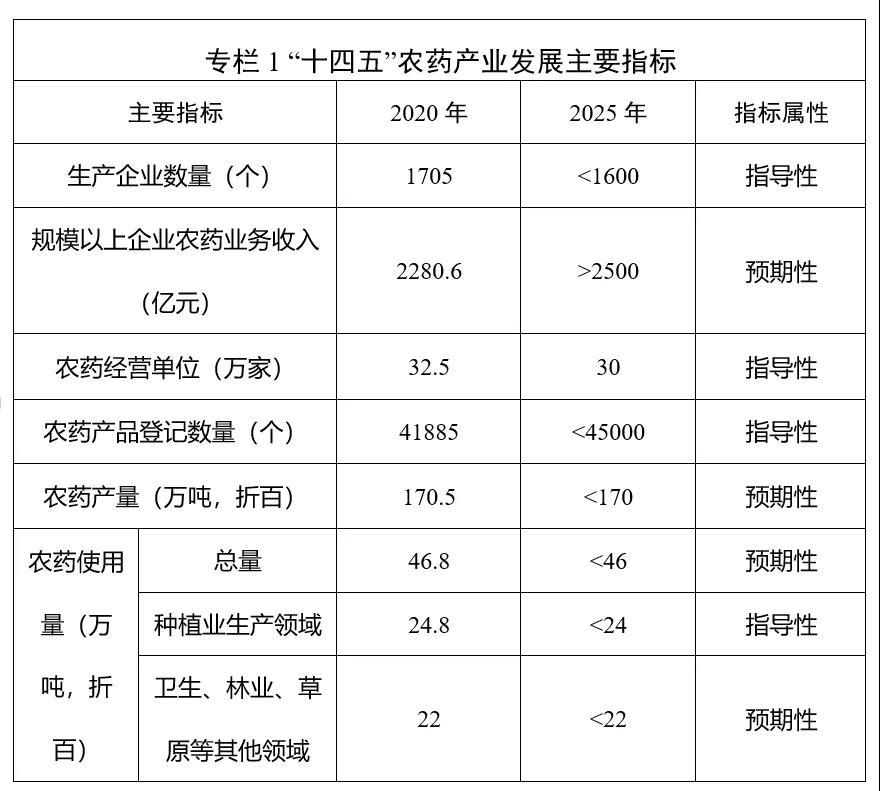
Production capacity continues to strengthen. After years of development, it has gradually taken shape. Pesticide A full-chain production system covering active ingredients, formulations, intermediates, and more. In 2020, nationwide… Pesticide There are 1,705 manufacturing enterprises, including 693 large-scale enterprises, nationwide. Pesticide Total output amounted to 1.705 million tonnes (expressed as 100% content, the same below), with a production value of nearly RMB 300 billion, profits and taxes exceeding RMB 20 billion, and over one million employees. Pesticide While meeting domestic demand, the products are also exported to 188 countries and regions, with exports totaling 1.269 million tons and a value of US$11.7 billion in 2020. Eleven Chinese enterprises have ranked among the global leaders. Pesticide The industry’s top 20 companies are seeing their overall strength and international competitiveness steadily improve.
The product mix has been steadily optimized. In 2020, nationwide… Pesticide The number of varieties stands at 714, an increase of 97 compared with 2010. At present, highly toxic and extremely toxic chemicals are being used in production. Pesticide (Excluding rodenticides) There were 10 varieties, 13 fewer than in 2010, and their share of total usage declined from 5% to below 1%. As of the end of 2020, Pesticide The total number of registered products stands at 41,885, an increase of 12,688 compared with 2010. Among these, the share of registered insecticides declined from 53.2% to 43.5%, while the shares of fungicides, herbicides, and plant growth regulators rose from 21.9%, 21.1%, and 2.1%, respectively, to 26.0%, 26.7%, and 2.8%.
The operation and use are being gradually standardized. Pesticide Store layouts have become more rational, a quality traceability system has been preliminarily established, and restricted use… Pesticide Designated-point operations and ledger management for purchasing and sales have been fully implemented. As of the end of 2020, nationwide… Pesticide There are 325,000 operating entities, of which 233,000 have been included. Pesticide Regulatory information platform. Conduct “double-random, one-public” supervisory spot checks, Pesticide The qualified rate of product quality has improved year by year. During the 13th Five-Year Plan period, Pesticide The pass rate of random inspections has increased from 84.2% to 96.2%. Pesticide The level of scientific and safe usage is steadily improving, covering agricultural products such as vegetables, fruits, and tea. Pesticide The pass rate of residual sampling inspections has remained stable at or above 97%.
New progress has been made in research and development innovation. At present, China… Pesticide A pattern has essentially taken shape, combining generic drug production with independent innovation, thereby reversing the previous reliance on imports and imitation. Breakthroughs have been achieved in new processes and technologies such as chemical synthesis and biofermentation, leading to the research, development, and commercialization of more than 50 novel compounds—such as diflufenican, etoxazole, cyclopyrimidone, and bispyribac—that are protected by proprietary intellectual property rights. Pesticide , the existing Pesticide Over 90% of the varieties have been localized.
Section 2: Challenges Faced
During the 14th Five-Year Plan period, agricultural green development and ecological civilization construction will… Pesticide Industrial development has set forth new requirements, Pesticide The industry still has certain weak links and significant shortcomings, which require continued efforts to address. Pesticide The green, high-quality development of industries still faces a number of issues and challenges.
Production enterprises are small and fragmented, making the task of phasing out outdated capacity particularly challenging. In China, Pesticide There are numerous enterprises, most of which are small in scale, resulting in low industry concentration. More than half of these firms have not yet entered chemical industrial parks, and micro‑ and small‑scale enterprises account for 60% of the total. Furthermore, some companies are located in environmentally sensitive areas. The task of phasing out high‑pollution, high‑energy‑consumption production capacity is substantial, and the relocation of certain enterprises from eastern to central and western regions introduces uncertainties and risks to the local ecological environment.
The variety structure is aging, and the task of renewal and replacement is substantial. The currently registered… Pesticide Among the varieties, approximately 70% have been registered for more than 15 years. Pesticide Severe product homogenization, rising drug resistance, declining efficacy, increased dosages, and heightened residues and environmental risks all urgently call for accelerated action. Pesticide Phasing out and upgrading, eliminating highly toxic and high-risk substances. Pesticide 。
Innovation capacity is weak, and the task of transformation and upgrading is daunting. Pesticide There remains a significant gap between China and developed countries in areas such as original innovation, core manufacturing processes, and key intermediate synthesis technologies. Pesticide Insufficient investment in innovation, coupled with a lack of sustainable R&D platforms and mechanisms, results in limited capacity for original innovation and… Pesticide The country’s status as a major producer is not commensurate. Dual control of energy consumption, ecological and environmental protection, and workplace safety, among other measures, impose… Pesticide Industrial development has set new requirements, and the pressure to transform and upgrade remains substantial.
Insufficient support capacity, Pesticide Regulatory tasks are heavy. Over the years, Pesticide The industry lacks adequate support in terms of management personnel and infrastructure, and its regulatory systems and mechanisms remain inefficient. During the 13th Five-Year Plan period, ten provincial-level facilities were constructed. Pesticide The risk monitoring centers fall significantly short of actual needs, with most provinces and key counties lacking the necessary testing and inspection capabilities as well as the requisite information‑based management systems.
Section 3: Development Opportunities
During the 14th Five-Year Plan period, we will comprehensively advance rural revitalization and accelerate the modernization of agriculture and rural areas. Pesticide The industrial sector is playing an increasingly prominent role in ensuring the effective supply of grain and other key agricultural products and in supporting green agricultural development, while its tasks are becoming ever more demanding.
Ensuring national food security requires Pesticide Stable supply. During the 14th Five-Year Plan period, the fall armyworm and rice‑borne “two‑migration” pests, Wheat Major diseases and pests, such as stripe rust and Fusarium head blight, are occurring frequently and recurring with increasing severity, posing a heavy burden for prevention and control that requires sustained and stable efforts. Pesticide Production and supply. Coupled with rising demand in sectors such as forestry, grassland management, and healthcare, Pesticide The market space continues to expand.
Green development drives Pesticide Industrial transformation and upgrading. As we enter a new stage of development, the people’s aspirations for a better life call for safe and diversified agricultural products, and for… Pesticide Green, high-quality industrial development has set higher standards and provided external impetus for transformation and upgrading.
Optimizing the business environment helps enterprises grow stronger and larger. By deepening the “delegation, regulation, and service” reform and continuously strengthening intellectual property protection, a market‑oriented and law‑based business climate fosters greater market dynamism and endogenous growth drivers, accelerates independent innovation, promotes mergers and reorganizations, and enhances market competitiveness.
High‑level opening-up has facilitated the international expansion of enterprises. The new development paradigm—centered on the domestic circulation while fostering mutual reinforcement between domestic and international circulations—is becoming increasingly evident, and the deepening joint efforts to build the Belt and Road Initiative and advance international cooperation have provided China with… Pesticide Enterprises have been presented with favorable opportunities to expand into international markets, boost exports of their competitive products, develop trade in services, and broaden their overseas industrial presence.
In summary, the 14th Five-Year Plan period is a time to accelerate Pesticide During this strategic period of industrial transformation and upgrading, it is imperative to strengthen forward-looking thinking and systematic planning. Grounded in the needs of green agricultural development and the prevention and control of major pests and diseases, we must innovate our approaches, refine policies, and bolster supporting measures, with a focus on building a modern… Pesticide Industrial system, continuously improving Pesticide Domestic supply capacity and international competitiveness.
Chapter 2: General Requirements
Section 1: Guiding Principles
Guided by Xi Jinping Thought on Socialism with Chinese Characteristics for a New Era, we will comprehensively implement the spirit of the 19th National Congress of the Communist Party of China and all plenary sessions of the 19th Central Committee. Grounded in the new stage of development, we will uphold the new development philosophy, foster a new development pattern, and promote high-quality development. We will adhere to the fundamental national policy of conserving resources and protecting the environment, and strive to build a modern economy characterized by green and low-carbon development. Pesticide Focusing on the industrial system, we will strengthen top-level design, optimize industrial spatial planning, adjust the product mix, refine policy support, bolster scientific and technological innovation, address development bottlenecks, and advance… Pesticide Industrial transformation and upgrading, continuously improving Pesticide Industrial quality, efficiency, and market competitiveness provide strong support for ensuring food security, the safety of agricultural products, and ecological environmental safety.
Section II: Basic Principles
Uphold safe development. Coordinate development and security, rigorously enforce market access standards, strengthen market supervision, promote the scientific and safe use of agricultural inputs, and ensure the safety of agricultural production, the quality and safety of agricultural products, and the safety of the ecological environment. Urge… Pesticide Producers, operators, and users shall fulfill their principal responsibility for workplace safety and enhance the overall level of occupational safety.
Uphold green development. Integrate the concept of green development throughout… Pesticide Support biotechnology across all stages of industrial development. Pesticide Wait for green Pesticide Conduct research and development registration, promote green production technologies, advance the use of reduced‑quantity, high‑efficiency practices, and implement the collection and disposal of packaging waste, thereby fostering resource conservation and environmental friendliness. Pesticide Production methods and usage patterns.
Uphold high-quality development. Optimize production planning and develop and promote efficient, low-toxicity solutions. Pesticide Substitute for highly toxic and high-risk substances Pesticide , promote green, intelligent, and continuous production, and strive to build Pesticide An upgraded version of industrial upgrading, fostering large enterprises and building renowned brands.
Uphold innovative development. Strengthen scientific and technological innovation, and develop new… Pesticide Develop new processes and apply cutting-edge technologies. Promote innovation in management systems and mechanisms, build a digital management platform, fully implement online, user-friendly administrative approval services, and enhance the quality and safety traceability system.
Section 3: Development Goals
By 2025, Pesticide The industrial system has become more comprehensive, the industrial structure more rational, and the support for agricultural production has continued to strengthen, while green development and high-quality development have steadily advanced.
Production intensification. Promote Pesticide Manufacturing enterprises will undergo mergers and reorganizations, upgrade and transform their operations, and grow stronger and larger, fostering a group of competitive medium- and large-sized producers. By 2025, the focus will be on cultivating 10 enterprises with an output value exceeding RMB 5 billion, 50 enterprises surpassing RMB 1 billion, and 100 enterprises exceeding RMB 500 million, within the industrial park. Pesticide The output value of manufacturing enterprises increased by 10 percentage points.
Standardized operations. With a focus on key production areas for grains, vegetables, fruits, and tea, efforts are being made to build… Pesticide Standardized operational services have been implemented in 10,000 retail outlets, with vigorous promotion of standardized practices such as prescription-based drug sales, ledger-keeping, and traceability management. By 2025, the goal is to achieve standardization in 50% of… Pesticide Store operations are conducted in accordance with standardized procedures and services.
Utilize specialization. Strengthen. Pesticide Promote the widespread adoption of scientifically sound and safe agricultural practices, vigorously advance green pest‑management technologies such as biological control, physicochemical trapping and monitoring, and judicious use of pesticides, and focus on developing professional, integrated pest‑management services, continuously enhancing… Pesticide Utilization efficiency. By 2025, the coverage rate of integrated pest and disease management for the three major grain crops will reach 45%, with continued efforts to promote chemical… Pesticide Use in reduced quantities.
Modernization of governance. Building a nation Pesticide A digital regulatory platform enhances information-based and intelligent regulatory services. By refining management systems and upgrading operational tools, it establishes a modern management framework that integrates top-down coordination, ensures efficient operations, and provides robust support, thereby achieving comprehensive improvements. Pesticide Regulatory service capacity and level.
Chapter 3: Key Tasks
During the 14th Five-Year Plan period, focusing on Pesticide A new goal for industrial development: focusing on building a modern… Pesticide Production system, business service system, safe-use system, supervision and management system, and research-and-development innovation system.
Section 1: Building the Modern Pesticide Production system
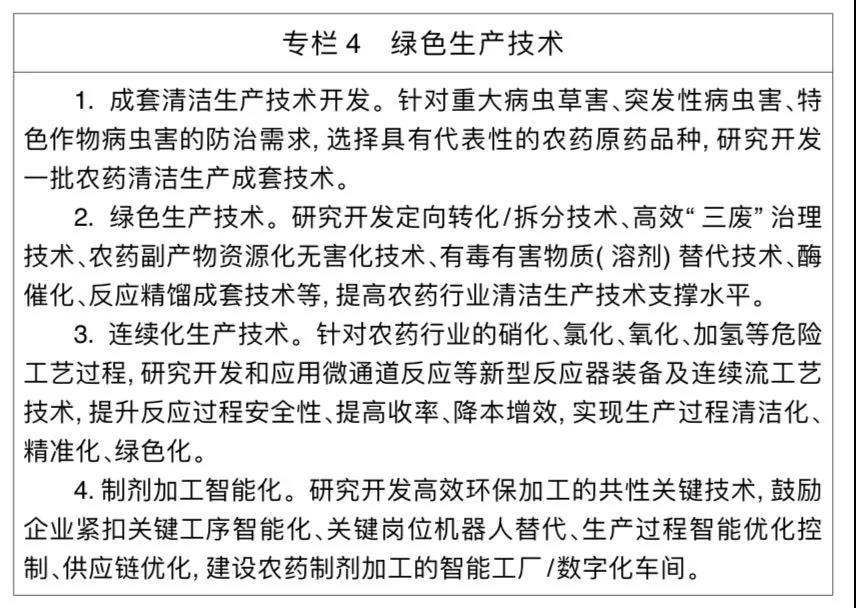
(1) Optimize production layout. In accordance with the overall planning of national- and provincial-level chemical parks (industrial parks), guide… Pesticide Enterprises that locate in compliant industrial parks—aligned with the designated industrial orientation and subject to legally mandated environmental impact assessments—can leverage the parks’ locational and supply-chain advantages to enhance and strengthen their industries. At the same time, efforts should be intensified to phase out high-risk, highly polluting production capacity and curb overcapacity. In the eastern coastal regions, chemical industrial parks should be maintained at a stable level. Pesticide Development: appropriately expand the scale of leading industrial parks, with a focus on developing the chemical industry. Pesticide Promote innovation and production, and phase out outdated capacity. In the central and western regions, strengthen efforts to encourage enterprises to enter industrial parks. Pesticide Comprehensive project evaluation and stringent oversight of production licensing. Prioritize the development of biotechnology. Pesticide Industry and Chemistry Pesticide Formulation processing, with moderate development of the chemical industry. Pesticide Active‑ingredient manufacturers. In environmentally sensitive areas such as the Yangtze River Economic Belt, the Yellow River Basin, and key rivers and lakes, strict controls are imposed. Pesticide Production project construction.
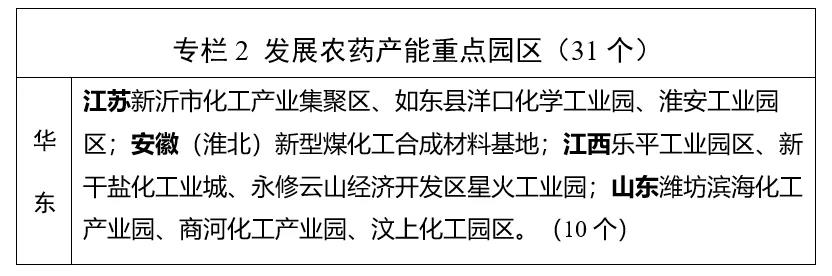

(II) Enhance industrial concentration. Based on resource endowments, transportation and logistics, technological development, and other production factor conditions, while adhering to market orientation, innovation-driven growth, and policy support, we will focus on building a number of… Pesticide Industrial clusters will help raise the level of production intensification. Leveraging the advanced technologies and talent advantages of the eastern region and the Bohai Rim area, we will foster a group of innovative, export-oriented enterprises characterized by high technology and high added value. In light of the ecological requirements and current industrial conditions in the central and western regions, priority will be given to developing a number of bio‑based industries. Pesticide Leading enterprises and green Pesticide Formulation processing enterprises. Enterprises are encouraged to undergo mergers and reorganizations, adopt end-to-end production layouts, and advance… Pesticide The development of corporate groups toward greater scale, branding, and internationalization is gradually transforming… Pesticide The landscape of enterprises is characterized by small size and fragmentation.
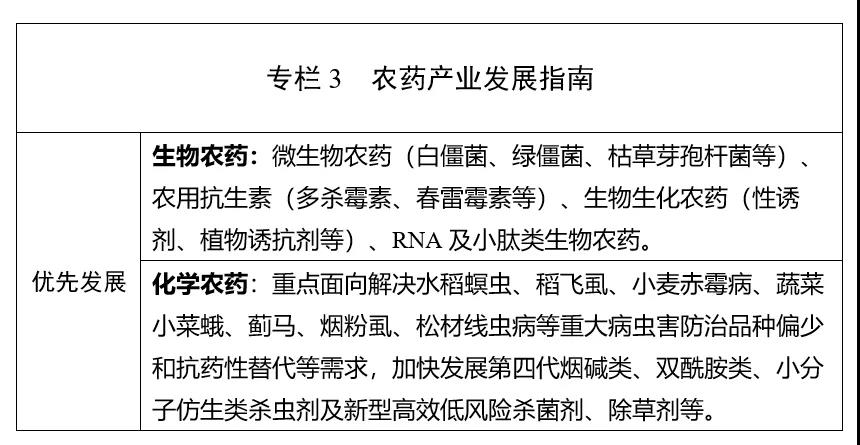
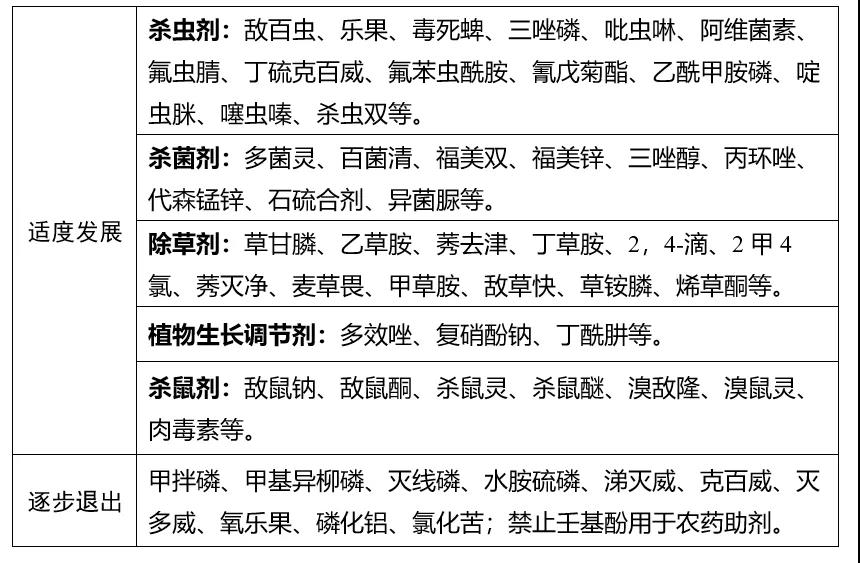
(3) Adjust the product structure, focusing on the prevention and control of major pests and diseases, and… Pesticide Reduction requirements: In alignment with the latest provisions of the “Guidance Catalogue for Industrial Structure Adjustment” and the “Comprehensive Catalogue of Environmental Protection,” we support the development of efficient, low-risk new chemical products. Pesticide , vigorously develop the bioindustry Pesticide , gradually phasing out and retiring old varieties that are highly resistant, have poor efficacy, and pose high risks Pesticide Varieties and dosage forms—strictly regulate highly toxic, high-risk substances with characteristics such as environmental persistence and bioaccumulation. Pesticide and adjuvants. By fully leveraging new processes and technologies, we will vigorously develop water-based, nano‑formulated, ultra‑low‑volume, and controlled‑release formulations to meet the needs of medium- and large‑scale application equipment and diversified pesticide use. The processing and use of dustable formulations and toxic or hazardous adjuvants will be strictly regulated, with gradual implementation of… Pesticide The efficiency, greenness, and harmlessness of dosage forms.
(4) Promote green and clean production. In accordance with the principles of ecological priority and green, low‑carbon development, enterprises are encouraged to strengthen technological innovation and process upgrades, phase out outdated production technologies and equipment, and foster… Pesticide Promote clean, low-carbon, and circular development in production. Vigorously advance integrated technologies such as microchannel reactors, high-efficiency catalysis, and reactive distillation; optimize process design and production workflows; encourage equipment upgrades; and drive the automation, continuous operation, and intelligentization of manufacturing processes, thereby reducing pollutant and greenhouse gas emissions and lowering energy consumption. Establish and improve a sound system… Pesticide Green standards system, improvement of production management systems, enhancement of… Pesticide Product quality, intensifying pollution control efforts, advancing the rectification of existing environmental issues, and promoting… Pesticide Green, high-quality development.
Section 2: Standards Pesticide Operating Service System
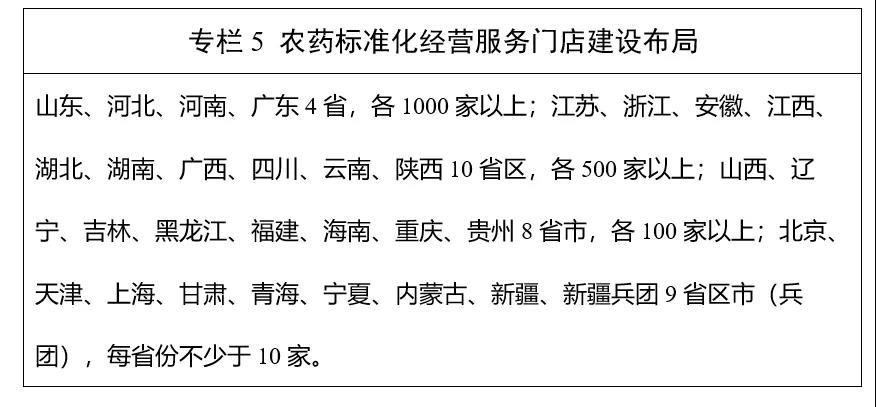
(1) Optimize the layout of operating outlets. In accordance with… Pesticide Optimize by region and tier, in line with risk management and supply‑side convenience requirements. Pesticide The layout of wholesale markets and retail outlets shall be strictly controlled and subject to usage restrictions. Pesticide The number of operating outlets shall be rationally planned and distributed in major agricultural production areas and key grain-producing counties. Pesticide The number of operating outlets meets the needs for pest, weed, and rodent control. Improve… Pesticide Supply chain, in Pesticide A number of facilities will be strategically located in areas with high demand and convenient transportation and logistics. Pesticide Wholesale market. Vigorously develop Pesticide Operating socialized services to promote Pesticide Operations are shifting from simple, fragmented drug sales to large-scale, professional, and socially integrated services that combine technology with pharmaceuticals. By 2025, Pesticide The number of operating entities shall not exceed 300,000; restricted use. Pesticide The number of designated retail outlets shall be capped at no more than 15,000. Pesticide The number of integrated enterprises engaged in both production and sales has reached 2,000.
(II) Regulating the Internet Pesticide Operations. Establish an internet-based operational framework featuring cross-departmental collaboration and coordination. Pesticide Supervisory and management system, implemented in accordance with the law. Pesticide The management responsibilities of online business platforms clarify the legal obligations and principal responsibilities of online operators, and establish regulations for online commerce. Pesticide The negative list and the code of conduct for online business activities shall be strictly enforced. Pesticide The business licensing system implements integrated online–offline operations. Promote… Pesticide Online real-name registration and traceability management. Strengthen cross-departmental coordinated oversight of online operations, rigorously crack down on illegal business practices, and prevent internet operators from engaging in unauthorized sales. Pesticide It creates safety hazards.
(3) Promote the development of standardized stores. Formulate Pesticide Operational store‑development service standards, with a number of flagship locations established in key regions. Pesticide Standardize operating service outlets to enhance… Pesticide The level of standardized management in operations, as well as the quality of prescription dispensing and pharmaceutical services and advisory support. To be improved. Pesticide Business ledger, improved and refined Pesticide Traceability platform, enabling Pesticide Traceability management. By 2025, nationwide… Pesticide More than 10,000 standardized operating service outlets, with the aim of… Pesticide The coverage rate of standardized operating service outlets has reached 50%, and key areas for fruits, vegetables, and tea have essentially achieved full coverage.
Section 3: Improvement Pesticide Safety Usage System
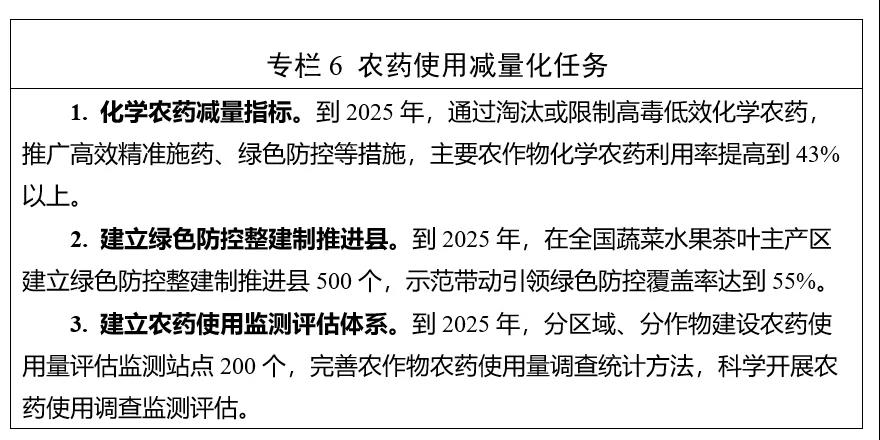
(1) Promoting Chemistry Pesticide Employing reduction strategies. Coordinating pest and disease control needs and Pesticide Reduction requirements call for phasing out highly toxic, low-efficiency chemicals. Pesticide , promote high efficiency, low toxicity, and low risk Pesticide , promote biological control of plant diseases and pests as an alternative to chemical control. Vigorously advance the use of high-efficiency application equipment, intelligent and precision spraying technologies, and alternate or rotational pesticide application strategies to enhance… Pesticide Utilization rate. Promote and apply green pest management practices such as biological control, ecological regulation, physicochemical trapping, and the judicious use of pesticides to reduce chemical inputs. Pesticide Use. Build big data. Pesticide Use the monitoring platform to provide guidance. Pesticide Scientific and precise application. During the 14th Five-Year Plan period, we will advance the implementation of… Pesticide Reduction initiatives and green pest management, demonstrating and leading the way in chemical use. Pesticide Use reduction.
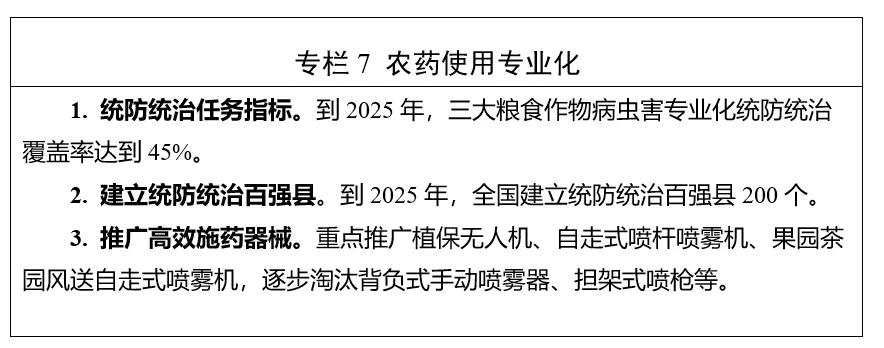
(II) Promotion Pesticide Promote professionalization. Support the development of specialized pest‑control service organizations, upgrade their facilities and equipment, and focus on enhancing their capacity to provide integrated pest management services in major grain‑producing areas and key disease‑and‑pest‑source regions. Strengthen training for professional plant protection teams, and gradually implement this approach in major production areas of grains, vegetables, fruits, tea, and other crops, as well as in regions where major pests and diseases—such as pine wood nematode, the gypsy moth, and grassland rodent infestations—are prevalent. Pesticide The safety‑use instructor system clarifies familiarity with pest and disease control and… Pesticide Specialist or technician-led, zone‑based巡回 guidance ensures safe usage and promotes effective implementation. Pesticide Promote and popularize measures such as alternating use, safe application, and adherence to the prescribed safety interval. Pesticide Scientific and safe application of technology. Strive to provide training at or above the county level during the 14th Five-Year Plan period. Pesticide 10,000 safety-use instructors, new types of business entities and rural areas Pesticide There are 200,000 safety‑use instructors, with instructor coverage exceeding 50% in major grain‑producing areas and surpassing 80% in key fresh‑food agricultural production regions. All relevant departments shall strengthen their efforts in accordance with their respective responsibilities. Pesticide Professional guidance on usage.
(3) Promotion Pesticide Recycling and utilization of packaging waste. Formulate Pesticide Standards for the recycling and resource utilization of packaging waste are being gradually established. Pesticide Packaging waste recycling and treatment system. Strengthening… Pesticide Conduct targeted surveys and monitoring of packaging waste, launch pilot programs for a three-tiered recycling system at the county, township, and village levels, and, leveraging “zero-waste city” initiatives, explore effective recycling models and mechanisms tailored to different regions. Build a number of… Pesticide Establish centralized collection, storage, and transportation stations for packaging waste, designate a group of resource‑recovery facilities, and promote… Pesticide Recycling, disposal, and resource recovery of packaging waste. Guiding… Pesticide Enterprises should improve their packaging processes, promote the use of environmentally friendly and recyclable packaging materials, phase out aluminum foil pouches, and encourage the adoption of large‑capacity packaging that is easy to recycle. Build… Pesticide A digital platform for the recycling and treatment of packaging waste, promoting… Pesticide Producers and users shall fulfill their recycling responsibilities. By 2025, efforts will be made to… Pesticide The recycling rate for packaging waste has reached over 80%.
Section Four: Soundness Pesticide Supervision and Management System
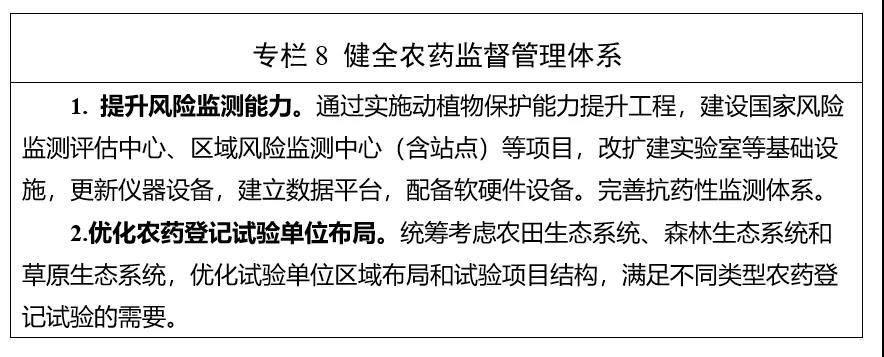
(1) Strengthen informationization and digitalization. Build a national… Pesticide A digital regulatory platform that enhances functional modules such as administrative approval, supervisory management, quality traceability, and the integrity system. Strengthening… Pesticide Construction of the foundational database and the industry statistics and dispatch system, implementation of Pesticide Electronic processing of administrative approvals, promoting interconnectivity and data sharing among ministerial and provincial information platforms, and enhancing… Pesticide The level of informationization of regulatory services.
(II) Strengthen risk monitoring and assessment. Establish and improve Pesticide Risk monitoring and assessment system, strengthened Pesticide Capacity building for risk assessment. A number of facilities will be established on a zoned basis. Pesticide Safety risk monitoring points, with corresponding facilities and equipment fully in place. For those that have been registered and in use for 15 years or more… Pesticide varieties, and strengthen monitoring of efficacy, crop phytotoxicity, resistance dynamics, as well as Pesticide Monitoring and evaluation of residues, human and animal poisoning, and environmental impacts, with a focus on phasing out inefficient and high-risk practices. Pesticide Phased withdrawal, prevention of usage-related safety risks, and improvement of the system Pesticide Implement environmental risk monitoring and re‑evaluation mechanisms following registration. By 2025, complete a batch of highly toxic and high‑risk substances. Pesticide Re-evaluation of varieties, establishing a framework for highly toxic and high-risk substances. Pesticide Risk assessment and phase-out mechanisms.
(3) Strengthen support for inspection and testing. Enhance research on inspection and testing technologies, and improve relevant technical standards and the registration‑testing management system. Intensify oversight and inspection of testing institutions to ensure compliance and standardization. Pesticide Conduct registration trials to ensure trial quality. Actively promote… Pesticide The registration and testing management system has been aligned with international standards, international laboratory cooperation has been strengthened, and mutual recognition of test data has been promoted.
(4) Improve the technical standards system. Strengthen top-level design and promote comprehensive implementation. Pesticide Standard system development. With Pesticide Focusing on evaluation, product quality, safe use, maximum residue limits, and environmental risks, we will strengthen the development of technical standards. We will reinforce standard‑driven guidance, encourage industry associations to develop group standards, and improve the system. Pesticide Standardization system. Actively participate in the development of international standards and promote… Pesticide Standard internationalization.
Section 5: Establishment Pesticide R&D Innovation System
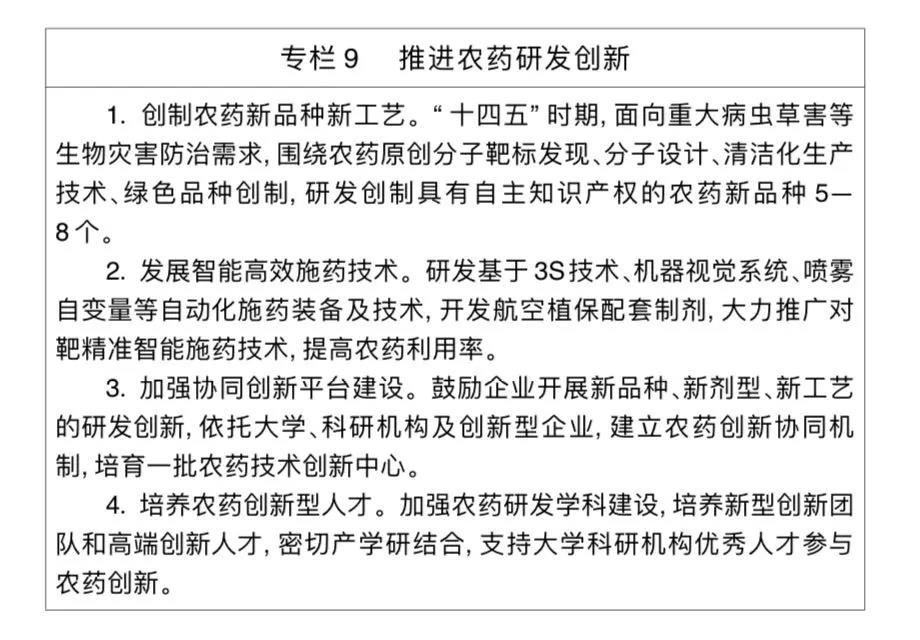
(1) Strengthen green initiatives Pesticide Research and development. Addressing the critical needs for the prevention and control of major plant diseases, pests, and weeds, focusing on… Pesticide Original molecular target discovery, molecular design, and clean production—strengthening the development of low-risk chemical pesticides, fungicides, herbicides, and other novel agrochemicals. Pesticide original innovation, fully leveraging synthetic biology technologies to advance Pesticide Creation and upgrading. Increasing the use of microorganisms. Pesticide , plant-derived Pesticide the intensity of research and development. Encourage the application of nanotechnology in Pesticide Innovative applications in dosage forms. Continuous optimization and improvement. Pesticide Production processes: actively introduce new technologies and processes such as microchannels and continuous flow to achieve low-carbon, energy-efficient, and clean production. Research and refine approaches based on pest and disease management and… Pesticide Apply a coordinated system of digital, intelligent, and precision technologies to enhance… Pesticide Creation efficiency and Pesticide Precision utilization efficiency.
(II) Strengthen capacity building for innovation. Optimize collaborative innovation pathways, intensify the integration of superior research resources, and bolster the development of new products, new technologies, and new processes, thereby accelerating… Pesticide Incubation and commercialization of scientific and technological achievements. Promote deep integration among industry, academia, and research, and establish a number of… Pesticide Innovation Engineering Center, ministerial-level Pesticide Key Laboratory for Applied Innovation; promote the joint establishment of collaborative innovation laboratories (bases) between universities and enterprises, thereby enhancing China’s… Pesticide Industrial capabilities in original innovation, collaborative innovation, and integrated innovation; aimed at addressing Pesticide With major, critical industrial challenges as the goal, it will… Pesticide The cultivation of innovative talent has been incorporated into relevant talent-development programs in agriculture, science and technology, education, and other fields, to… Pesticide Industrial development provides talent support.
(3) Improve innovation mechanisms. Strengthen Pesticide We will tackle key core technologies in priority industries, refine the management of science and technology projects, and implement the “listing‑for‑leadership” and “race‑horse” systems for major R&D initiatives. We will promote deep integration among industry, academia, and research institutions, strengthen collaborative innovation, and encourage enterprises to take the lead in establishing… Pesticide Innovation consortia such as sector-specific science and technology innovation alliances are encouraged to motivate enterprises to increase their R&D investment. Large enterprises should be empowered to play a leading and supporting role, while small, medium, and micro‑enterprises are encouraged to engage in innovation and entrepreneurship, fostering integrated innovation across the upstream, midstream, and downstream segments of industrial chains, as well as among enterprises of all sizes. The mechanisms for evaluating scientific and technological achievements should be refined, with performance assessments oriented toward problem‑solving and tangible outcomes, thereby strengthening… Pesticide Basic research and integrated applied research in the field, for… Pesticide Technology provides support for the sustainable development of industries.
Chapter 4: Safeguard Measures
Section 1: Strengthening Organizational Leadership
Pesticide The implementation of industrial development plans is a systematic undertaking that involves multiple departments, levels, and entities. It requires the establishment of a working mechanism characterized by interdepartmental collaboration, vertical coordination, and multi‑stakeholder cooperation, so as to advance plan implementation in a concerted effort. Relevant departments, in accordance with their respective responsibilities, should work closely together, strengthen guidance and coordination, and increase support. Localities, based on their specific circumstances, should formulate region‑specific plans, programs, or implementation schemes, set development goals and priority tasks tailored to local conditions, reinforce planning‑driven direction, and intensify supportive measures to promote… Pesticide The industry continues to develop in a healthy and sustainable manner.
Section 2: Strengthening Policy Support
Improve Pesticide Industrial development support policies, optimized. Pesticide Industrial development environment. Guidance Pesticide Production enterprises are being concentrated in chemical industrial parks, with policy support provided in areas such as land-use planning, energy allocation, environmental protection infrastructure, and financing and loans. Enterprises are encouraged to develop and introduce advanced equipment and processes, thereby enhancing the level of green, intelligent, and continuous production, promoting industrial transformation and upgrading, and accelerating the phase-out of high-pollution, high-risk production capacities. Improvements are being made… Pesticide Registration and approval system, accelerating biotechnology Pesticide , highly toxic Pesticide Registration of alternative products, specialized pesticides for minor crops, and formulations tailored for forestry and grassland. Increased emphasis on highly toxic substances. Pesticide The level of support for substitution, integrated pest and disease management, and the development of standardized business service outlets.
Section III: Strengthening Investment and Funding Guarantees
Soundness Pesticide A support and guarantee mechanism for industrial development investment, along with diversified investment channels. Through the project to enhance wildlife and plant conservation capabilities, efforts will be strengthened… Pesticide Infrastructure development, including the Risk Monitoring Center. Increasing efforts to address highly toxic substances… Pesticide The level of support for the promotion and application of alternative products, as well as for integrated pest and disease management, will be increased. Pesticide R&D has been incorporated into national science and technology programs to support new… Pesticide , research and innovation in new dosage forms and new manufacturing processes. Local governments and private capital are encouraged to increase their investment to provide support. Pesticide Enterprise upgrading and transformation, industrial restructuring and product development, clean production, and specialized applications.
Section IV: Strengthening Regulatory Services
Establish and improve Pesticide Regulatory service system, streamlined Pesticide Regulatory functions, establishing a team that is well-versed in policies, regulations, and operations. Pesticide Strengthen the regulatory service team and comprehensively enhance regulatory service capabilities. Improve… Pesticide Management systems, strengthened in accordance with the law. Pesticide Supervision and management of registration, production, operation, and use. Promote implementation. Pesticide The linkage between registration and production licensing shall be established and improved. Pesticide Integrity system and traceability management system. Strengthen oversight and random inspections, and severely crack down on the production and sale of counterfeit and substandard products. Pesticide Conduct shall be subject to legal accountability of the users who violate regulations.
Section 5: Strengthening Ecological Conservation
In accordance with the requirements of ecological and environmental protection laws and regulations, economic and technological policies, industrial policies, and resource utilization guidelines, we will strictly uphold the red lines for ecological and environmental protection, with all regions and relevant departments integrating… Pesticide In the course of industrial development, factors such as resources, ecology, and the environment guide enterprises to strengthen evaluation and management in areas including ecological and environmental protection, resource utilization, pollutant emissions, and risk prevention and control for newly added production capacity and newly established manufacturing facilities. Through coordinated efforts across all levels and among relevant departments, we will advance the implementation of planning measures, effectively safeguard the ecological environment, reinforce enterprises’ principal responsibility for workplace safety, and promote… Pesticide High-quality industrial development.
Source: Ministry of Agriculture and Rural Affairs Author: Ministry of Agriculture and Rural Affairs
Tags:
More information
Contact Us
Address:
No. 1, No. 1, New District Road No. 1, Gaocheng District, Shijiazhuang City, Hebei Province
WeChat/WhatsApp:
Phone:
Email:
