


-
About UsHebei Derui Chemical Co., Ltd. (hereinafter referred to as Derui Chemical) was established in January 2006 with a registered capital of RMB 51.8 million. The company specializes in the production and sale of agrochemicals, with its main products including thiamethoxam technical grade, imidacloprid technical grade, spirotetramat technical grade, and related formulated products.

-
Product CenterThe company is committed to building and continuously improving its management systems, and in 2020 it obtained certifications under GB/T 19001-2016/ISO 9001:2015, GB/T 24001-2016/ISO 14001:2015, and GB/T 45001-2020/ISO 45001:2018. Derui Chemical has consistently upheld the corporate mission of “pursuing green development and serving global agriculture,” while adhering to the core values of “integrity, innovation, pragmatism, and gratitude.” The company is eager to collaborate with its partners to contribute to the advancement of global agriculture.
-
BlogThe company places great emphasis on standardized management and sustainable development, successfully obtaining certification for its three major management systems—quality, environment, and occupational health and safety—in 2020. These certifications align with GB/T 19001-2016/ISO 9001:2015, GB/T 24001-2016/ISO 14001:2015, and GB/T 45001-2020/ISO 45001:2018. Derui Chemical remains committed to its corporate mission of promoting green development and serving global agriculture, upholding the core values of “integrity, innovation, pragmatism, and gratitude.” We look forward to partnering with stakeholders from all sectors, pooling our strengths, and advancing together to support the steady growth of global agriculture.

Xinhua News Flash | Safeguarding Our Food Security! World Food Day on the “Bowl of Rice”
Release Date:
2025-10-16
BEIJING, Oct. 16 (Xinhua) — Title: Safeguarding Our “Food” Future! World Food Day on the “Bowl of Rice”
Xinhua News Agency reporters Gu Yiping and Hu Liran
With food in hand, one feels no anxiety!
On October 16, we marked the 45th World Food Day. This year’s theme is “Hand in Hand, Promoting Diverse Cuisine and Joining Forces to Build a Brighter Future.”
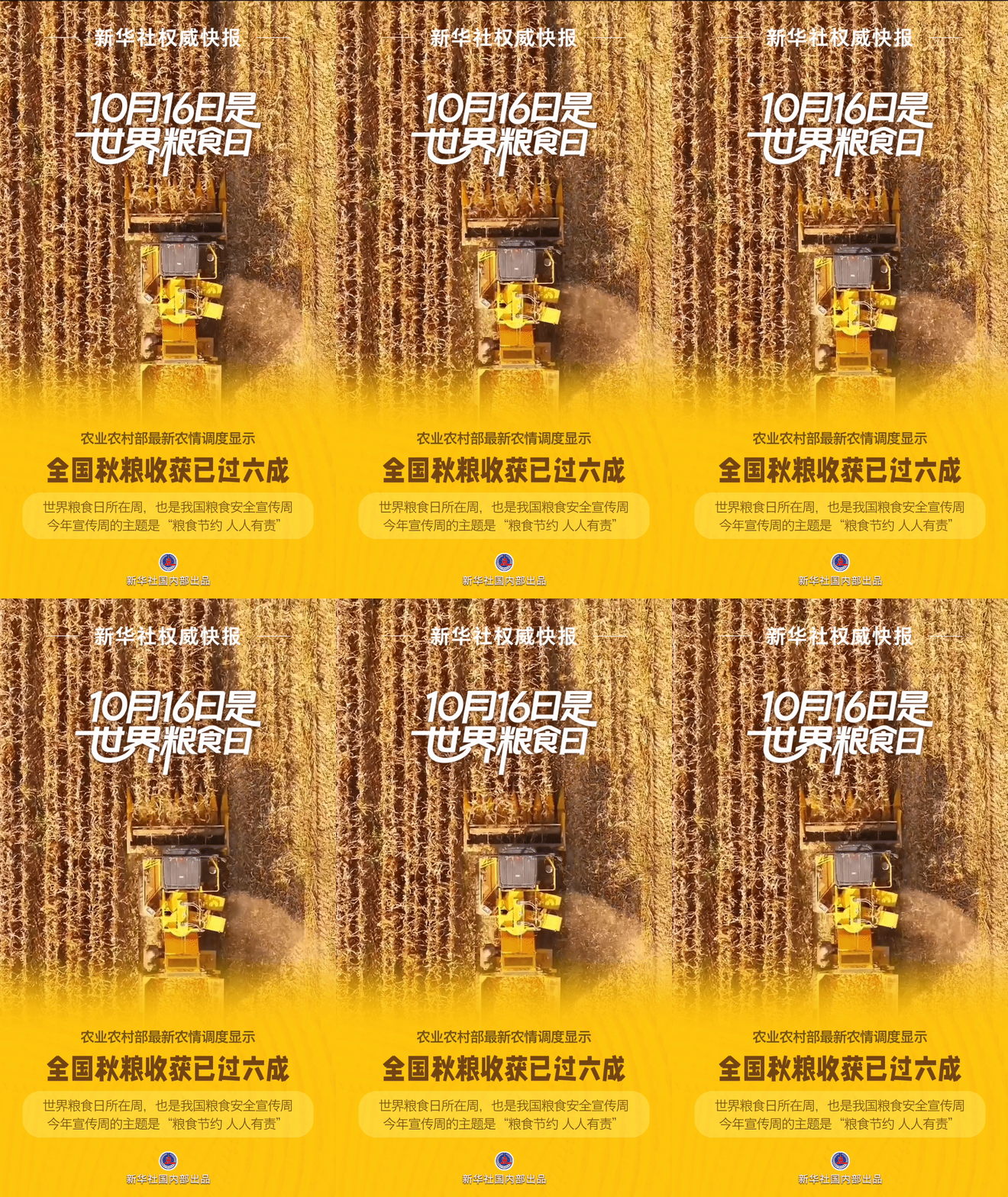
With over 1.4 billion people to feed, ensuring food security is China’s most fundamental national condition. General Secretary Xi Jinping has consistently placed food security at the forefront of his concerns, emphasizing that “ensuring national food security must be given top priority.”
According to the latest agricultural situation report from the Ministry of Agriculture and Rural Affairs, more than 60 percent of the national autumn grain harvest has been completed.
At present, China’s per capita grain availability has reached 500 kilograms, surpassing the internationally recognized food‑security threshold of 400 kilograms per person, ensuring basic self-sufficiency in cereals and absolute food security for staple grains. With its rice bowl firmly in hand, China stands with full confidence.
Diligent cultivation ensures grain yields; conserving grain and reducing losses cultivates the “invisible farmland.” From production and storage to processing and consumption, efforts to safeguard national food security span the entire grain‑circulation chain.
Unwaveringly ensuring a bumper harvest—
China’s grain output has remained above 1.3 trillion jin for many consecutive years, and last year it even surpassed the 1.4-trillion-jin mark for the first time. However, sustained bumper harvests do not mean we can afford to slacken our efforts; adverse factors such as natural disasters continue to pose risks to grain production.
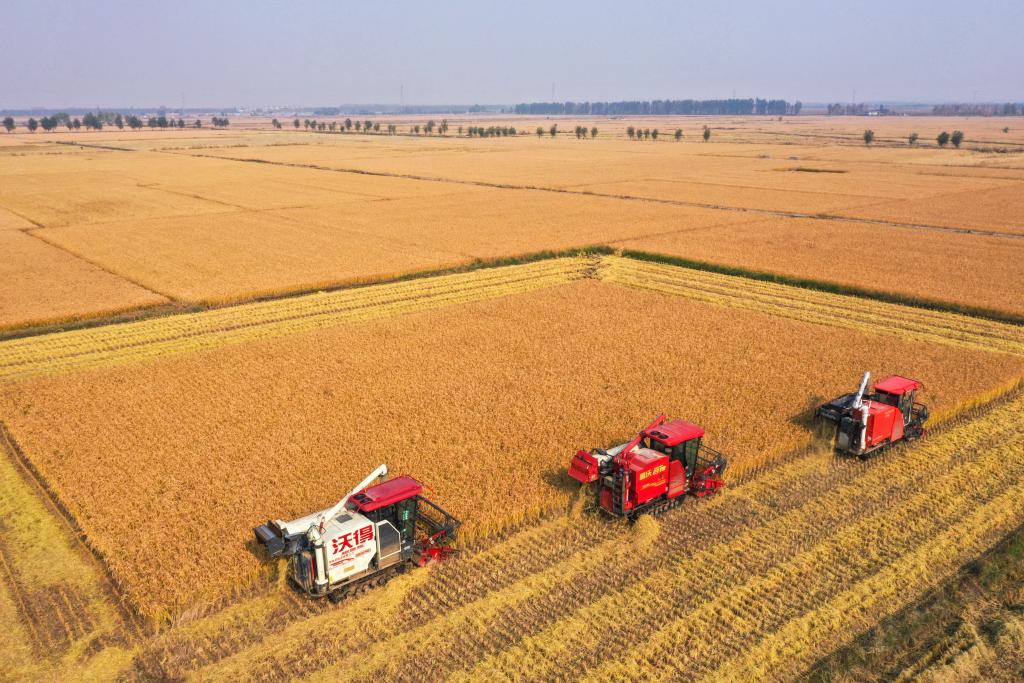
On October 14, 2025, in Gongzhuling City, Jilin Province, the Jilin Midou Planting Farmers’ Professional Cooperative conducted a demonstration of mechanized rice harvesting (drone photo). Photo by Xinhua News Agency reporter Zhang Nan.
Recently, the Huanghuai region—particularly Henan and Shandong—has experienced prolonged periods of overcast and rainy weather. In some areas, waterlogging has hampered field operations, making it difficult for agricultural machinery to access fields, thereby delaying autumn harvest progress.
Time waits for no one in the farming season! In Henan, combine harvesters are being upgraded to enhance their ability to operate in overly wet fields, ensuring timely progress in the autumn harvest. Meanwhile, Shandong has mapped out a province-wide service network for mechanized “three-autumn” operations, dynamically updating and publicly sharing information on grain-drying facilities. Across the country, coordinated efforts and a range of measures are being implemented to ensure the smooth completion of the autumn grain harvest—the largest component of the year’s total grain production.
The granaries of major countries are greener and fresher—
Being prepared for the unexpected is a fundamental principle of statecraft. China’s solid and reliable granary as a major power strengthens our ability to ensure food security.
Grain is sensitive to heat and easily spoils at high temperatures. At the Shenqiu Direct‑Affiliated Grain Depot of the Central Reserve in Zhoukou, Henan Province, staff employ an internal‑circulation temperature‑control system to preserve grain quality: in winter, they harness cold air from the north to ventilate and store coolness, building a reservoir of cold within the grain pile; in summer, they circulate this cold source to maintain the grain at near‑low‑temperature conditions, thereby slowing down quality degradation.
During grain harvesting and transportation, pests can easily contaminate the grain and bore into it. In Fuyang, Anhui Province, the Fuyang Direct‑Affiliated Warehouse of the Central Reserve Grain Administration employs carbon‑dioxide modified‑atmosphere storage technology: carbon dioxide is injected into the granaries, creating a “bubble‑like” environment around the grain that establishes a low‑oxygen atmosphere, thereby inhibiting microbial growth, controlling pest infestations, and ensuring green, long‑term grain preservation.
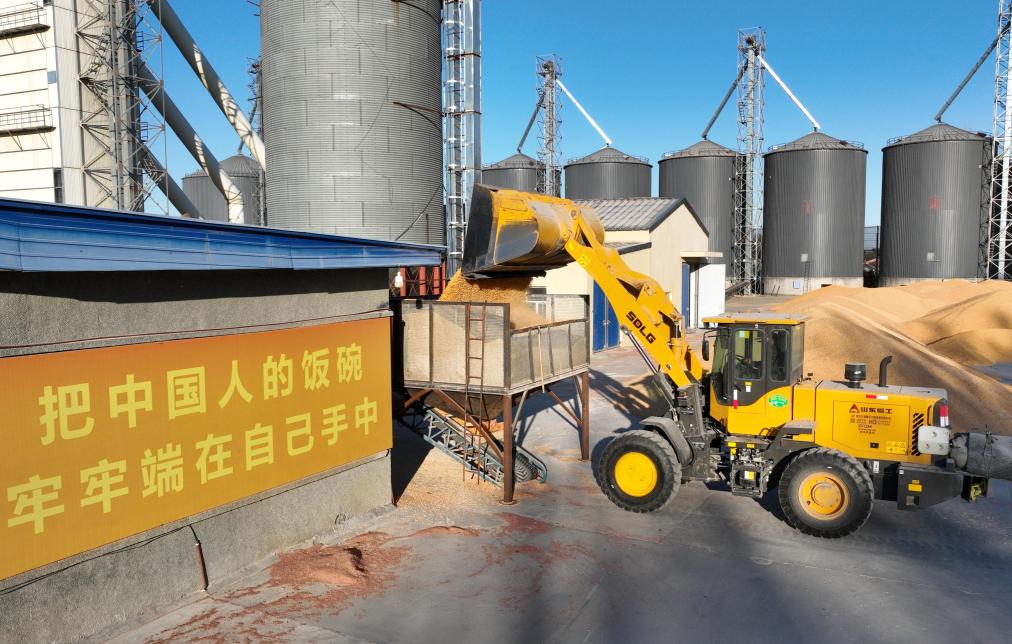
On October 14, at the Grain Trading Center of Heilongjiang Gongqing Farm Co., Ltd. under the Beidahuang Group, a loader was conducting grain cleaning and sorting in preparation for drying (drone photo). Xinhua News Agency (photo by Li Ang).
Across the country, an increasing number of green grain-storage technologies are being tailored to local conditions, reducing losses in stored grain quantities while enhancing grain quality, ensuring that people’s bowls are filled with fresher, higher‑quality Chinese grain.
Reducing “waste on the tip of the tongue” is gradually becoming a “new dining trend”—
The week in which World Food Day falls also marks China’s National Food Security Awareness Week. This year’s theme is “Food Conservation: A Responsibility Shared by All.”
Cherishing every grain in our bowl and reducing food waste is a sign of respect for the hard work of hundreds of millions of farmers, and it is also our most direct way of safeguarding China’s food security.
At dinner time in Hangzhou, Zhejiang, the time-honored restaurant “Zhiweiguan” was bustling with customers. The reporter observed that, before taking orders, servers would advise patrons on appropriate portion sizes, helping to prevent overordering and food waste due to unfamiliarity. Reminders against leaving food or dishes uneaten could be found at the ordering counter, on table cards, and on paper menus.
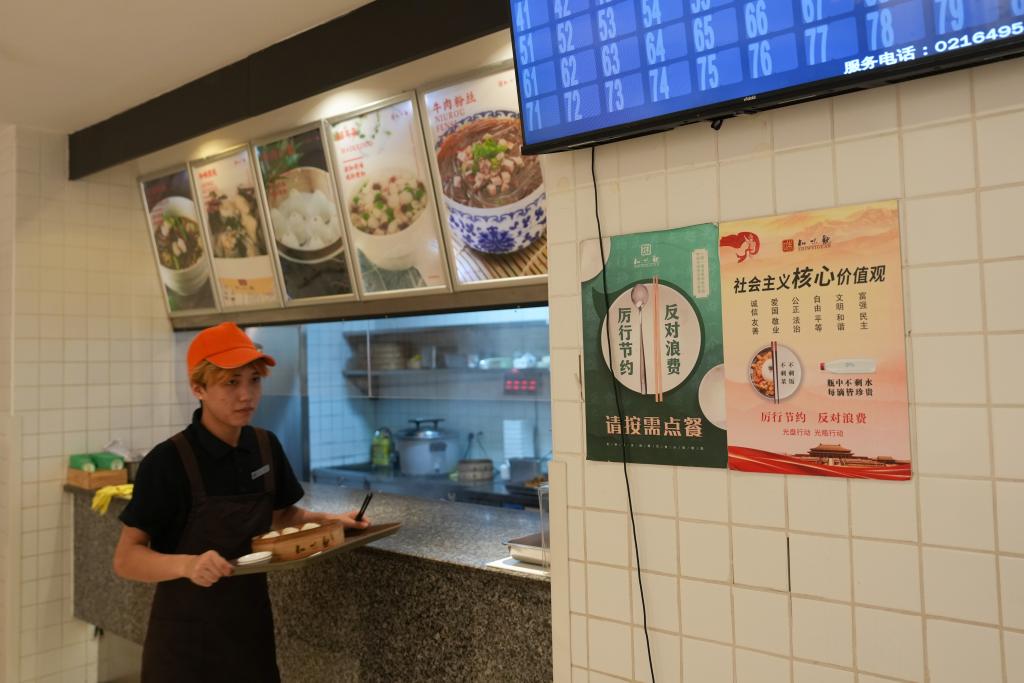
On October 15, 2025, at a branch of the time-honored Hangzhou restaurant “Zhiweiguan,” a reminder sign promoting “practicing thrift and opposing waste” was posted in a prominent location. Photo by Xinhua News Agency reporter Huang Zongzhi.
At 9:30 p.m., inside a branded chain bakery at the 1903 Commercial Plaza in Xishan District, Kunming, Yunnan, a staff member was wrapping leftover cakes and desserts in plastic wrap and packing them into sealed containers. “Any bread or cake that doesn’t sell out by the end of the day is carefully packaged and sent to our factory, where it undergoes professional processing to be turned into chicken feed—making sure nothing goes to waste,” the employee explained.
At present, the “Clean Plate Campaign” is gaining widespread support across the country, and food‑saving has become a “new dining trend” that more and more people are embracing.
The “rice bowl” can “hold” the land, sea, air, and space—
We draw food not only from the land but also from the sea… “Eating” is about more than just consuming grains; meat, eggs, dairy, fruits, vegetables, fish, mushrooms, bamboo shoots, and other delicacies all contribute to a rich culinary landscape. By building a diversified food supply system, we can help people make the transition from “having enough to eat” to “eating well.”
Implementing the “Grand Food View” and continuously expanding the boundaries of food. By the end of 2024, China’s total output of livestock products—including meat, eggs, and milk—had reached 175 million tons, up 18.8% from 2020; total aquatic product output had climbed to 73.58 million tons, a 12.3% increase over 2020; and annual edible mushroom production exceeded 40 million tons…
On World Food Day, we safeguard bountiful harvests, celebrate food, cherish grain, and work together to protect our “food” heritage!
Planning: Chen Fang
Reporters: Gu Yiping, Hu Liran
Coordinated by: Wang Min, Zhang Xinxin, and Yin Yiru
Produced by the Domestic Department of Xinhua News Agency
[Editor-in-charge: Zhao Wenhan]
Source: Xinhua Net
Tags:
More information
Contact Us
Address:
No. 1, No. 1, New District Road No. 1, Gaocheng District, Shijiazhuang City, Hebei Province
WeChat/WhatsApp:
Phone:
Email:
